

Bolt Brings Ride-Hailing to ChatGPT: What It Means for Nigerians and Africa
Bolt is integrating ride-hailing into ChatGPT, allowing users to request rides through AI. Here is what the move could mean for Nigeria and Africa.

You May Soon Be Able to Book a Bolt Ride Without Opening the Bolt App
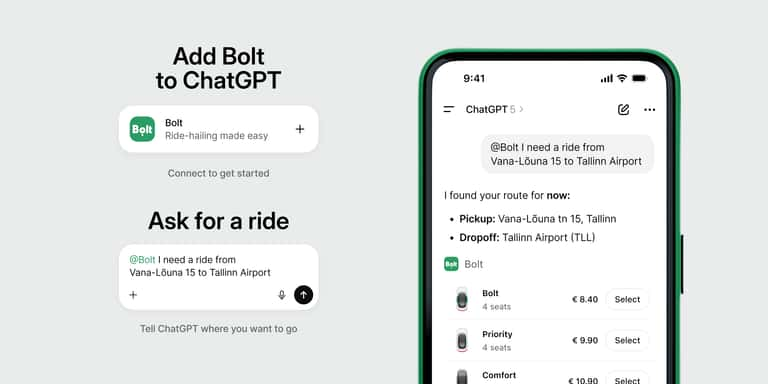
Booking a ride could soon become as simple as asking an AI chatbot. Bolt has announced an integration with ChatGPT that allows users to access ride-hailing through OpenAI's chatbot. The initial rollout covers several European markets, including the EU, UK, Norway, Switzerland, Ukraine and Azerbaijan. The move is another example of AI moving beyond answering questions and becoming a gateway to everyday services.
For African users, particularly Nigerians who already rely heavily on app-based transportation in major cities, the development could eventually change how people request rides.
How Bolt's ChatGPT Integration Works
Instead of opening the Bolt application and manually entering a destination, users can interact with Bolt through ChatGPT. The integration allows customers to request ride-hailing services through an AI conversation, with Bolt handling the actual transportation service. Bolt describes the integration as a way of bringing ride-hailing into an AI-powered experience. The company says it is the first platform to bring ride-hailing through AI to the initial group of European markets.
This is potentially significant because users already communicate with ChatGPT using natural language. Rather than navigating menus, someone could eventually say something like:
I need a Bolt from Ikeja to Victoria Island.
The AI could then help initiate the booking if the service is available in that market.
Bolt Is Targeting ChatGPT's Huge User Base
The integration gives Bolt access to a potentially enormous audience. OpenAI says ChatGPT has grown to more than 900 million weekly active users, making it one of the world's largest consumer AI platforms.
Technext reports that Bolt plans to expand its ChatGPT payment functionality later in 2026, allowing users to complete bookings through the AI platform. That could turn ChatGPT from simply a place where people ask for travel recommendations into a platform where they can actually take action and book transportation.
What About Nigeria?
This is where things become particularly interesting. Nigeria is not listed among the initial markets announced by Bolt for the ChatGPT integration. Bolt's official announcement currently names the EU, UK, Norway, Switzerland, Ukraine and Azerbaijan. Therefore, Nigerian users should not expect the feature to automatically work locally just because Bolt has launched the integration globally.
However, Nigeria is already an important market for Bolt. Bolt has operated in Nigeria since 2016 and has expanded across dozens of Nigerian cities. Punch reported in 2025 that Bolt was operating in 33 cities across Nigeria, highlighting the company's significant presence in the country's mobility market.
That existing infrastructure could make Nigeria an interesting market for future AI-powered ride booking.
Payment Is the Next Important Step
Getting a ride recommendation from an AI is one thing. Actually paying for the ride without leaving the AI experience is another.
This is why Bolt's reported plans for ChatGPT payments are particularly important. Technext reports that Bolt intends to introduce a payment outlet within ChatGPT later in 2026 so users can complete their bookings on the AI platform.
Bolt already supports digital payment methods within its existing platform. Its Nigerian support documentation, for example, allows riders to add cards through the Payment section of the Bolt app. If ChatGPT-based booking and payment eventually reach Nigeria, the experience could become much more seamless.
The Bigger AI Trend
Bolt's move represents a broader shift toward what could be called agentic commerce. Instead of AI simply telling you what to do, AI assistants increasingly connect users with services that can actually perform tasks.
Today, that could mean booking a ride. Tomorrow, it could involve ordering food, purchasing a flight, booking accommodation or arranging deliveries.
For companies such as Bolt, integration with AI platforms could also provide another way to reach customers without requiring them to search through an app store or open a dedicated application.
What Nigerians Should Expect
For now, Nigerian Bolt users should not assume that ChatGPT ride booking is available locally. The current official Bolt announcement covers specific European markets and does not list Nigeria.
However, the company's existing presence in Nigeria means a future African expansion would be worth watching. If Bolt eventually brings the feature to Nigeria, users could potentially have another way to request rides using conversational AI, while payment integration could make the entire process even more seamless.
Final Thoughts
Bolt's integration with ChatGPT could be an important step toward making AI assistants more useful in everyday life. The interesting part isn't simply that ChatGPT can help users find a ride. It is that AI is gradually becoming a gateway to real-world services.
For Nigeria and the rest of Africa, the next major question is whether companies like Bolt will bring these integrations to local markets. If they do, booking a ride could eventually become as simple as sending a message to an AI assistant—without opening the Bolt app at all.

Author
Adebayo JohnsonSenior tech editor with over 4 years of experience covering mobile and gadget technology. Explore author & articles





