

Free Siemens Solar Training Opens for Nigerians — How to Apply
Siemens Energy, GIZ and partners are offering free Solar PV training in Nigeria. Here is why graduates and young professionals should consider the renewable-energy opportunity.

Nigerian graduates, technicians and young professionals interested in renewable energy have an opportunity to receive three weeks of Solar Photovoltaic installation training at no cost, as Siemens Energy and its partners begin developing the workforce needed for Nigeria's changing electricity sector.
The programme is part of the Siemens Energy Education and Development (SEED) initiative, co-implemented by Siemens Energy, FGN Power Company and GIZ through the Nigerian Energy Support Programme. NESP is co-funded by the European Union and German Government and implemented by GIZ in collaboration with Nigeria's Federal Ministry of Power. GIZ's official SEED programme announcement
Successful participants will receive classroom instruction, hands-on Solar PV installation experience, technical site visits and competency assessments. The programme also covers the cost of COREN certification, while meals will be provided on training days. Participants will, however, have to pay for their own accommodation and transportation.
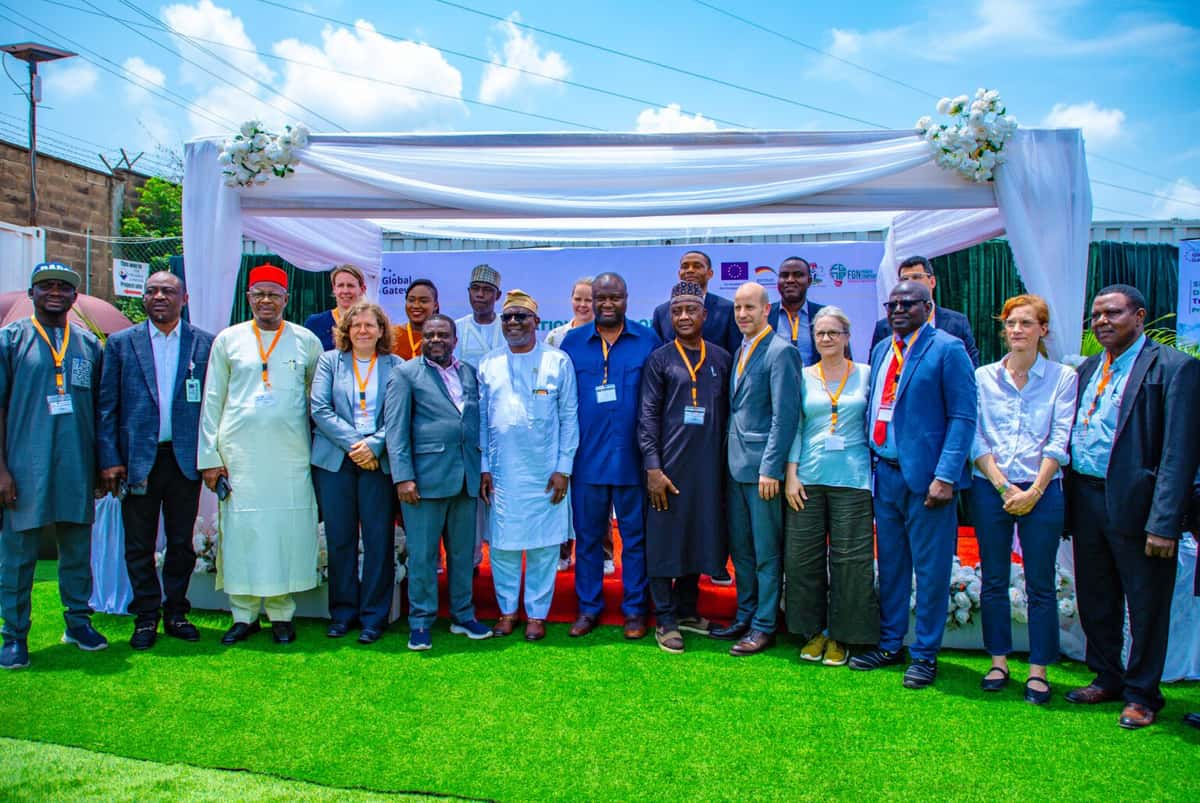
Training will take place in Abeokuta, Ogun State and Lagos State, and applications for the current intake close at 4:00 PM on Friday, September 18, 2026.
Apply for the free SEED Solar PV Installation Training
For young Nigerians, the bigger story is not simply that another free training programme has opened. It is why Siemens Energy, Germany, the European Union and the Nigerian government are putting resources into training people now.
GIZ says SEED plans to train approximately 6,000 energy professionals over five years across ten training sites in Nigeria, including young people and women. Its stated objective is to create skilled professionals capable of supporting on-grid and off-grid electricity systems as investment flows into the power sector. That timing is significant. Siemens is already deeply involved in Nigeria's Presidential Power Initiative (PPI). FGN Power Company says the programme is structured around phases targeting electricity capacity of 7GW, 11GW and ultimately 25GW.
As we previously discussed in Afritech Connect's analysis, Africa Needs Its Own Data Centres — But There Is One Major Problem: Power, building generation and transmission infrastructure is only part of solving Nigeria's electricity problem. Someone must design, install, operate, inspect and maintain those systems.
This is where young Nigerians should look beyond the idea that a solar career means climbing onto roofs and mounting panels. A growing renewable-energy industry needs Solar PV installers, electrical technicians, solar system designers, battery-storage technicians, mini-grid engineers, energy auditors, operations and maintenance technicians, project engineers, sales engineers, renewable-energy consultants, site supervisors and eventually specialists working with EV charging and battery infrastructure.
There is evidence these skills can translate into actual career progression. GIZ's 2026 NESP report highlights the experience of Gwanzuwang Jonah, who participated in Solar PV Installation and Mini Grid Design training. According to GIZ, the training helped him progress from an intern to Technical Assistant at Sosai Renewable Energy and later into a project-engineering role at Havenhill Synergy, working on the operation and maintenance of mini-grid and commercial solar systems.
Nigeria's renewable market is also moving beyond small rooftop systems. The Rural Electrification Agency's DARES programme is a $750 million initiative targeting more than 17.5 million Nigerians. Its goals include deploying 465MW of capacity, powering more than three million households and providing electricity to hundreds of thousands of businesses through distributed renewable-energy systems.
The REA says its earlier Nigeria Electrification Project has already deployed or installed about 94MW of PV capacity, provided new or improved electricity services to more than 1.1 million households and supported thousands of MSMEs.
Every additional solar home system, commercial installation, battery bank and mini-grid creates work beyond the original installation. Equipment needs inspection. Batteries eventually need replacement. Inverters fail. Panels need maintenance. Businesses need systems designed around their actual electricity consumption. Large installations require engineering, safety management and monitoring.
And renewable skills increasingly overlap with another emerging African industry: electric mobility. Afritech Connect recently reported how Kenyan startup ARC Ride raised $33.3 million to expand electric motorcycles and battery swapping across Africa. EVs, battery-swapping stations and charging infrastructure ultimately depend on electricity. As these industries expand into more African markets, people who understand electrical systems, batteries, power electronics and renewable generation could find themselves positioned across several industries rather than just solar.
There is also an entrepreneurship opportunity. A trained installer does not necessarily have to wait for Siemens, GIZ or another large company to offer employment. Households, shops, schools, estates and small businesses increasingly need people capable of evaluating electricity demand and recommending appropriately sized panels, batteries and inverters. Technical competence can become a service business involving installation, maintenance, troubleshooting, system upgrades and energy consulting.
The important distinction is competence. Poorly sized batteries, unsafe wiring and badly installed solar equipment can cost customers money and create safety risks. Recognised practical training gives young technicians another tool with which to demonstrate that they understand what they are installing rather than simply knowing how to connect components. This is why the SEED opportunity deserves attention from recent ND, HND and university graduates as well as people who developed their technical skills outside formal education. The current programme specifically welcomes practical/experience-based applicants and young professionals from relevant technical fields.
Nigeria's renewable-energy transition will require hardware, investment and government policy, but it will also require people who know how to build and maintain what is being financed. Siemens Energy and its partners are effectively investing in that human infrastructure now.
For a young Nigerian wondering which additional skill could remain useful as the economy changes, learning how electricity can be generated, stored and delivered from solar energy is increasingly more than a side skill. It could become a career, a business—or an entry point into one of Africa's next major industries.
Applications close: Friday, September 18, 2026 at 4:00 PM.
Training: Three weeks, onsite in Lagos or Abeokuta.
Cost: Training and certification are free. Meals are provided on training days; participants cover their own accommodation and transportation.
Apply for the Siemens Energy SEED Solar PV Installation Training

Author
Azeez LiadiAzeez is an AI Engineer, Data Scientist, founder, and Senior Tech Writer at Afritech Connect. A top 1% graduate of Lagos State University, he has worked with international startups and… Explore author & articles





