MTN FibreX vs Airtel 5G ODU: Which Home Internet Is Better in Nigeria?
MTN FibreX vs Airtel 5G ODU compared in Nigeria. We examine current prices, speeds, unlimited data, FUP, installation, power backup and which broadband option makes more sense.

If you're tired of constantly buying mobile data bundles for your home, two of the more interesting fixed-broadband options in Nigeria right now are MTN FibreX and Airtel's SmartConnect 5G Outdoor Unit (ODU).
On price alone, they look surprisingly similar. MTN charges ₦30,000 per month for 50Mbps FibreX, while Airtel's 50Mbps ODU plan costs ₦25,000.
At 100Mbps, both cost ₦45,000 per month. But after examining how the two services actually work, we don't think this comparison should be decided by ₦5,000 or an advertised Mbps number.
The bigger difference is the connection itself. MTN FibreX brings fibre directly to your property.
Airtel SmartConnect uses an outdoor antenna to connect your property to Airtel's mobile network.
That creates different advantages around consistency, installation, coverage, power outages and very heavy data consumption. And there's another distinction heavy users need to understand: MTN explicitly states that FibreX has no Fair Usage Policy. Airtel's ODU “unlimited” offering requires more careful attention to the FUP attached to the specific plan.
That difference alone could change which service makes sense for your home.
MTN FibreX vs Airtel 5G ODU
Feature | MTN FibreX | Airtel SmartConnect 5G ODU |
|---|---|---|
Connection | Fibre-to-the-home | 5G/4G fixed wireless |
Entry monthly price | ₦30,000 | ₦25,000 |
Entry speed | 50Mbps | Up to 50Mbps |
100Mbps price | ₦45,000 | ₦45,000 |
Maximum advertised tier | 1Gbps | 100Mbps on current Nigerian ODU plans |
Data | Unlimited | Unlimited plans, but check applicable FUP |
MTN FibreX FUP | None | — |
Installation | Free | Promotional/free installation under current offer |
Equipment | Free-to-use router | SmartConnect ODU package |
Backup power included | No dedicated backup | About 5–6 hours under current SmartConnect offer |
Availability | FibreX-covered addresses | Depends on Airtel network/ODU serviceability |
Best suited to | Heavy households, remote work, gaming, businesses | Homes without fibre, smaller households, value-focused users |
The table makes the trade-off much clearer. If you're downloading hundreds of gigabytes or terabytes every month, we'd look closely at FibreX. If your biggest problem is simply that fibre hasn't reached your street, Airtel becomes much more interesting.
MTN FibreX Price in Nigeria
MTN's current FibreX plans are straightforward:
FibreX plan | Speed | Monthly price |
|---|---|---|
Basic | 50Mbps | ₦30,000 |
Standard | 100Mbps | ₦45,000 |
Advanced | 200Mbps | ₦70,000 |
Premium | 300Mbps | ₦100,000 |
Prestige | 1Gbps | ₦200,000 |
All five have a 30-day validity. More importantly, These plans are unlimited data plans with no Fair Usage Policy but you could occasionally experience slowdown internet speed towards the end of your subscription as it happened to us.
MTN's FibreX FAQ explicitly states that customers can use as much data as needed without usage restrictions and that the unlimited FibreX plans aren't throttled during peak hours.
That's an important clarification. We previously noticed occasional speed reductions during our own use of FibreX, particularly after periods of heavy usage. Based on MTN's current published terms, however, we would not describe that as confirmed FUP throttling.
MTN says there isn't one. Any slowdown could instead come from congestion, Wi-Fi conditions, technical issues or another network factor unless MTN identifies the cause.
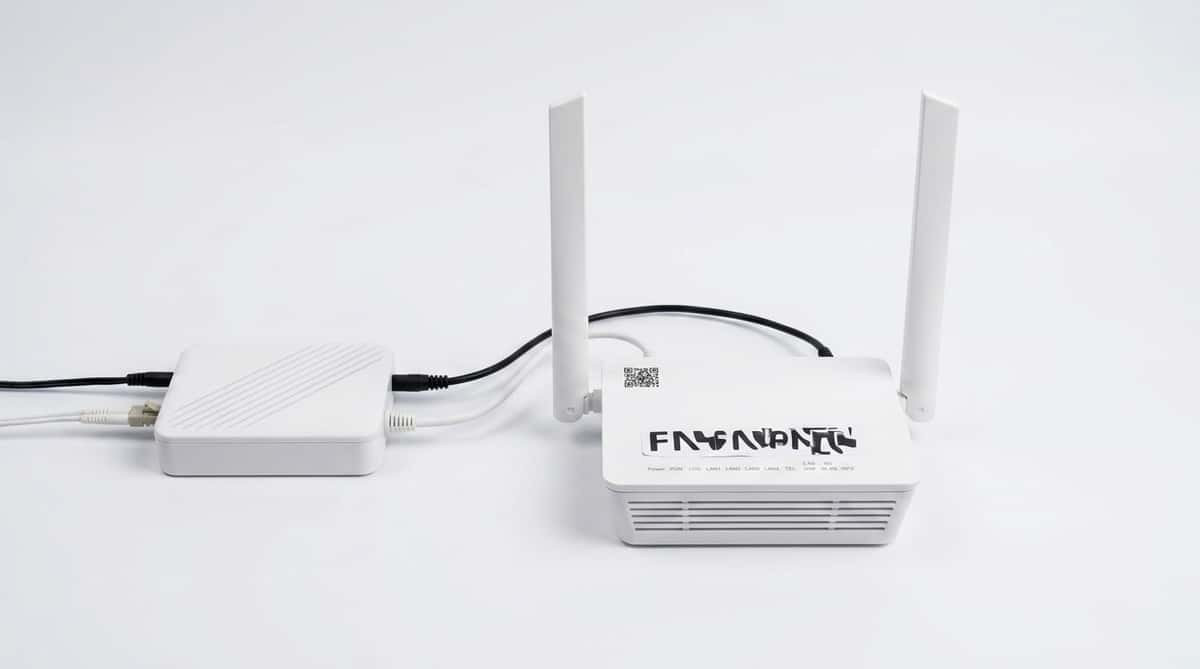
What We Found Using MTN FibreX
We've actually used FibreX, so there are parts of this comparison where we can go beyond the specification sheet. On the ₦30,000 50Mbps plan, our connection generally operates around the advertised speed. We've seen results above 50Mbps. We've also seen results below it. That's normal enough that we wouldn't tell readers to expect a permanently fixed 50.00Mbps every second of the month.
The more significant issue we've experienced is occasional downtime. In our use, we've had periods where the connection disappeared for roughly 30 minutes to an hour before returning. They haven't been constant, and service has generally been restored relatively quickly. On some occasions MTN has subsequently sent communication acknowledging the interruption. So we wouldn't describe FibreX as literally never going down.
Our experience is closer to:
Fast and generally stable, with occasional service interruptions
That's a much more useful expectation for someone considering the service.
Airtel 5G ODU Price
Airtel takes a simpler approach. Current approved SmartConnect ODU plans include:
50Mbps: ₦25,000 / 30 days
100Mbps: ₦45,000 / 30 days
The NCC's approved Airtel bundle schedule also lists longer subscriptions:
50Mbps: ₦67,500 / 90 days
100Mbps: ₦121,500 / 90 days
and:
50Mbps: ₦125,000 / 180 days
100Mbps: ₦225,000 / 180 days
Those longer plans improve the effective monthly price.
For example: ₦67,500 divided across three months works out to ₦22,500 per month for the 50Mbps tier.
₦121,500 across three months works out to ₦40,500 per month for 100Mbps.
That's worth considering if you've already tested Airtel at your property and know the service performs well there. We wouldn't prepay six months before confirming performance first.
Is Airtel ODU Really Unlimited?
This deserves more attention than it normally receives. Airtel markets SmartConnect around unlimited broadband, and the NCC's approved bundle schedule lists the 50Mbps and 100Mbps ODU packages as unlimited.
But we'd distinguish between:
unlimited data volume
and
unlimited full-speed data with no FUP whatsoever.
They're not necessarily the same thing.
Current Airtel material for its unlimited fixed-wireless plans documents Fair Usage Policy thresholds on certain SmartConnect configurations and explains that speed can be reduced after the relevant usage allowance has been reached. Airtel also makes clear that advertised maximum speed isn't guaranteed because network conditions and connected users affect performance.
This is where MTN FibreX currently has the cleaner proposition.
MTN explicitly states:
no FUP
and
no usage-based speed throttling on FibreX.
For a normal household, the distinction may never become noticeable.
For someone downloading huge games, backing up terabytes to the cloud, moving large video projects or running a data-heavy business from home, we'd investigate Airtel's current FUP terms before subscribing.
The Biggest Difference Isn't Speed — It's Fibre vs Wireless
Suppose both companies sell you a 50Mbps plan. They're still fundamentally different internet connections. With FibreX, a physical fibre connection reaches your property.
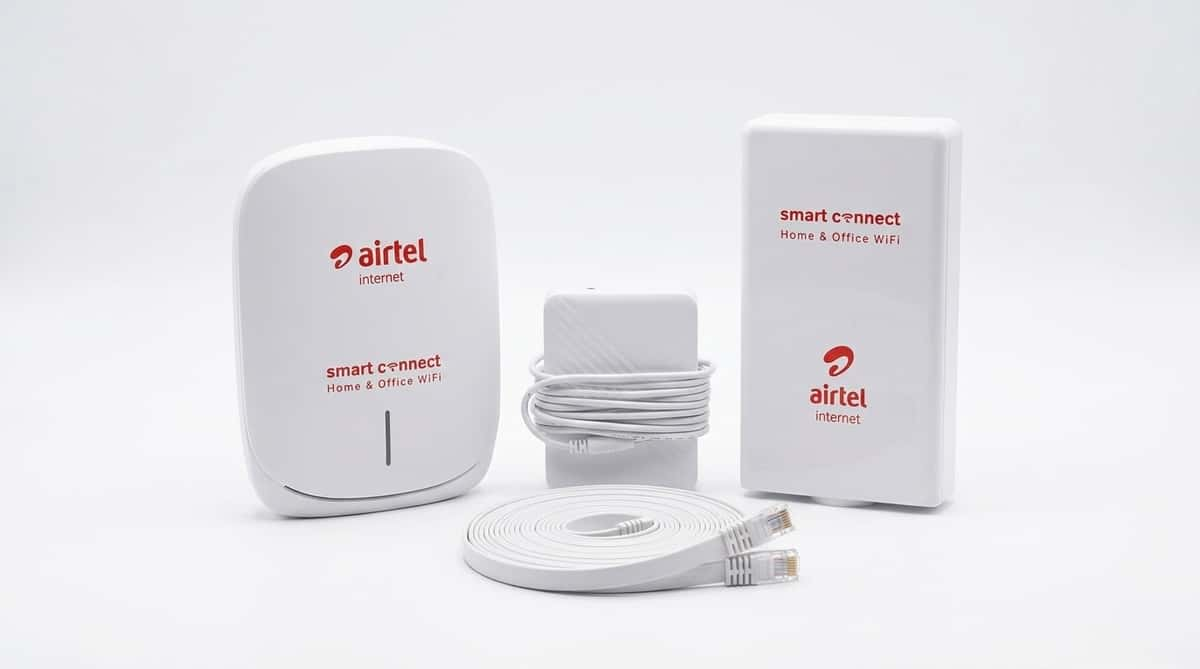
With SmartConnect, an outdoor unit communicates wirelessly with Airtel's network.
The outdoor design is clever. Mounting the receiving hardware outside can give the system a cleaner radio path than putting an ordinary 5G router inside your house behind concrete walls, windows and other obstructions.
Airtel's SmartConnect ODU also supports fallback to 4G LTE where appropriate and can connect multiple devices through the indoor network. Launch information describes support for as many as 64 connected devices.
But wireless is still wireless.
Its performance can depend on: signal quality, distance from network infrastructure, congestion, weather/environmental conditions, network load and how Airtel has provisioned capacity in your area.
That's why we'd never choose between these services purely by looking at “100Mbps” on the website.
50Mbps Fibre Isn't Necessarily the Same Experience as 50Mbps 5G
This is one of the practical lessons we'd want readers to take from the comparison.
Two internet connections can both show:
50Mbps download
On a speed test and still feel different. Download speed is only one measurement.
You also have: latency, jitter, packet loss, upload performance and consistency.
For Netflix, the difference may not matter much. For competitive gaming, remote desktop access, cloud applications or an important video meeting, unstable latency can become more noticeable than raw download speed.
We therefore wouldn't say fibre is automatically faster simply because it's fibre.
We'd say fibre generally gives us fewer radio-network variables to worry about.
That's why, if both services perform well at an address and cost almost the same amount, we'd usually investigate FibreX first for latency-sensitive workloads.
Airtel Has One Very Advantage: Backup Power
This is a feature we'd give much more weight than we did originally. The SmartConnect package has been offered with backup power capable of keeping the system running for approximately five to six hours during an outage.
That's genuinely useful. A fibre connection doesn't magically keep your Wi-Fi alive when NEPA takes the light. The network outside your house may still be operational, but your FibreX ONT/router needs electricity.
So with FibreX, anyone who wants internet through an outage needs to think about: a UPS, inverter, power bank or another backup-power solution.
Airtel integrating backup power into the SmartConnect proposition removes part of that problem.
For remote workers, this isn't a minor convenience. Imagine being halfway through a Teams meeting when electricity disappears.
Having the internet hardware stay online automatically can matter more in that moment than whether your plan can theoretically reach 200Mbps.
Entry-Level Price: Airtel Saves ₦5,000 Per Month
At 50Mbps:
MTN FibreX: ₦30,000
Airtel ODU: ₦25,000
So Airtel saves: ₦5,000 per month.
If those prices remained unchanged for 12 months: ₦5,000 × 12 = ₦60,000.
That's not insignificant. And Airtel's longer subscriptions can lower the effective monthly cost further. But we wouldn't automatically call Airtel the better-value connection based on that ₦5,000.
The correct question is:
What are you getting for the ₦5,000 difference at your particular address?
If FibreX is dramatically more stable and you're online eight hours every working day, ₦5,000 may be money well spent.
If Airtel gives you a stable 50Mbps connection and FibreX offers no noticeable practical advantage for your household, keeping the ₦5,000 makes more sense.
Which Is Better for Gaming?
If both were available at our address and gaming mattered heavily, we'd start by testing FibreX.
Not because a fibre connection automatically guarantees perfect gaming. It doesn't.
But online gaming depends heavily on: latency, jitter, packet loss, routing and connection stability.
A wireless connection introduces signal and radio-network conditions into that equation. For casual gaming, a well-performing Airtel ODU could be completely adequate.
For competitive gaming, we'd want actual ping measurements from the property before choosing either provider.
We'd test at: morning, afternoon, and particularly evening peak hours.
A speed test at 10am doesn't tell you what the network will feel like at 8pm. But we have both tested both with online playstation console game and they both considerably performed fast with stable connection and speed.
Which Is Better for Remote Work?
This one is more nuanced than simply saying FibreX. For someone who spends the entire workday on: Zoom, Google Meet, Teams, Slack, cloud applications, VPN, remote desktop, GitHub, large uploads or shared company drives; we'd value stability more than headline download speed.
That pushes us toward FibreX when it's available and performs well. But Airtel has that backup-power advantage.
If your electricity frequently disappears and you don't have an inverter or UPS, an extremely stable fibre connection that switches off with your router isn't much help during an important meeting.
So our remote-work decision would look like this:
Stable electricity/backup power + FibreX coverage → FibreX becomes very attractive.
Frequent outages + no existing backup + strong Airtel service → SmartConnect becomes much more interesting.
That's a more realistic Nigerian comparison.
Which Is Better for Heavy Downloaders?
This is where we'd be most comfortable with FibreX.
MTN currently makes an unusually clear promise for FibreX:
Unlimited data with no Fair Usage Policy.
For someone downloading: large Steam games, console updates, 4K video, cloud backups, datasets, software repositories or hundreds of gigabytes every month. That matters. We'd want Airtel to confirm the FUP attached to the exact SmartConnect plan before treating its unlimited service as equivalent for extremely heavy consumption.
For an ordinary household that never approaches such thresholds, this distinction may have little practical effect.
Installation: Both Remove Much of the Upfront Pain
MTN: free installation and a free-to-use router with FibreX.
Airtel's SmartConnect launch offer has included the ODU, SIM, installation and an introductory unlimited bundle, although the exact acquisition promotion should be confirmed when ordering because hardware offers can change.
The important difference is installation complexity. FibreX requires fibre infrastructure to be available close enough to serve the property.
Airtel requires adequate wireless serviceability for the outdoor unit.
Neither company's coverage map should be treated as the final word.
The real question is:
Can the provider successfully install and deliver the service at this exact building?
Coverage Is the First Test, Not the Last Section
We'd actually check coverage before comparing anything else. There's little value spending an hour deciding between the ₦25,000 and ₦30,000 plans if only one provider can serve your house.
MTN provides a FibreX coverage checker covering available FibreX locations by state.
Airtel's ODU has the advantage of not requiring fibre to be physically extended into the property, but wireless serviceability still matters.
We'd therefore do this before paying: Ask MTN to confirm FibreX availability at the exact address.
Then: Ask Airtel to confirm SmartConnect serviceability at the same property.
If both say yes, the real comparison begins.
MTN FibreX Makes More Sense If...
We'd put FibreX first when:
Fibre is already available at the property.
You move very large amounts of data.
You don't want an FUP.
Stable latency matters.
You game online frequently.
Several people work from home.
You upload large files.
You want 200Mbps or faster.
You're running a small office or data-heavy business.
You already have reliable backup power.
The ability to scale all the way to 1Gbps gives FibreX much more room for genuinely heavy users.
Airtel SmartConnect Makes More Sense If...
We'd look closely at Airtel when:
Fibre hasn't reached the property.
Airtel's network is strong around the building.
50Mbps is enough.
Saving ₦5,000 per month matters.
You want the ODU's outdoor reception advantage.
Built-in/packaged backup power is useful.
You're replacing a phone hotspot or MiFi.
You don't need anything above 100Mbps.
Your monthly consumption won't make the applicable FUP a concern.
For many households, those are completely reasonable requirements.
Final Verdict
After researching the two services more closely, we wouldn't reduce this comparison to:
Fibre is better than 5G
That's too simplistic. The more useful conclusion is that these products solve slightly different Nigerian internet problems.
MTN FibreX solves the heavy-home-internet problem. You get a physical fibre connection, plans from 50Mbps to 1Gbps and, crucially, MTN currently states that its unlimited FibreX packages have no FUP and no usage-based throttling.
For a family moving hundreds of gigabytes every month, a remote worker transferring large files, a serious gamer or a small business, those characteristics matter.
Airtel SmartConnect solves the “good broadband without waiting for fibre” problem. Its 50Mbps plan costs ₦25,000 rather than ₦30,000, the outdoor unit is designed to improve reception, and the current hardware proposition includes several hours of backup power—something we'd consider genuinely useful in Nigeria.
So our decision would start with three questions:
Is FibreX physically available at the property?
How strong is Airtel's service at that exact property?
How much data will the household actually consume?
If both services were available at our home, we moved huge amounts of data and already had backup electricity, we'd favour FibreX because the no-FUP policy and higher speed ceiling are difficult to ignore.
If FibreX wasn't available or 50Mbps was enough and Airtel performed strongly at the property—the ₦25,000 SmartConnect package becomes a very credible alternative.
And if electricity reliability is a major problem, Airtel's included backup-power solution deserves much more weight than a normal specifications comparison would give it. The biggest mistake would be choosing either provider solely because one advertises a bigger Mbps number.
For home internet in Nigeria, your address is part of the specification.

Author
Dolapo AnifowosheTech enthusiast and technical data scientist who loves to play with numbers. Explore author & articles