Nigerian Company Pilots Bike-Mounted Fuel Delivery System for On-Demand Delivery
Nigerian company Cone Oil and Chemicals is piloting a patented bike-mounted fuel storage and delivery system designed for faster on-demand fuel delivery.

A Different Approach to Getting Fuel Delivered in Nigeria
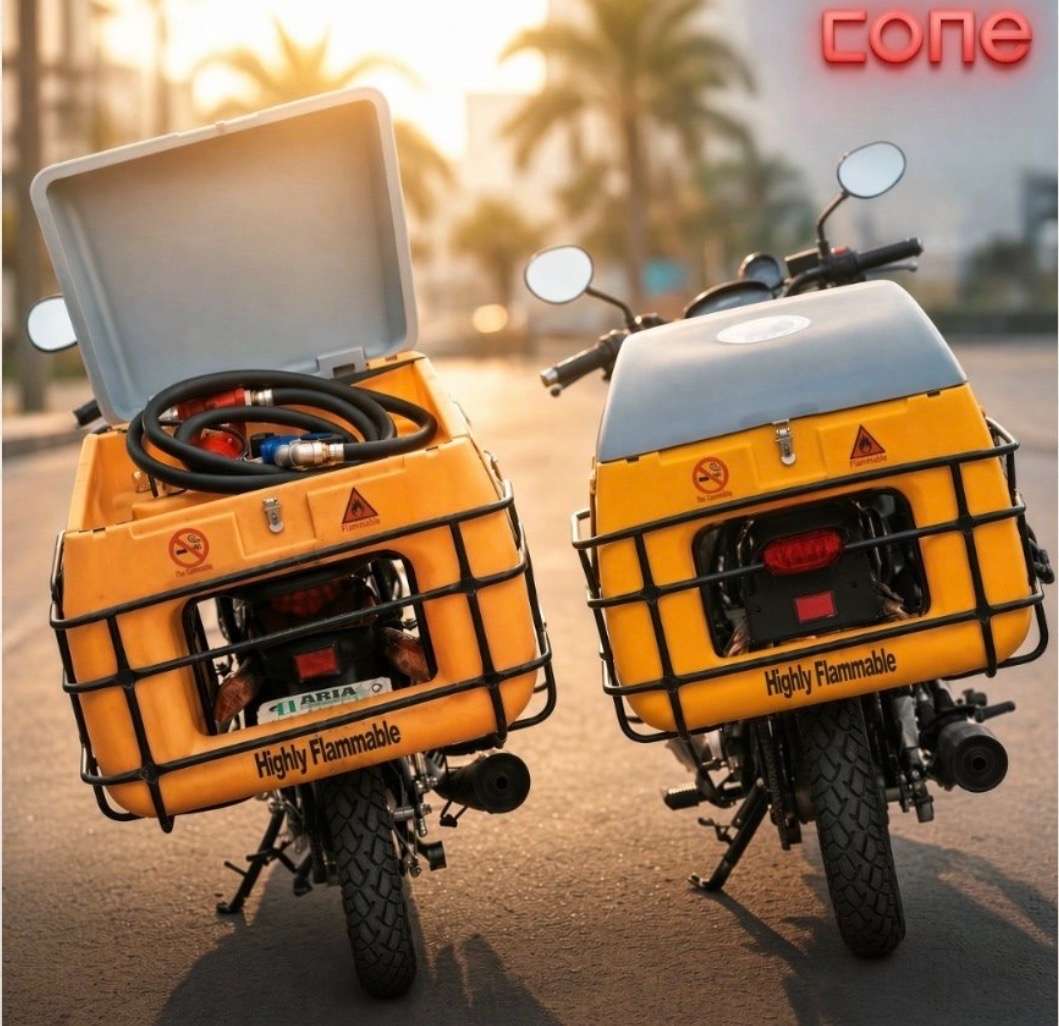
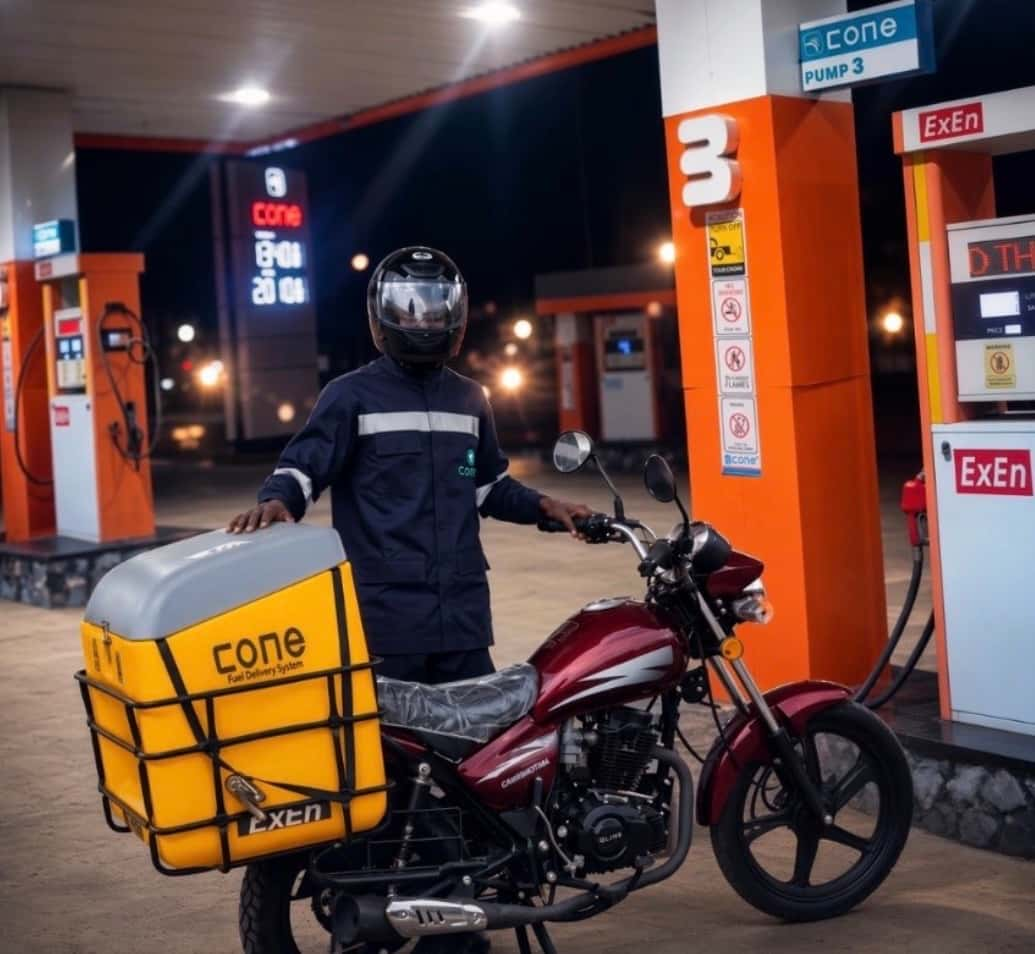
A Nigerian company is testing a new approach to fuel delivery that could make it easier for customers to receive petrol directly at their location. Cone Oil and Chemicals Ltd has begun pilot operations for what the company describes as a patented bike-mounted fuel storage and delivery system, designed to navigate dense urban traffic and deliver fuel to customers at their point of need.
The company says the system is being developed around an app-based delivery model, allowing customers to request fuel without having to travel to a filling station.
How the Fuel Delivery System Works
The concept is relatively straightforward: instead of customers travelling to a petrol station, a delivery motorcycle carries the fuel and travels directly to the customer. Cone Oil says the system is designed to take advantage of motorcycles' ability to move through congested urban roads. That could be particularly useful in cities such as Lagos, where traffic congestion can make even short journeys surprisingly time-consuming.
The company says customers would be able to request fuel through an application and have it delivered to their location. According to Cone Oil, the central objective is to reduce the cost and difficulty associated with getting fuel delivered to customers "anywhere, under any conditions."
The Technology Has Been Under Development for Years
Cone Oil says the technology was patented in 2022 and has subsequently undergone repeated testing involving areas such as safety, fuel metering and stability. The company is now moving from development toward pilot operations.
However, this does not mean the system is already cleared for unrestricted commercial deployment. Cone Oil says the technology is currently undergoing regulatory review and approval before wider deployment. That distinction is important because transporting and dispensing petrol involves significant safety and regulatory requirements.
Nigeria's patent system provides protection for qualifying inventions while the country's Patents and Designs Registry oversees the registration and protection of inventions.
Why Motorcycle Fuel Delivery Could Matter in Nigeria
Fuel delivery is not a completely new concept, but the use of a motorcycle-based system specifically designed for urban environments could address a major logistical problem. Nigeria's large cities frequently experience heavy traffic, while fuel stations can become crowded during periods of supply disruption or increased demand. A motorcycle can generally move through urban traffic more easily than a conventional fuel delivery vehicle.
For businesses, generators, motorists and households that need fuel urgently, an on-demand delivery model could therefore provide another option. The potential value is especially significant for Lagos and other densely populated African cities, where traffic and distance can make conventional delivery expensive.
Safety Will Be One of the Biggest Questions
The most important issue for the technology will not simply be whether it can transport fuel. It will be whether it can do so safely, reliably and within Nigeria's regulatory requirements. Cone Oil says it has conducted safety, metering and stability tests since the technology was patented. The ongoing regulatory approval process will ultimately be important in determining how and where the system can be deployed.
For customers, some of the questions will include how the fuel is stored, how much a motorcycle can safely carry, how dispensing is controlled and what safety measures are used in the event of an accident. These details will become increasingly important if the company moves beyond the pilot stage.
An App Could Make Fuel Delivery More Convenient
The proposed model also brings fuel delivery closer to the on-demand services Nigerians already use for food, groceries and transportation. Instead of calling a station or searching for a nearby filling station, customers could potentially open an application, request a specific quantity of fuel and provide their location.
The motorcycle would then travel to the customer. For businesses operating generators or vehicles, this could potentially reduce the time employees spend travelling to purchase fuel.
What Happens Next?
The immediate focus appears to be on pilot operations and regulatory approval. That means it is too early to say whether the system will become widely available across Nigeria or how much customers will eventually pay for the service.
The success of the pilot will likely depend on several factors, including safety, operating costs, regulatory approval, fuel pricing, delivery fees and whether customers are willing to pay for the convenience. If those challenges can be addressed, the model could provide an interesting alternative for last-mile fuel delivery.
Could This Change Fuel Delivery in Africa?
The idea has potential beyond Nigeria. Many African cities face similar problems: congested roads, long distances between customers and fuel stations, and increasing demand for convenient on-demand services.
A delivery model designed specifically for dense urban environments could therefore have applications in other African markets if it proves commercially and regulatorily viable. For now, however, the technology remains in the pilot and regulatory stage.
Final Thoughts
Cone Oil's bike-mounted fuel delivery system represents an interesting attempt by a Nigerian company to rethink how petrol can reach customers. Rather than requiring people to travel to filling stations, the company is exploring a model where the fuel comes to the customer.
The concept is particularly relevant to Nigeria's crowded cities, but its future will depend heavily on regulatory approval, safety performance and whether the economics work for both the company and consumers. For now, Cone Oil's pilot is worth watching as an example of how Nigerian startups are experimenting with technology to solve everyday infrastructure and mobility problems.

Author
Kwame MensahTech journalist covering AI, software, and emerging technologies impacting Africa's digital landscape and beyond.. Explore author & articles