Ray-Ban Meta Gen 1 Smart Glasses Buying Guide: Price, Specs and Features
Ray-Ban Meta Gen 1 smart glasses buying guide covering Nigeria price, 12MP camera, Meta AI, battery life, speakers, video recording, features and use cases.

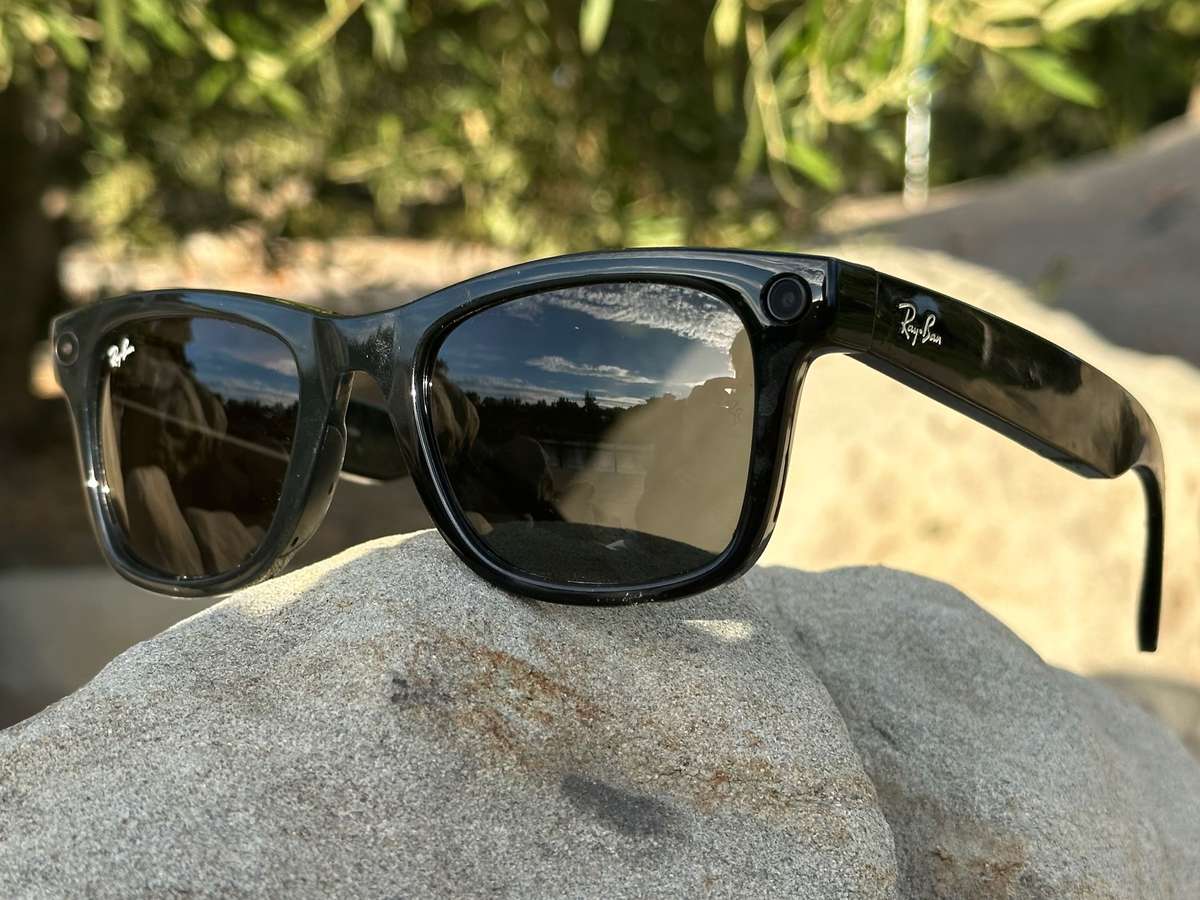
The Ray-Ban Meta Gen 1 smart glasses are now an interesting alternative for buyers who want Meta's wearable AI experience but don't necessarily need the improved battery and 3K video recording offered by Gen 2. Despite being the older generation, Gen 1 still packs a 12MP ultra-wide camera, Meta AI, open-ear speakers, five microphones, 32GB storage and hands-free photo and video recording into a frame that looks remarkably similar to conventional Ray-Ban eyewear. And because Gen 2 is now available, finding Gen 1 at a discounted price could make it the better-value option for some buyers.
Ray-Ban Meta Gen 1 Price and Specifications
Specification | Ray-Ban Meta Gen 1 |
|---|---|
Nigeria Price | Around ₦578,000–₦635,000 |
Camera | 12MP ultra-wide |
Photo Resolution | 3024 × 4032 |
Video | 1080p+ |
Video Frame Rate | Up to 60fps at 1080p |
Storage | 32GB |
Photo Storage | 500+ photos |
Video Storage | 100+ 30-second videos |
Audio | 2 open-ear speakers |
Microphones | 5-microphone array |
AI Assistant | Meta AI |
Bluetooth | Bluetooth 5.3 |
Wi-Fi | Wi-Fi 6 |
Battery | Up to 4 hours |
Charging Case | Up to 32 additional hours |
Continuous Audio | Around 3.5 hours |
Continuous Calls | Around 4 hours |
Water Resistance | IPX4 |
Controls | Voice, touchpad, capture button |
Prescription Lenses | Supported |
12MP Camera for Hands-Free Photos and Video
The camera is probably the biggest reason to buy Ray-Ban Meta glasses. Gen 1 has a 12MP ultra-wide camera capable of taking 3024 × 4032 portrait-oriented photos and recording 1080p video. Ray-Ban currently lists adjustable stabilization for 1080p+ 30fps footage and up to 60fps at 1080p.
Instead of taking out your smartphone, you can press the physical capture button or use a voice command:
Hey Meta, take a photo.
That makes the glasses particularly useful when travelling, walking, cooking, attending events or capturing first-person footage where holding a phone would get in the way. A visible LED activates when the camera is recording, so the glasses aren't intended as a hidden surveillance camera.
Meta AI Is More Useful Than You Might Expect
The hardware may be Gen 1, but the AI experience isn't necessarily frozen in 2023. Meta has continued bringing software capabilities to its glasses. You can activate Meta AI by saying “Hey Meta” and ask questions, capture photos and videos, control media, make calls and send supported messages. The camera also gives AI an interesting advantage: it can provide assistance based on things you're looking at when supported features are available.
For example, you could look at something unfamiliar and ask Meta AI about it, or use supported translation capabilities when encountering another language. Feature availability can depend on your country, language, account and software version, so don't assume every advertised Meta AI function will work everywhere.
Open-Ear Speakers Instead of Earbuds
There are two speakers built directly into the glasses. They're open-ear speakers, meaning you can hear music, podcasts, phone calls and AI responses without putting earbuds into your ears. This is useful while walking because you can continue hearing your surroundings. The disadvantage is isolation. If you're on a noisy flight or bus, proper noise-cancelling earbuds will provide a much better listening experience. The Ray-Ban Meta speakers are better viewed as convenient everyday audio than a replacement for premium headphones.
Ray-Ban rates Gen 1 for approximately 3.5 hours of continuous audio playback.
Five Microphones for Calls and Recording
The glasses contain a custom five-microphone array. Besides capturing your voice for Meta AI commands, those microphones allow you to make calls and record immersive audio alongside video. This creates an interesting hands-free communication setup: your ears remain uncovered while the glasses handle both the microphone and speakers.
Meta also supports functions such as calls and messaging through compatible services, allowing you to perform common communication tasks without constantly holding your phone.
Recording Travel, Events and Unexpected Incidents
Another practical advantage of a wearable camera is being able to quickly document something happening around you. That could include a beautiful view while travelling, a memorable family moment, an accident you witness or an unexpected confrontation where having a first-person record may be useful. Because the camera is already on your face, you don't necessarily have to hold a smartphone throughout the recording.
However, recording laws and privacy expectations vary between countries and locations. The capture LED also indicates when recording is active. Use the feature responsibly and don't assume wearing smart glasses gives you permission to record everywhere.
32GB Storage
The Gen 1 includes 32GB of internal storage. Ray-Ban says this is enough for more than 500 photos using three-frame bursts or over 100 30-second videos before transferring content. Photos and videos can then be transferred to your smartphone through the Meta AI app. For normal daily use, 32GB should be sufficient because these glasses aren't really intended to replace a phone or dedicated action camera for hours of continuous recording.
Battery Life Is Gen 1's Biggest Weakness
Battery life is where the age of Gen 1 becomes obvious. Ray-Ban rates it for up to four hours of use on a single charge, compared with up to eight hours for Gen 2. The charging case helps considerably, providing around 32 additional hours before the case itself needs charging. Still, if you frequently use the camera, AI and audio throughout the day, expect to return the glasses to their case regularly.
This is one of the strongest reasons to consider Gen 2 instead.
Water Resistance
Ray-Ban Meta Gen 1 carries an IPX4 water-resistance rating. That means it can handle normal splashes and some exposure to rain, but these aren't swimming glasses. Avoid submerging them or treating them like a waterproof action camera.
Who Should Buy Ray-Ban Meta Gen 1?
The Gen 1 makes the most sense for content creators and travellers who want first-person photos and short videos without constantly holding their phone. They're also useful for music and podcasts, particularly when you want to remain aware of your surroundings. For calls and everyday communication, the integrated speakers and microphones provide an unusually convenient hands-free setup.
And for people curious about wearable AI, Gen 1 provides access to many of the fundamental Meta AI features without necessarily paying for the latest hardware.
Pros
12MP ultra-wide camera
Hands-free photos and videos
Meta AI integration
Open-ear speakers
Five-microphone array
32GB storage
Bluetooth and Wi-Fi connectivity
Prescription-lens compatible
IPX4 water resistance
Looks much like conventional Ray-Ban eyewear
Cons
Only up to four hours of typical battery life
Gen 2 records higher-resolution 3K video
Expensive compared with normal glasses
AI features vary by region
Privacy considerations when recording
No display inside the lenses
Gen 2 may offer better long-term value if the price difference is small
Should You Buy Ray-Ban Meta Gen 1 in 2026?
Yes — but only at the right price. The Ray-Ban Meta Gen 1 remains surprisingly capable. You still get the 12MP camera, Meta AI, open-ear audio, five microphones, hands-free recording and 32GB storage. Current Nigerian pricing is roughly ₦578,000 to ₦635,000 based on listings I found. One Nigerian retailer lists the Wayfarer at ₦578,000, although it was out of stock when checked, while Ubuy Nigeria lists an imported Gen 1 Wayfarer at ₦634,839 before shipping and customs.
Final Verdict
The Ray-Ban Meta Gen 1 is still worth considering in 2026 if you find it significantly cheaper than Gen 2. Its biggest compromises are the four-hour battery life and lower video resolution. Gen 2 doubles the rated battery life to eight hours and upgrades recording to as high as 3K, making it the better product overall. But if your priority is simply getting Ray-Ban's smart-glasses experience — hands-free photos, video, music, calls and Meta AI , Gen 1 still provides most of what makes these glasses interesting.
The key is price. If Gen 1 is substantially discounted, buy it. If it costs almost as much as Gen 2, spend the extra money on the newer model.

Author
Adebayo JohnsonSenior tech editor with over 4 years of experience covering mobile and gadget technology. Explore author & articles