

Redmi Note 14 Review: Where It Still Holds Up Against the Note 15
Redmi Note 14 review covering its 108MP camera, AMOLED display, battery, Helio G99-Ultra performance, price and whether it is still worth buying.

The Redmi Note 14 remains an interesting affordable Android phone even after the arrival of the Redmi Note 15. Its combination of a 120Hz AMOLED screen, 108MP main camera, 5,500mAh battery and expandable storage still covers most of what everyday buyers actually need.
However, there's an important distinction before buying: the Redmi Note 14 sold by Xiaomi Nigeria is the 4G model. Don't confuse it with the Redmi Note 14 5G, which uses different hardware.
With the newer Redmi Note 15 now available, price is also more important than ever.
Redmi Note 14 Specs and Price
Specification | Redmi Note 14 |
|---|---|
International Launch Price | £179 / $240 (6GB/128GB) |
Nigeria Price | ₦348,000–₦370,000 (8GB/128GB) |
Display | 6.67-inch AMOLED, 2400 × 1080 |
Refresh Rate | 120Hz |
Peak Brightness | 1,800 nits |
Processor | MediaTek Helio G99-Ultra |
RAM | 6GB / 8GB |
Storage | 128GB / 256GB |
Expandable Storage | Up to 1TB |
Main Camera | 108MP, f/1.7 |
Secondary Cameras | 2MP depth + 2MP macro |
Front Camera | 20MP |
Battery | 5,500mAh |
Charging | 33W |
Network | 4G LTE |
Protection | IP54 |
Fingerprint | In-display |
OS | Xiaomi HyperOS |
120Hz AMOLED Is Still Excellent for the Price
The display is one reason the Redmi Note 14 hasn't aged badly. You get a 6.67-inch AMOLED panel with 2400 × 1080 resolution and up to 120Hz refresh rate. Xiaomi rates peak brightness at 1,800 nits and specifies 100% DCI-P3 colour coverage.
Gorilla Glass 5 protects the front. For YouTube, Netflix, TikTok, web browsing and casual gaming, this remains a very good display for an affordable phone. The 120Hz refresh rate also makes scrolling and animations noticeably smoother than conventional 60Hz budget devices.
Xiaomi includes dual speakers with Dolby Atmos, making the phone particularly attractive for buyers who consume lots of video.
Helio G99-Ultra Is Capable, But There's No 5G
The MediaTek Helio G99-Ultra is manufactured using a 6nm process and reaches up to 2.2GHz. Combined with LPDDR4X RAM and UFS 2.2 storage, it provides sufficient performance for WhatsApp, social media, banking, Google Maps, streaming and everyday multitasking.
Casual gaming is also perfectly realistic. However, buyers shouldn't mistake this for a high-performance gaming phone. More demanding games will require reduced graphics settings if smooth frame rates are the priority.
The bigger limitation in 2026 is connectivity: this is a 4G-only smartphone. That's fine for users satisfied with current Nigerian 4G networks, but anyone planning to keep the phone for another four or five years should consider whether paying extra for 5G is worthwhile.
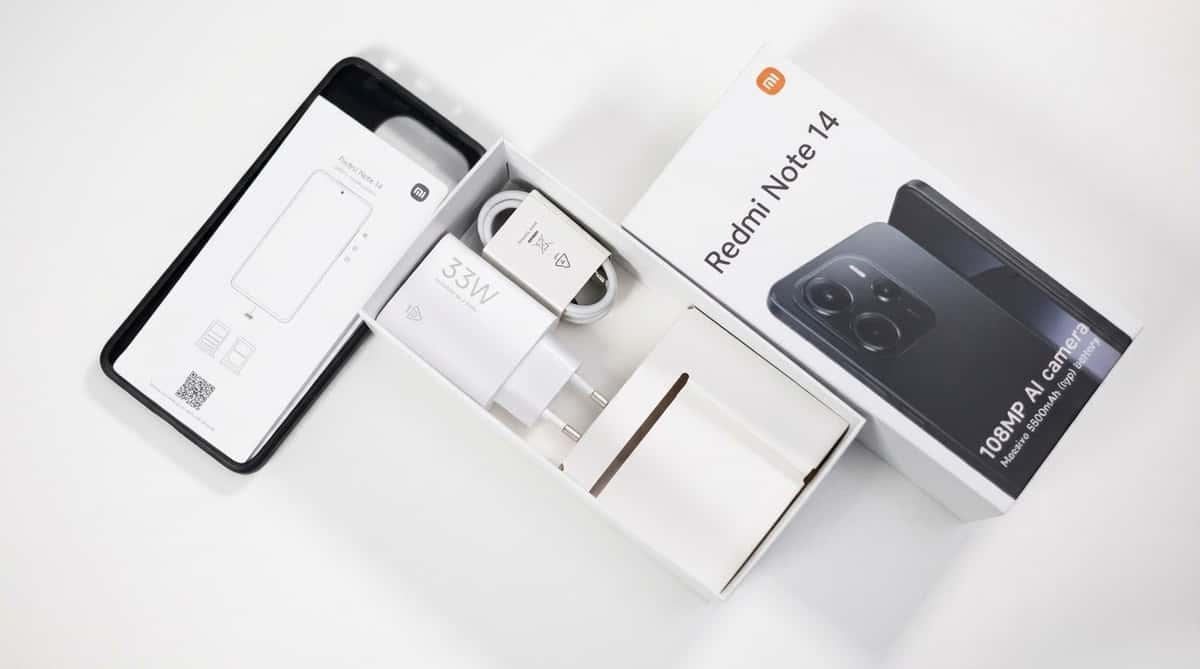
108MP Camera: Good Main Sensor, Weak Supporting Cameras
The Redmi Note 14 has a 108MP f/1.7 main camera using a 1/1.67-inch sensor.
Xiaomi uses 9-in-1 pixel binning and offers what it calls 3x optical-grade zoom, achieved using in-sensor cropping and computational processing rather than a dedicated optical telephoto lens.
For daylight photos, portraits, food and social-media photos, the main camera is the one you'll want to use.
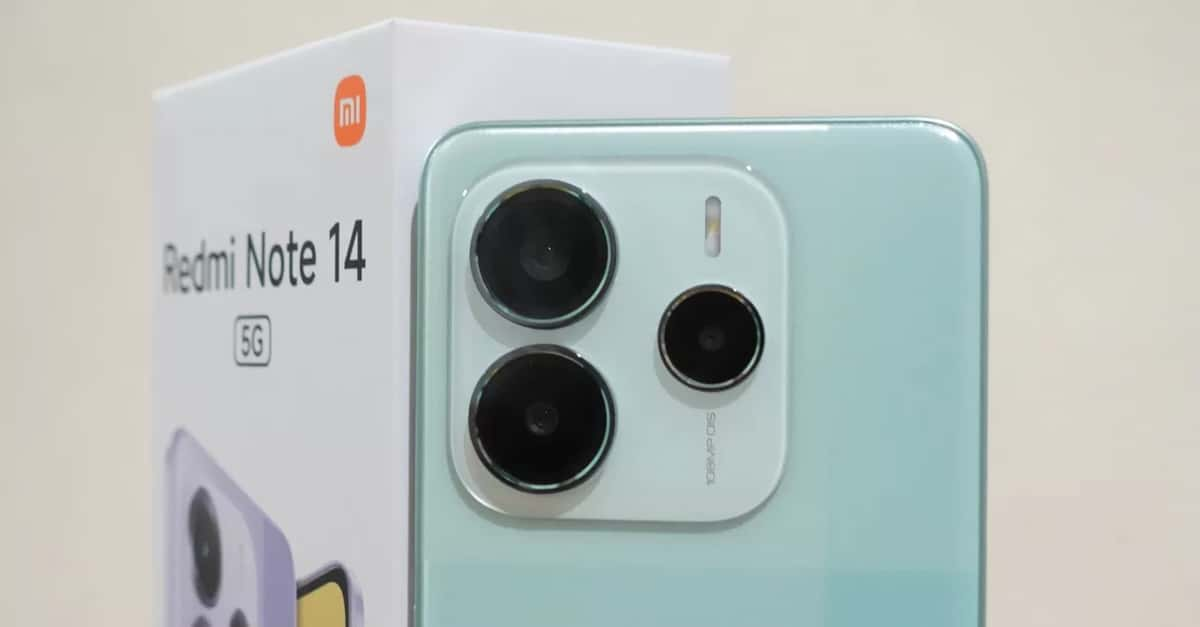
The remaining cameras are much less impressive. There's a 2MP depth sensor and 2MP macro camera, but no ultra-wide lens. Video is also limited to 1080p at up to 60fps, so there's no 4K recording.
The front camera is a more useful 20MP unit capable of 1080p video. Buy the Redmi Note 14 for its main camera—not because it technically has a “triple-camera system.”
5,500mAh Battery Is Still a Strength
Battery capacity is 5,500mAh, paired with 33W charging. Xiaomi claims around 1.48 days of typical battery life under its internal testing and says the battery can retain more than 80% capacity after 1,600 charging cycles under its test conditions.
The company quotes approximately 55% charge in 40 minutes and 100% in 77 minutes. Those numbers will vary with temperature, charger, usage and battery condition, but the overall package should comfortably handle a normal day for most users.
The newer Redmi Note 15 moves up to 6,000mAh, however, so battery endurance is one area where buying the newer model can provide a tangible improvement.
Durability and Everyday Features
Xiaomi protects the display with Gorilla Glass 5 and gives the phone an IP54 rating against dust and splashing water. IP54 does not mean the phone is waterproof. It shouldn't be submerged, and resistance can deteriorate over time.
There's also an in-screen fingerprint reader, NFC where supported, an IR blaster and—something increasingly rare—a 3.5mm headphone jack.
Expandable storage is another advantage. The hybrid SIM slot supports microSD cards up to 1TB, although using one means giving up the second SIM position.
Redmi Note 14 Price in Nigeria
Pricing is where the buying decision gets interesting. A current Nigerian price tracker shows the 8GB/128GB Redmi Note 14 around ₦348,000 on Jumia, while Konga has an 8GB/128GB listing around ₦370,000.
Some Jumia 8GB/256GB stock has appeared around ₦300,000 during discounts, although that particular offer was currently out of stock. That means you shouldn't automatically pay more for a lower-storage configuration. Compare current listings carefully before ordering.
Also confirm you're buying the 4G Redmi Note 14 described here. Marketplace search results frequently mix Redmi Note 14, Note 14 5G and other Note 14-series models.
Redmi Note 14 vs Redmi Note 15: Which Should You Buy?
The newer Redmi Note 15 4G improves several important areas. It moves from a 5,500mAh to 6,000mAh battery, increases claimed peak display brightness from 1,800 to 3,200 nits, and uses the newer Helio G100-Ultra.
However, the fundamental experience remains similar: both are 4G phones with 120Hz AMOLED displays, 108MP main cameras and 33W charging.
This makes price the deciding factor. If the Redmi Note 14 is at least ₦50,000–₦70,000 cheaper than an equivalent Redmi Note 15 configuration, the older phone remains worth considering. If the prices are close, buy the Redmi Note 15.
Buying Guide: Who Should Buy It?
The Redmi Note 14 is best suited to students, casual users, social-media users and budget-conscious buyers who want an AMOLED screen, strong battery endurance and a decent main camera without paying for premium hardware.
Heavy gamers should consider a faster chipset. Photography enthusiasts may prefer the Pro models for stronger camera hardware.
And buyers specifically looking for future-proof network connectivity should skip this model and choose a 5G phone instead. For everyone else, the Redmi Note 14 can still make sense but only at the right price.
Final Verdict
The Redmi Note 14 remains a capable affordable smartphone in 2026, especially when discounted. Its 120Hz AMOLED display, 108MP main camera, 5,500mAh battery, stereo speakers, expandable storage and in-display fingerprint reader give it a solid everyday feature set.
The compromises are equally clear: no 5G, no ultra-wide camera, no 4K video, modest 33W charging and an older processor than the Redmi Note 15.
At around ₦300,000–₦330,000, it can be an excellent value purchase. Around ₦350,000–₦370,000, we'd compare the Redmi Note 15 carefully before buying.
In 2026, the Redmi Note 14 isn't obsolete. It's simply a phone whose recommendation now depends heavily on how much cheaper you can find it than its successor.
Read more: Redmi Note 15 Review: Great Battery and AMOLED Display, But Should You Buy the 4G Model?
Read more: Redmi Note 15 Pro vs Redmi Note 17 Pro: Price & Specs in Nigeria 2026
Read more: Xiaomi Redmi Note 17 5G Review: Price, Specs and Is It Worth Buying in Nigeria?

Author
Adebayo JohnsonSenior tech editor with over 4 years of experience covering mobile and gadget technology. Explore author & articles





