

Sony WH-1000XM4C Could Bring Premium Noise Cancellation to More Africans for Less
Sony WH-1000XM4C revives the popular XM4 with Bluetooth 6.0, premium ANC and 27-hour battery life. See its features, price and expected Nigeria cost.

Sony has done something unusual with the WH-1000XM4C. Instead of completely replacing an older headphone with another radically redesigned flagship, the company has gone back to one of the most popular models in its 1000X family—the WH-1000XM4 and refreshed it for 2026.
The original XM4 launched in 2020 and built its reputation around strong active noise cancellation, good sound quality, comfort and a foldable design that made it convenient for travelling.
Six years later, Sony officially announced the WH-1000XM4C, also called the M4 2nd Gen, on September 7, 2026. The idea is relatively straightforward. Keep much of what made the XM4 successful, update a few areas such as Bluetooth connectivity and sound customization, introduce a new Lavender colour and sell it below Sony's newest flagship headphones.
For Nigerian and African buyers, that could be interesting. But after researching the XM4C and comparing its specifications against the original XM4, we found that this isn't necessarily an upgrade in every area.
Sony WH-1000XM4C Specs and Price
Specification | Sony WH-1000XM4C |
|---|---|
Type | Wireless over-ear headphones |
Drivers | 40mm |
Noise cancellation | Active Noise Cancellation |
ANC processor | Sony HD Noise Cancelling Processor QN1 |
Bluetooth | Bluetooth 6.0 |
Codecs | SBC, AAC, LDAC |
Battery with ANC | Up to 27 hours |
Battery without ANC | Up to 34 hours |
Charging time | Approx. 3 hours |
Wired connection | 3.5mm audio cable |
Weight | Approx. 253g |
Colours | Black, Platinum Silver, Lavender |
U.S. price | $299.99 |
European price | €249 in Germany |
Nigeria price | ₦650,232 |
What Makes the WH-1000XM4C Interesting?
The biggest attraction isn't that Sony has invented an entirely new headphone. It hasn't. The attraction is that Sony has revived a design that many users already know.
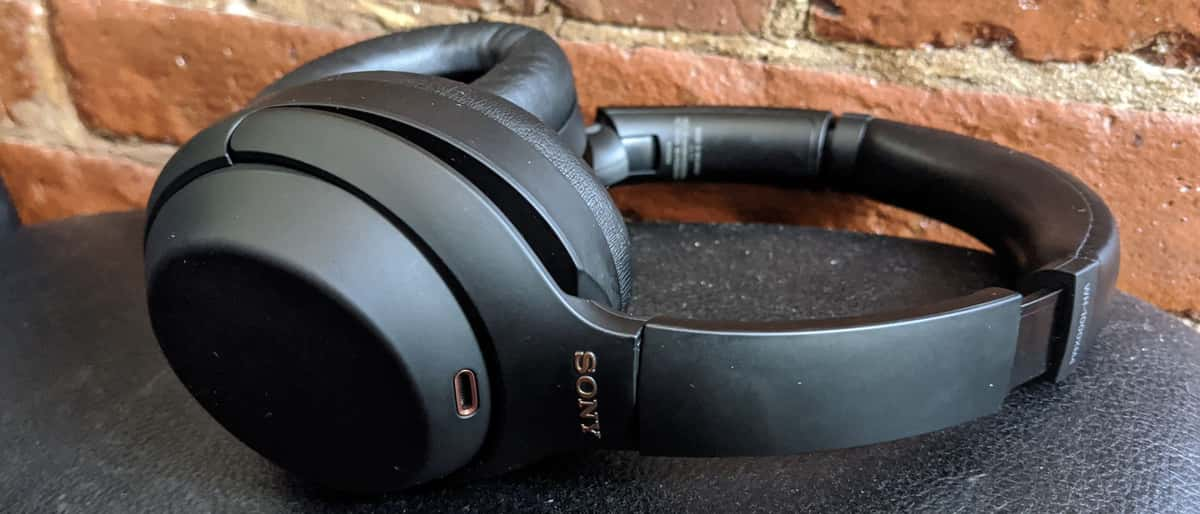
The XM4C retains the familiar folding construction of the original XM4, which means the earcups can fold inward for easier storage inside the supplied carrying case. At approximately 253g, it's also relatively manageable for a full-size pair of noise-cancelling headphones. Sony's official European store specifically highlights the folding construction, lightweight design and matching carrying case.
For Nigerians who regularly travel between Lagos and Abuja, work from noisy offices, study around other people or spend considerable time flying, those practical details can matter as much as another specification on a box.
The Noise Cancellation Is Proven Technology, Not Completely New Technology
Sony continues to use its HD Noise Cancelling Processor QN1, combined with four microphones for noise cancellation. That is important context.
You're not getting the more sophisticated noise-cancelling architecture found in Sony's newest flagship designs. The WH-1000XM5, for example, moved to a larger microphone array.
Instead, the XM4C is essentially bringing a proven ANC platform back into Sony's current lineup. Sony also retains features such as Personal NC Optimizer, Ambient Sound and Quick Attention.
For someone commuting through busy Nigerian roads, working beside a generator, sitting inside a noisy office or flying frequently, reducing persistent background noise remains the primary reason we'd consider headphones like these.
The important distinction is that you're buying mature ANC technology rather than Sony's newest possible ANC hardware.
Sound Still Revolves Around 40mm Drivers and LDAC
Sony hasn't abandoned the 40mm driver architecture either. The XM4C supports SBC, AAC and LDAC, with a wired frequency response extending from 4Hz to 40kHz when the headphones are connected by cable and powered on.
LDAC is particularly relevant for Android users because it can transmit substantially more audio data than basic Bluetooth SBC under suitable conditions.
Sony has also expanded sound customization. Independent coverage of the launch notes a 10-band equalizer, compared with the simpler EQ implementation associated with the older model, alongside a new gaming-oriented sound preset.
That doesn't automatically mean everyone will prefer the XM4C's tuning. But it gives listeners more control over how the headphones sound.
Bluetooth 6.0 Is the Most Obvious Technology Upgrade
One genuinely modern change is Bluetooth. The original WH-1000XM4 used Bluetooth 5.0. The XM4C officially moves to Bluetooth 6.0. We wouldn't buy the headphone purely because the Bluetooth version number is higher. Audio quality still depends on codecs, source material, signal conditions and the headphone's acoustic tuning. But it helps bring a six-year-old design concept into a much newer connectivity generation.
The supported codecs remain: SBC + AAC + LDAC. That combination should make the XM4C particularly attractive to Android users who want Sony's higher-bitrate LDAC option.
Battery Life Is Actually Worse Than the Original XM4
This is one of the most important details we found during our comparison. The WH-1000XM4C delivers: Up to 27 hours with noise cancellation enabled and Up to 34 hours with noise cancellation disabled.
It has charging time of three hours. The original XM4 was rated for up to 30 hours with ANC enabled and 38 hours without noise cancellation. So despite being the newer product, the XM4C doesn't improve battery endurance.
It actually loses several hours. Twenty-seven hours is still enough for several days of normal commuting or multiple long flights. But anyone expecting “M4 2nd Gen” to automatically mean better battery life should understand the trade-off.
The Replaceable Battery Matters More Than It Sounds
One less glamorous change may ultimately be one of the XM4C's most important long-term improvements. The refreshed headphones have been designed around newer European requirements for more serviceable batteries. Recent launch coverage reports that Sony has moved toward a user-replaceable battery design, which could potentially extend the useful lifespan of the headphones.
That's relevant in Africa. Premium headphones are expensive imports, and throwing away a perfectly functional ₦650,000-class headset simply because its battery has degraded after several years makes little sense. The practical benefit will still depend on replacement-battery availability and servicing options in Nigeria, but greater repairability is something we'd rather have than another cosmetic upgrade.
Black, Silver and a New Lavender Finish
Sony offers three colours:
Black
Platinum Silver
Lavender
Lavender is the obvious newcomer. The Black and Platinum Silver finishes maintain the understated look associated with Sony's previous premium headphones, while Lavender gives the XM4C a noticeably more distinctive appearance.
The carrying case is also colour matched. We don't think colour should determine whether you spend hundreds of thousands of naira on headphones, but it's good to see Sony offering something beyond the traditional black-and-silver choices.
What Has Sony Actually Removed?
This is where the XM4C becomes more interesting as a product strategy. Sony isn't simply selling the original XM4 again under another name. Battery endurance has been reduced, while NFC is no longer part of the specification sheet. The original XM4 supported NFC for convenient pairing.
That's gone here. For most buyers in 2026, we don't consider this a serious loss. Bluetooth pairing has become straightforward enough that NFC is nowhere near as important as it once was. The battery reduction is more noticeable.
In return, you're getting Bluetooth 6.0, revised sound customization, updated software features and a more serviceable design.
Sony WH-1000XM4C Price in Nigeria
Sony launched the XM4C at $299.99 in the United States, while Sony's German store lists it at €249.
During our market check, we found one Nigerian specialist retailer selling the original XM4 at approximately ₦299,999, while Konga listings were approximately ₦425,000 and ₦490,000. And we found the price for XM4C at Ubuy Nigeria at ₦650,232.
Be Careful With Suspiciously Cheap XM4 Listings
This deserves particular attention. During our Nigerian market research, we encountered extremely wide pricing for Sony headphones.
A genuine premium Sony headphone being dramatically cheaper than every established retailer should trigger further investigation rather than immediate excitement.
Before buying, we'd check:
Seller reputation
Model number
Packaging
Serial information
Sony app connectivity
ANC functionality
Touch controls
LDAC support
Included accessories
Return policy
Warranty
Counterfeit premium headphones can look surprisingly convincing externally while using completely different drivers, electronics and noise-cancelling hardware internally. Price alone isn't proof that something is fake. But an unusually low price should make you investigate.
WH-1000XM4C vs Original WH-1000XM4
The decision becomes particularly interesting if both remain available in Nigeria.
Feature | WH-1000XM4C | WH-1000XM4 |
|---|---|---|
ANC | QN1-based | QN1-based |
Drivers | 40mm | 40mm |
Bluetooth | 6.0 | 5.0 |
LDAC | Yes | Yes |
ANC battery | 27 hours | 30 hours |
ANC off | 34 hours | 38 hours |
NFC | No | Yes |
Foldable | Yes | Yes |
Lavender colour | Yes | No |
Newer EQ/software | Yes | Older implementation |
This creates an unusual conclusion. The XM4C isn't automatically better just because it's newer. If we found a genuine original XM4 for around ₦300,000 and an XM4C for ₦650,000, we'd be serious. If the price difference were much smaller, however, the XM4C's newer connectivity, software changes and longer-term serviceability would become more attractive.
Who Should Buy the WH-1000XM4C?
We think there are four groups that should pay particular attention. Frequent travellers benefit from strong ANC and the folding design. Remote workers can use the headphones to reduce distractions in shared offices, cafés and other noisy environments. Students who study in busy surroundings may also benefit from effective noise isolation.
And Android users who care about wireless audio quality can take advantage of LDAC support. But we'd hesitate if you already own a perfectly functional original XM4. The XM4C simply doesn't introduce enough dramatic improvements to make replacing a good XM4 an obvious decision.
Final Thoughts
The Sony WH-1000XM4C is unusual because Sony isn't pretending it has reinvented premium headphones. This is essentially a modernised revival of a proven design.
You still get the familiar foldable construction, 40mm drivers, QN1-based active noise cancellation, LDAC and touch-oriented everyday usability. Sony has then added Bluetooth 6.0, expanded sound customization and a Lavender colour while adapting the design for a newer generation.
There are compromises. Battery life falls from the original XM4's 30-hour ANC rating to 27 hours, while NFC has disappeared.
For Nigerian buyers, however, the headphone is not in circulation yet and price is only available in a few stores at ₦650,232. At this price or substantially above, we'd compare it carefully with newer Sony flagships and competing Bose headphones before paying. And if you find a genuine original XM4 around ₦300,000? Don't dismiss it simply because the XM4C exists. The older model actually has longer rated battery life and still offers many of the features that made this design successful in the first place.
Our conclusion: The WH-1000XM4C makes the most sense for first-time premium Sony buyers who want the proven XM4 formula in a refreshed, more serviceable 2026 package, not existing XM4 owners looking for a major upgrade.
Read more: Bose QuietComfort Ultra Headphones Review: Price & Specs
Read more: Sony WH-1000XM6 Review: Specs, Features & Nigeria Price

Author
Adebayo JohnsonSenior tech editor with over 4 years of experience covering mobile and gadget technology. Explore author & articles





