
WhatsApp Makes Parental Controls Easier on iPhone: What African Parents Need to Know
WhatsApp is making parent-managed accounts easier to set up on iPhone. Learn how WhatsApp parental controls work, what parents can monitor, and how Nigerian and African families can protect children online.
Nkechi Okafor
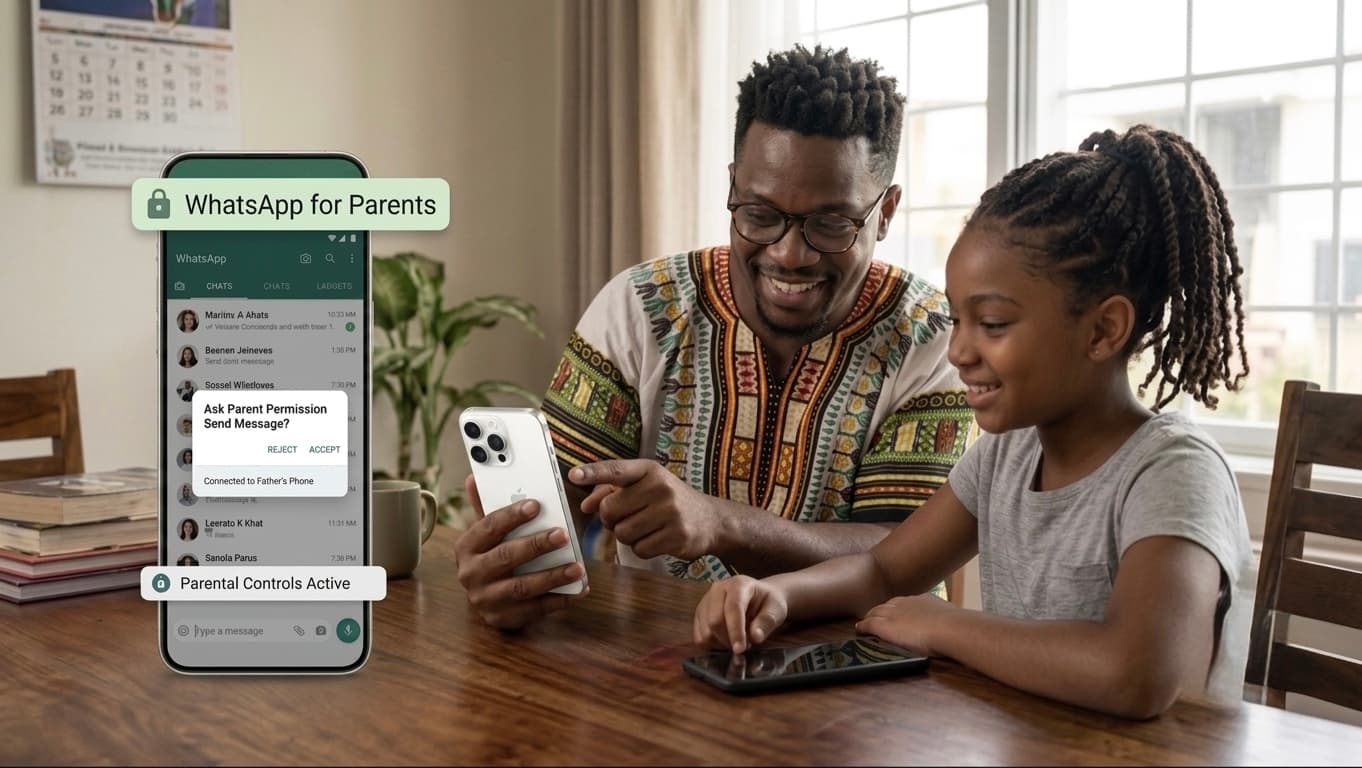
WhatsApp Is Making It Easier for Parents to Manage Their Children's Accounts
For many African parents, giving a child their first smartphone comes with a difficult question:
How do I let my child communicate with family and friends without giving them unrestricted access to everyone on WhatsApp?
WhatsApp is now addressing part of that problem with parent-managed accounts, a feature designed specifically for pre-teens.
The feature allows a parent or guardian to help create and manage a child's WhatsApp account while keeping the child's personal conversations protected by end-to-end encryption.
The latest changes are particularly relevant for iPhone families, where WhatsApp is making the setup process easier.
What Are WhatsApp Parent-Managed Accounts?
Parent-managed accounts are designed for pre-teens who need WhatsApp primarily to communicate with family and trusted contacts.
Instead of giving a child a completely unrestricted WhatsApp account, parents can configure certain parts of the experience.
Parents can:
Decide who can contact the child
Control which groups the child can join
Review message requests from unknown contacts
Manage privacy settings
Receive notifications about certain account activities
Protect parental settings with a PIN
WhatsApp says the account is designed to focus on messaging and calling, rather than providing the full experience available to older users.
Why This Matters in Nigeria and Africa
This feature could be particularly useful for African families because WhatsApp is much more than a social media app here.
It is often the primary communication tool between:
Parents and children
Teachers and students
Extended families
Church groups
School groups
Sports teams
Community groups
A child can therefore end up receiving messages from people far beyond their immediate family.
For parents, the challenge isn't necessarily stopping children from using WhatsApp.
It's making sure they can use it safely.
How Does the Parent-Managed Account Work?
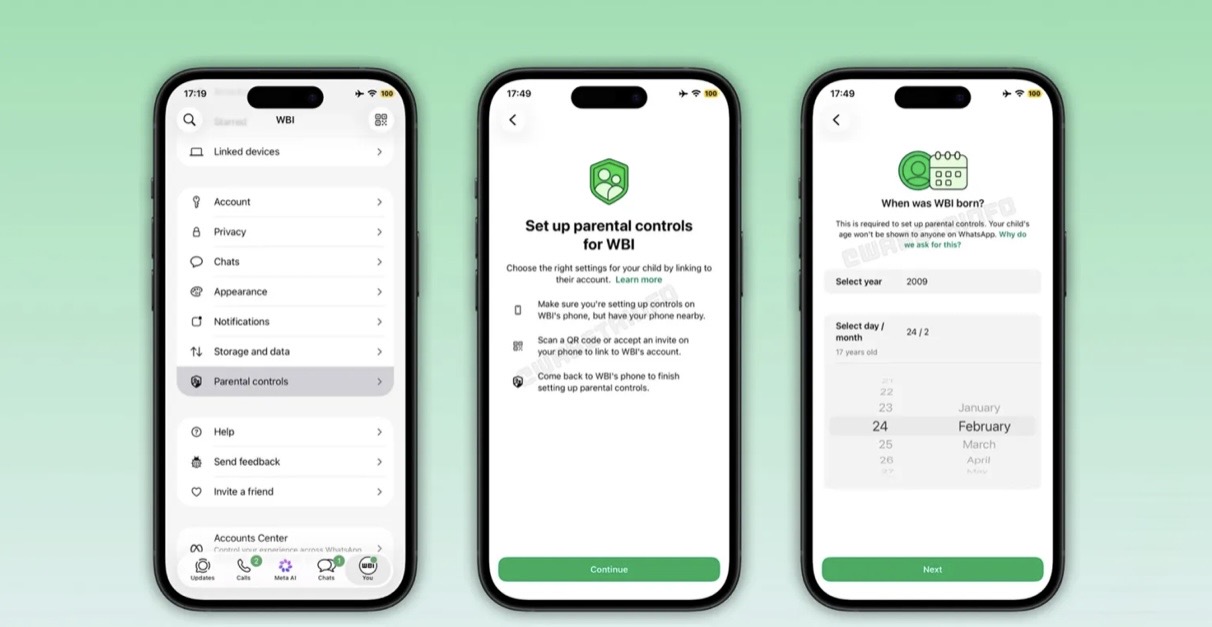
Setting up the account requires both devices to be available.
The parent or guardian uses their own phone alongside the phone being set up for the child. WhatsApp then links the accounts during the setup process.
Once connected, the parent can manage the child's account settings.
The important thing is that this isn't simply a second WhatsApp account that the parent secretly monitors.
It's a managed account with specific parental controls.
Parents Can Control Who Contacts Their Child
One of the most useful features is contact management.
Parents can decide who is allowed to communicate with the child's account.
This can help reduce unwanted contact from strangers.
For example, a parent could configure the account so that the child primarily communicates with:
Parents
Siblings
Relatives
School friends
Trusted contacts
WhatsApp also allows parents to review requests from unknown contacts.
This is especially useful for younger children who may not yet recognize online scams, manipulation or inappropriate contact.
What About WhatsApp Groups?
Groups are another major concern for parents.
A child can potentially be added to:
School groups
Gaming groups
Community groups
Unknown groups
Large family groups
Groups containing people they don't know
With parent-managed accounts, parents control which groups the child can join, and only parents can add the child to groups under the default setup.
That gives parents considerably more control over the child's WhatsApp environment.
Parents Don't Get to Read Every Message
This is an important distinction.
Parent-managed accounts are not designed to give parents a copy of every private conversation.
WhatsApp says personal conversations remain protected with end-to-end encryption, meaning WhatsApp itself cannot read or hear the content of those conversations.
Parents get control over things such as contacts, groups and privacy settings—not unrestricted access to the child's private chats.
That's an important balance between child safety and privacy.
Parents Can Receive Activity Notifications
WhatsApp also provides parents with notifications about certain activities on a managed account.
According to WhatsApp's official guidance, parents can receive notifications about important events such as changes involving contacts.
This doesn't mean parents need to constantly check the child's phone.
Instead, they can receive signals when something important happens.
That can make it easier to intervene when necessary.
WhatsApp Uses a Parent PIN
Parental controls are protected by a parent PIN on the managed device.
This prevents the child from simply changing the restrictions themselves.
Parents should therefore choose a PIN the child cannot easily guess.
How African Parents Can Use This Feature
Here's a practical example.
Imagine a 12-year-old in Lagos gets an iPhone primarily to communicate with their parents and grandparents.
Instead of setting up a completely unrestricted WhatsApp account, the family can use a parent-managed account.
The parent could allow:
Mum + Dad + siblings + grandparents + selected friends
while restricting unknown contacts and controlling group participation.
That creates a much safer starting point for a child's first experience with WhatsApp.
What About Android?
The parent-managed account system isn't exclusively an iPhone concept.
WhatsApp introduced the feature for its broader ecosystem, with setup involving the parent's phone and the child's device.
However, the exact interface and availability can vary depending on the device and rollout.
Is This a Good Thing for African Families?
Yes—but with a caveat.
Parental controls should not become an excuse for parents to secretly monitor every aspect of a child's life.
The better approach is to explain to the child:
We're setting this up to help you use WhatsApp safely.
Children should understand why certain restrictions exist.
As they get older and demonstrate responsible online behavior, parents can gradually give them more independence.
Frequently Asked Questions
What age are WhatsApp parent-managed accounts designed for?
They are designed for pre-teens, particularly children under 13 who need a safer, parent-supervised WhatsApp experience.
Can parents read their child's WhatsApp messages?
No. Parent-managed accounts do not give parents unrestricted access to private conversations. WhatsApp says personal conversations remain protected by end-to-end encryption.
Can parents stop strangers from contacting their child?
Parents can control who can contact the managed account and review message requests from unknown contacts.
Can children join WhatsApp groups themselves?
Under the default parent-managed setup, only parents can add the child to groups.
Does WhatsApp parental control replace Apple's Screen Time?
No. They solve different problems. WhatsApp manages the child's WhatsApp account, while Apple's Screen Time provides broader controls over the iPhone or iPad.
Is the feature available to every WhatsApp user?
The rollout can vary by country, device and account. Some users have reported waiting for the option even after WhatsApp announced the feature.
Final Thoughts
For African parents, WhatsApp isn't optional for many families anymore. It's how children communicate with parents, relatives, teachers and friends.
That makes child safety on WhatsApp increasingly important.
WhatsApp's parent-managed accounts don't give parents complete surveillance over their children and that's actually a good thing.
Instead, the feature focuses on the areas where younger users are most vulnerable: who can contact them, which groups they can join and how their privacy is configured.
Combine that with Apple's Screen Time controls, sensible family rules and regular conversations about online safety, and parents can give children a much safer introduction to smartphone communication.
The goal shouldn't be to keep children away from technology. It should be to teach them how to use it safely.
Advertisement
Responsive
Related Articles
Apple's iCloud Private Relay May Not Fully Hide Your IP Address, Researchers Warn
Security researchers say Apple's iCloud Private Relay may expose a user's real IP address under certain conditions. Here's what the issue means, who's affected, and whether you should be worried.

X Money Is Here: Elon Musk's X Begins Rolling Out Its New Financial App in the U.S.
X has begun rolling out X Money to U.S. Premium subscribers, bringing peer-to-peer payments, a Visa debit card, cashback and savings yields to the social platform. Here's what it means.

Telegram Removed from Apple's App Store Worldwide? Here's What We Know 2026
Telegram briefly disappeared from Apple's App Store worldwide before being restored. Here's why it happened, what Apple and Telegram said, and what it means for users in Africa.
Advertisement
728x90
Comments (0)
Leave a comment
Comments cannot be edited or deleted after posting. Please review your comment before submitting.
No comments yet. Be the first to share your thoughts!