Africa Needs Its Own Data Centres But There Is One Major Problem: Power
Africa is entering the AI economy, but limited electricity and data-centre capacity could hold the continent back. Here is why governments and companies must invest in both digital infrastructure and power.

Africa is entering a new phase of its technology journey.
For years, the continent's digital economy depended heavily on infrastructure built and operated outside Africa. Websites, applications, financial services, government platforms and AI systems increasingly depend on cloud computing, but much of the underlying computing infrastructure is still concentrated in a relatively small number of markets.
That is becoming a problem.
As artificial intelligence becomes part of banking, healthcare, agriculture, education, manufacturing and government services, Africa will need considerably more computing capacity inside the continent. But there is a fundamental obstacle: data centres need enormous amounts of reliable electricity. And this is where Africa, particularly countries such as Nigeria, faces a difficult challenge.
Africa cannot fully participate in the AI economy without computing infrastructure
AI is not just software. Behind every AI chatbot, recommendation engine, image generator and enterprise AI system are servers containing powerful CPUs, GPUs, networking equipment and storage. Those machines need to operate continuously.
A data centre therefore needs far more than a building filled with computers. It requires reliable electricity, cooling systems, fibre connectivity, backup power, physical security and sophisticated networking.
The World Economic Forum estimates that Africa's data-centre electricity demand could increase from approximately 0.4 GW to 2.2 GW by 2030. That growth is significant. And AI could accelerate it even further.
Why Africa needs more local data centres
There are several reasons African countries should develop significantly more domestic and regional data-centre capacity.
Faster digital services
If data generated by Africans has to travel thousands of kilometres to servers outside the continent, latency can increase and connectivity becomes another potential point of failure. Local infrastructure can bring computing resources closer to users.
For example, a Nigerian fintech processing millions of transactions could benefit from having critical cloud infrastructure located within Nigeria or nearby African markets rather than depending entirely on infrastructure on another continent.
Data sovereignty
Data sovereignty is becoming increasingly important. Governments are handling sensitive information involving citizens, healthcare, taxation, financial transactions, biometrics and national infrastructure. Keeping appropriate categories of data within national or regional infrastructure can give governments greater control over where sensitive information is stored and processed.
Nigeria is already moving in this direction. In August 2026, the Federal Government unveiled its National Digital Cloud Policy, explicitly aiming to attract investment in cloud and data-centre infrastructure and position Nigeria as a regional digital services and hosting hub.
More opportunities for African businesses
Local data centres can also create an entirely new technology ecosystem. Instead of African startups simply becoming customers of foreign cloud providers, local infrastructure can support:
African cloud companies
AI startups
fintech platforms
software companies
government applications
research institutions
universities
enterprise computing
AI model training and inference
This could create jobs across engineering, cybersecurity, networking, cloud architecture, electrical engineering and data-centre operations.
Africa is already attracting data-centre investment
This is not merely a theoretical opportunity. South Africa currently dominates Africa's hyperscale data-centre market and hosts approximately 70% of Africa's hyperscale capacity, according to the South African government. Nigeria, Kenya, Egypt and South Africa are also emerging as important African data-centre markets. The opportunity is large enough that analysts expect billions of dollars of additional investment into the continent's data-centre sector over the coming years.
Companies are responding. MTN, for example, is planning AI-enabled data centres in South Africa and Nigeria through a joint venture, with the initial phase targeting 150 MW of capacity. The direction is clear: Africa needs computing infrastructure, and investors increasingly see the opportunity. But then comes the difficult question.
Where will all the electricity come from?
A modern data centre cannot simply depend on an unreliable electricity supply. AI infrastructure is particularly demanding because high-performance GPU servers consume large amounts of electricity and generate significant heat. The facility therefore needs electricity for both computing and cooling. This creates an uncomfortable situation for countries that already struggle to provide reliable electricity to households and businesses.
Nigeria is a good example. Recent estimates put Nigeria's annual electricity generation at more than 41 TWh in 2025. The more important problem is the country's relatively limited reliable grid capacity and delivery infrastructure.
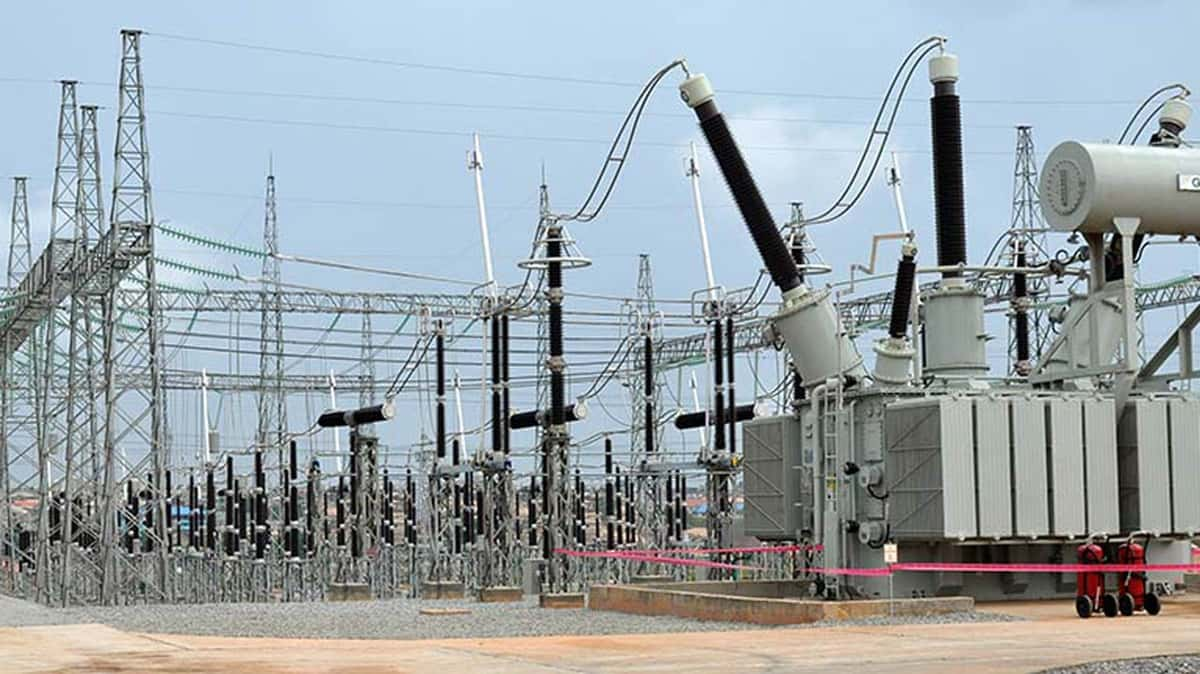
The Nigeria-Siemens Electrification Roadmap illustrates the scale of the challenge. When the agreement was signed in 2019, Nigeria had more than 13,000 MW of installed generation capacity, but Siemens said only around 3,400 MW reliably reached consumers on average. The programme targeted operational capacity of 7,000 MW, then 11,000 MW and eventually 25,000 MW. Those targets demonstrate that Nigeria's problem has never simply been about building more power plants. Generation, transmission and distribution all have to work together.
Texas shows the scale of the difference
The comparison with Texas makes the scale easier to understand, although the units need to be presented correctly. Texas generated approximately 566.5 million MWh, or 566.5 TWh, of electricity in 2024, according to the U.S. Energy Information Administration.
It is more accurate to compare annual electricity generation in terawatt-hours or available generating capacity in megawatts/gigawatts. The comparison nevertheless highlights the enormous difference between a major US power market and Nigeria's electricity infrastructure. And AI data centres are now adding another layer of demand.
AI is turning electricity into a strategic technology resource
The global AI race is increasingly becoming a race for electricity. Recent investment by companies such as Microsoft, Google, Amazon and others demonstrates that access to sufficient power can determine where AI data centres are built. Siemens Energy has also reported that the AI data-centre boom is driving substantial demand for power-generation equipment. This means African countries should stop treating electricity and technology infrastructure as completely separate policies.
They are becoming the same economic strategy. A country that has talented AI engineers but cannot provide reliable electricity and computing infrastructure may end up exporting its talent while importing its computing power.
Africa needs an energy-plus-data-centre strategy
The answer is not simply to build gigantic data centres and connect them to already-stretched national grids. African countries should consider a combination of approaches.
Invest in dedicated renewable energy
Large data centres could be paired with solar, hydro, wind and battery storage where geography permits. This can reduce pressure on national grids while providing operators with more predictable electricity.
Build data centres close to reliable power
The future of AI infrastructure may increasingly be determined by where electricity is available, rather than simply where customers live. That is already happening in other parts of the world, where data-centre developers are moving towards locations with available land and electricity. Africa can adopt the same strategy.
Strengthen transmission infrastructure
Generating more electricity means little if the grid cannot deliver it reliably. Governments therefore need to invest in transmission lines, substations, distribution networks and grid management.
Encourage private-sector power generation
Data-centre operators should be allowed to develop dedicated generation projects under clear regulations while remaining connected to the wider electricity system.
Develop African cloud platforms
African governments should also create policies that encourage local and regional cloud providers instead of relying exclusively on hyperscalers located elsewhere.
The opportunity is much bigger than hosting websites
The real prize is not simply having more servers sitting inside Africa. It is having the infrastructure necessary to build African AI.
Imagine Nigerian hospitals training models on appropriately governed local medical datasets.
Imagine African banks running fraud-detection systems locally.
Imagine agricultural companies processing satellite imagery and weather information in African data centres.
Imagine universities having access to GPU clusters without sending enormous datasets overseas.
Imagine African startups developing AI applications without worrying about international latency, foreign infrastructure availability or excessive cloud costs.
That is the potential economic value of local computing infrastructure.
The biggest investment Africa needs may not be GPUs
It is tempting to think the AI race is primarily about buying Nvidia GPUs and building data centres. It isn't. The foundation is electricity.
Then comes fibre.
Then data centres.
Then cloud infrastructure.
Then GPUs.
Then AI applications.
Without the foundation, the rest becomes considerably more difficult.
Final thoughts
Africa has a huge opportunity to participate in the AI economy, but the continent cannot afford to treat data centres as ordinary buildings. They are becoming strategic national infrastructure, similar to telecommunications networks, ports and electricity systems.
South Africa's growing data-centre market shows what is possible, while Nigeria's new National Digital Cloud Policy demonstrates that policymakers are increasingly recognising the importance of local cloud infrastructure. But Africa must solve the energy problem at the same time. The goal should not simply be more data centres.
It should be:
more reliable electricity → more data centres → more local cloud capacity → more AI computing → more African technology companies → more jobs and economic value.
If African governments and private companies invest in these layers together, the continent can move from being primarily a consumer of imported digital infrastructure to becoming a significant producer of AI and cloud technology.
The AI economy is coming. Africa's next competitive advantage may depend on whether it can power it.
Read more: Gates Foundation's $1 Billion AI Investment: What It Could Mean for Africa
Read more: Africa's Green Energy Potential Could Power Its Next Economic Boom
Read more: Africa Loses One-Third of Its Fish to Spoilage. These 3 Innovations Are Fighting Back
Read more: UduTech and Baro AI Expand GPU Access in Africa — But Can Developers Actually Rent Them?

Author
Azeez LiadiAzeez is an AI Engineer, Data Scientist, founder, and Senior Tech Writer at Afritech Connect. A top 1% graduate of Lagos State University, he has worked with international startups and… Explore author & articles