

Best 20,000mAh Power Banks Under ₦20,000 in Nigeria 2026
We reviewed and researched 20,000mAh power banks you can buy below ₦20,000 in Nigeria, comparing Oraimo, Romoss, itel, New Age and Baseus on charging, capacity and value.

Buying a 20,000mAh power bank below ₦20,000 in Nigeria sounds straightforward until you actually start comparing them. We found significant differences in charging speed, ports, usable capacity, weight and even how accurately some sellers describe the products. That's why we didn't choose these power banks simply because “20,000mAh” appears on the packaging.
We reviewed and researched what each one gives you for the money, checked current Nigerian pricing and looked at something we think matters even more: what kind of user should actually buy each model?|
Our September 2026 research found several genuine 20,000mAh options still available below our ₦20,000 ceiling.
Our Picks at a Glance
Power Bank | Price We Found | Max Charging | Our Best Use |
|---|---|---|---|
Romoss Sense 6PS+ | ₦16,800 when available | 22.5W | Fast charging |
Oraimo Traveler 4 | ₦16,900–₦17,990 | 10.5W | Reliability/everyday use |
itel Star 200 | ₦18,360 | Up to 5V/2.1A | Multiple everyday devices |
New Age 20,000mAh Y107 | ₦17,900–₦18,143 | Varies by version | Budget option |
Baseus Bipow 20,000mAh | ₦17,900–₦19,999 | 15W | Display/design |
Prices change frequently, so ₦20,000 is our cutoff, not a suggestion. If a particular seller has one of these models significantly above ₦20,000, we'd compare another option rather than automatically overpaying.
1.Oraimo Traveler 4 — Simple, Reliable, But Not Fast
Price we found: ₦16,900–₦17,990
Oraimo's Traveler 4 was one of the easiest models for us to verify. Our latest price check found it at ₦16,900 through Oraimo Nigeria, while another current Nigerian retail listing had it at ₦17,990. You get 20,000mAh/74Wh capacity, two USB-A outputs, USB-C and Micro-USB inputs and an LED torch.
But there's something buyers need to know. This isn't really a fast-charging power bank by 2026 standards. Each USB output tops out at 5V/2.1A, or roughly 10.5W.
Oraimo's own specification also explicitly notes that Traveler 4 doesn't support QC/PE fast-charging protocols. That's why we wouldn't choose it for charging speed. Its appeal is much simpler: large capacity from a recognisable brand at a reasonable price.
For someone primarily charging a phone overnight, topping up during a power outage or keeping several small devices alive, 10.5W can still get the job done.
For someone accustomed to 25W, 33W or faster phone charging, it will feel slow.
Who we'd buy it for
We think Traveler 4 makes most sense for someone who prioritises capacity and straightforward reliability over speed.
It's particularly easy to recommend when buying directly through an official channel reduces the uncertainty around counterfeit accessories.
Our buying threshold: ₦18,000 or less
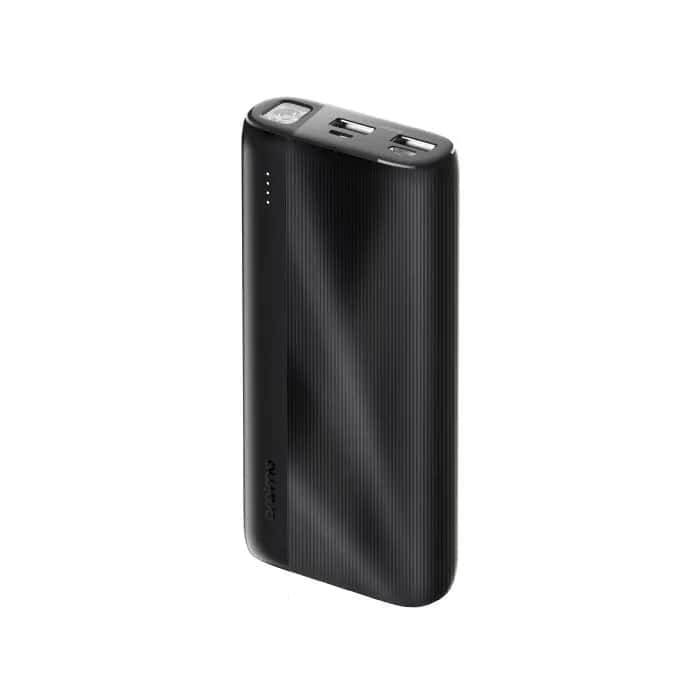
1. Romoss Sense 6PS+ — Our Fast-Charging Pick
Price we found: ₦16,800 when available
The Romoss Sense 6PS+ is the model that stood out when we compared charging specifications. It combines a 20,000mAh battery with up to 22.5W charging, USB-C input/output and multiple USB outputs.
The Nigerian listing we examined had it around ₦16,800, although it was out of stock when checked.
What stood out in our review
22.5W changes how useful a large power bank feels. A 20,000mAh battery gives you plenty of capacity, but slow output means you can still spend a long time waiting for your phone to charge.
That's why we prefer the Romoss for someone with a modern Android phone capable of accepting higher charging speeds. The USB-C connection also supports both input and output rather than existing solely to recharge the power bank.
The compromise
It's not particularly light. The specification we researched puts the weight at 671g, so this isn't something we'd want permanently sitting in a trouser pocket. It's better suited to a backpack, work bag or travel bag.
Availability is another issue. The sub-₦20,000 listing we found wasn't consistently in stock, while other Romoss 20,000mAh models can cost considerably more.
Our buying threshold: Excellent around ₦17,000–₦19,000. If it moves substantially beyond ₦20,000, it no longer belongs in this guide.
3. New Age 20,000mAh — Our Low-Cost Alternative
Price we found: ₦17,900–₦18,143 for qualifying models
New Age is slightly more complicated because several different 20,000mAh products are sold under the brand. During our market research, we found a 20,000mAh two-way Type-C model around ₦17,900, while the Y107 Type-C version appeared around ₦18,143 in another current listing.
But we also found more advanced New Age 20,000mAh models costing ₦34,000–₦43,000.
That leads to an important buying lesson: Don't shop by brand and capacity alone
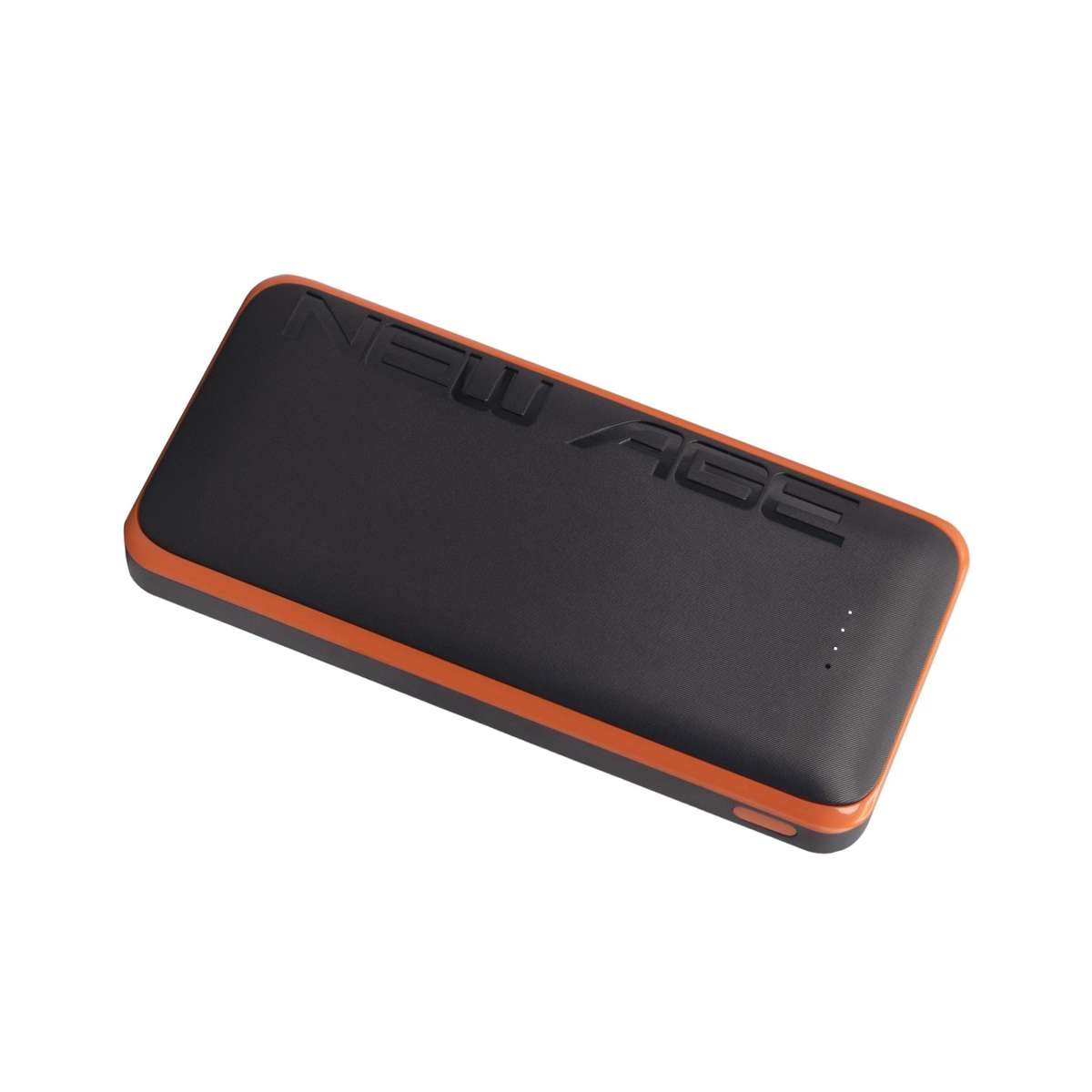
New Age 20,000mAh doesn't identify one specific product. Check the exact model number, output wattage, USB-C capabilities and included accessories before paying. This is particularly important on marketplaces where sellers may use very similar product titles for different versions.
For our under-₦20,000 guide, we're interested in the simpler qualifying models—not the wireless or 65W versions that cost considerably more.
Who should consider it?
Students and budget buyers who want 20,000mAh capacity without spending the entire ₦20,000 budget. But we'd verify the exact specification on the box before buying.
4. itel Star 200 — Straightforward Everyday Backup
Price we found: ₦18,360
The itel Star 200 currently sells for about ₦18,360 through itel's Nigerian store, putting it comfortably below our limit. It has a 20,000mAh lithium-polymer battery, dual USB outputs, USB-C and Micro-USB inputs and a relatively slim 21mm body.
itel also includes a 12-month warranty.
What we like about it
There's nothing particularly complicated about the Star 200. And that's partly the attraction. You can connect two devices simultaneously, there's a USB-C input for recharging the unit, and itel rates the outputs at up to 5V/2.1A.
We see it as the type of power bank you leave charged for power outages, put in a work bag or give to someone who doesn't care about charging protocols and simply needs dependable backup power.
Where it falls behind
Charging speed. Like the Traveler 4, its output is modest compared with newer 18W, 20W and 22.5W alternatives. itel also states that fully recharging the power bank itself can take around 10 hours at 5V/2A.
That matters. A large battery isn't only about how many times it charges your phone; how long you need electricity to refill the power bank itself is equally important in Nigeria.
If electricity availability is unpredictable, we'd recharge this whenever power becomes available rather than waiting until it reaches 5%.
5. Baseus Bipow 20,000mAh — Good If You Find the Right Price
Price we found: ₦17,900–₦19,999 in qualifying offers
The Baseus Bipow is the most price-sensitive recommendation on this list. Our research found a 20,000mAh 15W Baseus model around ₦17,900 through Baseus Nigeria, while a current marketplace offer for the Bipow digital-display version was ₦19,999.
That puts it just inside our budget. However, we also found sellers asking ₦21,999 and even much more for apparently similar Bipow variants. So this isn't a product we'd buy without comparing prices.
What we like
The version we researched combines:
20,000mAh capacity
15W charging
USB-C
Multiple outputs
Digital battery display
The digital percentage display is more useful than four vague LED dots because you can see much more clearly how much power remains.
Baseus also specifies a rated capacity around 12,000mAh at 5V/3A for the relevant Bipow model. That number deserves an explanation.
20,000mAh Doesn't Mean 20,000mAh Reaches Your Phone
This is one of the most misunderstood things about power banks. If you buy a 20,000mAh power bank, you shouldn't expect it to deliver the entire advertised 20,000mAh directly into your smartphone battery.
Energy is lost during voltage conversion, cable transmission and charging. That's why rated/usable output capacity is lower than the battery-cell capacity printed on the product.
For example, the 20,000mAh Baseus Bipow specification we examined gives a rated capacity of approximately 12,000mAh at 5V/3A. That doesn't mean the manufacturer secretly installed a 12,000mAh battery.
It means cell capacity and usable output capacity aren't the same measurement.
Understanding that makes it easier to spot unrealistic power-bank claims.
How Many Times Can 20,000mAh Charge Your Phone?
There's no honest universal answer.
It depends on:
Your phone's battery capacity
Conversion efficiency
Charging voltage
Cable losses
Whether you're using the phone while charging
Battery condition
Power-bank efficiency
A phone with a 5,000mAh battery therefore shouldn't automatically be expected to receive exactly four complete 0–100% charges simply because 20,000 ÷ 5,000 = 4.
Real-world charging losses make the result lower. From our perspective, a genuine 20,000mAh unit is better understood as multi-charge backup for a smartphone, not as a promise of a specific number of full charges.
Charging Speed Matters More Than We Initially Expected
One thing became clear when we compared these models:
capacity alone is a poor way to choose a power bank
Traveler 4 and Star 200 give you plenty of stored energy, but their roughly 10.5W-class outputs are relatively slow.
Baseus moves to 15W. The qualifying Romoss Sense 6PS+ reaches 22.5W.
If your phone supports faster charging and you're constantly topping up during the day, we'd pay attention to this difference.
If the power bank mainly sits beside your bed during an outage, speed becomes less important.
That's why two 20,000mAh power banks at the same price can offer very different value.
Which One Would We Buy?
If we could find the Romoss Sense 6PS+ around ₦17,000–₦19,000, we'd choose it when charging speed matters.
For a straightforward everyday power bank from an easily accessible official Nigerian channel, we'd consider the Oraimo Traveler 4.
The itel Star 200 is similarly straightforward and comes with a 12-month warranty.
For someone spending as little as possible, we'd investigate the qualifying New Age models—but carefully verify which version we're buying.
And the Baseus Bipow becomes particularly attractive when we can find the 20,000mAh version below ₦20,000. Above that figure, we'd compare alternatives.
What We Check Before Buying a Power Bank
After reviewing this category, these are the specifications we'd check before handing over money:
Actual model number: Don't rely solely on the marketplace title.
Capacity in Wh: A genuine 20,000mAh lithium power bank operating around 3.7V will commonly be around 74Wh.
Rated output capacity: This gives additional context about usable energy.
USB-C direction: Some USB-C ports are input-only. Look for USB-C output if you want to charge your phone through it.
Maximum wattage: “Fast charging” is meaningless unless the seller tells you how many watts and which protocols are supported.
Warranty: Particularly useful for batteries, which naturally degrade.
Seller authenticity: Counterfeit batteries aren't simply an inconvenience; poor-quality lithium cells can become a safety issue.
Frequently Asked Questions
What is the best 20,000mAh power bank under ₦20,000?
There isn't one answer for everyone. From the models we researched, we'd look at the Romoss Sense 6PS+ for charging speed, Oraimo Traveler 4 for straightforward everyday use and Baseus Bipow when its price falls below ₦20,000.
Is the Oraimo Traveler 4 fast charging?
Not by current standards. Its USB outputs reach 5V/2.1A, approximately 10.5W, and Oraimo states that it doesn't support QC/PE fast-charging protocols.
How much is the itel Star 200 in Nigeria?
Our September 2026 check found it at ₦18,360 through itel's Nigerian online store.
Is 20,000mAh better than 10,000mAh?
It gives you substantially more stored energy, but it also generally means more weight and a longer recharge time.
For commuting, 10,000mAh can be easier to carry. For long outages, travel or charging several devices, we'd rather have 20,000mAh.
Can these power banks charge a laptop?
We wouldn't buy most of these specifically for laptop charging. A USB-C port doesn't automatically mean laptop charging. Many laptops require 45W, 65W or more through USB Power Delivery, while most products in this guide top out between roughly 10.5W and 22.5W. Look for a dedicated USB-C PD laptop power bank if that's your primary use.
Final Verdict
Our research changed how we'd rank these power banks. We wouldn't simply call the Oraimo Traveler 4 the best overall because Oraimo is a familiar brand. Its 20,000mAh capacity and ₦16,900–₦17,990 price are attractive, but 10.5W output is slow by 2026 standards.
The Romoss Sense 6PS+ offers the strongest charging specification among the qualifying models we researched, reaching 22.5W, although finding it consistently below ₦20,000 is the challenge.
The itel Star 200 is a sensible straightforward alternative at ₦18,360, particularly for someone who values official availability and its included 12-month warranty.
The Baseus Bipow is also worth considering around ₦18,000–₦20,000, but we'd walk away if a particular seller pushes it well above our budget.
And that's ultimately what we'd tell a Nigerian buyer:
Don't buy a power bank because “20,000mAh” is printed in large letters on the box
Check the output wattage, usable/rated capacity, ports, warranty, exact model and current price. A good power bank isn't simply the one that stores the most energy.
It's the one that delivers that energy safely, at a useful speed, for a price that actually makes sense.
Read more: Best Portable Power Banks for Laptop Charging in Nigeria (2026 Buyer's Guide)
Read more: Oraimo PowerNova L21 Review: A Compact 20,000mAh Power Bank That Can Keep Your Phone Going All Day
Read more: Best Budget 10,000mAh Power Banks to Buy: Oraimo, itel and Infinix Compared

Author
Adebayo JohnsonSenior tech editor with over 4 years of experience covering mobile and gadget technology. Explore author & articles





