

FibreOne Broadband Review in Nigeria: Price, Speed and Lagos Coverage
Is FibreOne Broadband worth it in Lagos? We review FibreOne's internet plans, prices, speeds, coverage, installation cost, unlimited data and what Nigerian homes should know before subscribing.

Is FibreOne Broadband a Good Internet Provider in Lagos?
For Nigerians who work from home, stream Netflix and YouTube, attend online classes, download large files or run businesses from home, having a reliable broadband connection can be much better than constantly buying mobile data.
FibreOne Broadband is one of the fibre internet providers available in Nigeria, with residential plans designed for different household sizes and internet requirements.
The biggest attraction is the combination of fibre connectivity, unlimited plans and speeds reaching 220Mbps on the highest listed SmartHome plan. The National Communications Commission's currently published approved bundle information also lists FibreOne's Lagos residential plans, including 30Mbps, 65Mbps, 120Mbps, 160Mbps and 220Mbps options.
But FibreOne isn't necessarily the cheapest internet option in Lagos, particularly when the installation fee is included. So, how much does FibreOne cost, where does it work, how fast is it and is it worth installing in your home?
Let's break it down.
FibreOne Broadband Unlimited Plans and Prices in Lagos
FibreOne's residential plans are structured around different household requirements. The latest publicly available NCC-approved plan information lists the following Lagos SmartHome packages:
FibreOne Plan | Speed | Monthly Price |
|---|---|---|
SmartHome | Up to 30Mbps | ₦17,604 |
SmartHome Lite | Up to 65Mbps | ₦28,705 |
SmartHome Plus | Up to 120Mbps | ₦44,003 |
SmartHome Premium | Up to 160Mbps | ₦60,011 |
SmartHome Platinum | Up to 220Mbps | ₦84,687 |
There is a substantial difference between the entry-level package and the premium options. For a student or small household, paying almost ₦85,000 every month for 220Mbps may make little sense. On the other hand, a household with numerous devices, several simultaneous 4K streams, gaming consoles and people working remotely may have a reason to consider the higher tiers.
How Fast Is FibreOne Internet?
FibreOne's Lagos residential plans currently go from 30Mbps to 220Mbps.
The speeds are: 30Mbps → 65Mbps → 120Mbps → 160Mbps → 220Mbps
This gives FibreOne a reasonably broad range for different types of users. A 30Mbps connection can be enough for ordinary browsing, social media, video calls and streaming for a smaller household. At 65Mbps, multiple people can use the connection simultaneously with considerably more breathing room. The 120Mbps and above packages become more interesting for larger households, heavy downloaders, gamers, remote workers and people running several connected devices.
However, an advertised maximum speed should not automatically be interpreted as the speed you will see on every device. Your Wi-Fi router, distance from the router, walls, interference, device capabilities and whether you are testing over Wi-Fi or Ethernet can all affect the result.
FibreOne Coverage in Lagos
Coverage is probably the most important thing to check before paying for installation. Fibre internet isn't like MTN or Airtel mobile data where you can simply buy a SIM and expect coverage almost everywhere. The provider needs fibre infrastructure in or around your location.
FibreOne coverage areas including Lekki, Victoria Island, Ikoyi and Ikeja, alongside additional covered areas. However, coverage can vary significantly from one street or estate to another. That means being inside a FibreOne-covered neighbourhood does not necessarily guarantee that every house or street can be connected immediately. For anyone considering FibreOne, the best approach is to check availability for your exact address before paying.
This is important if you live in a newly developed estate, a less densely populated area or a street where fibre infrastructure has recently been deployed.
How Much Does FibreOne Installation Cost?
This is one of the biggest costs prospective customers need to consider.
FibreOne's standard installation charge at ₦77,250, with the higher SmartHome Platinum package previously listed at a higher installation cost. That means your first payment can be significantly higher than the monthly subscription.
For example, using the ₦77,250 installation figure and ₦17,604 monthly SmartHome subscription:
₦77,250 + ₦17,604 = ₦94,854
So a new customer choosing the entry-level package could potentially spend around ₦95,000 before recurring monthly payments, depending on the current installation terms and any applicable charges. This is why comparing only monthly subscription prices can be misleading.
What Happens During FibreOne Installation?
Fibre broadband installation generally involves bringing a physical fibre connection from the provider's network to the customer's premises and connecting it to the appropriate optical network equipment. The installation process can therefore be more involved than purchasing a mobile router.
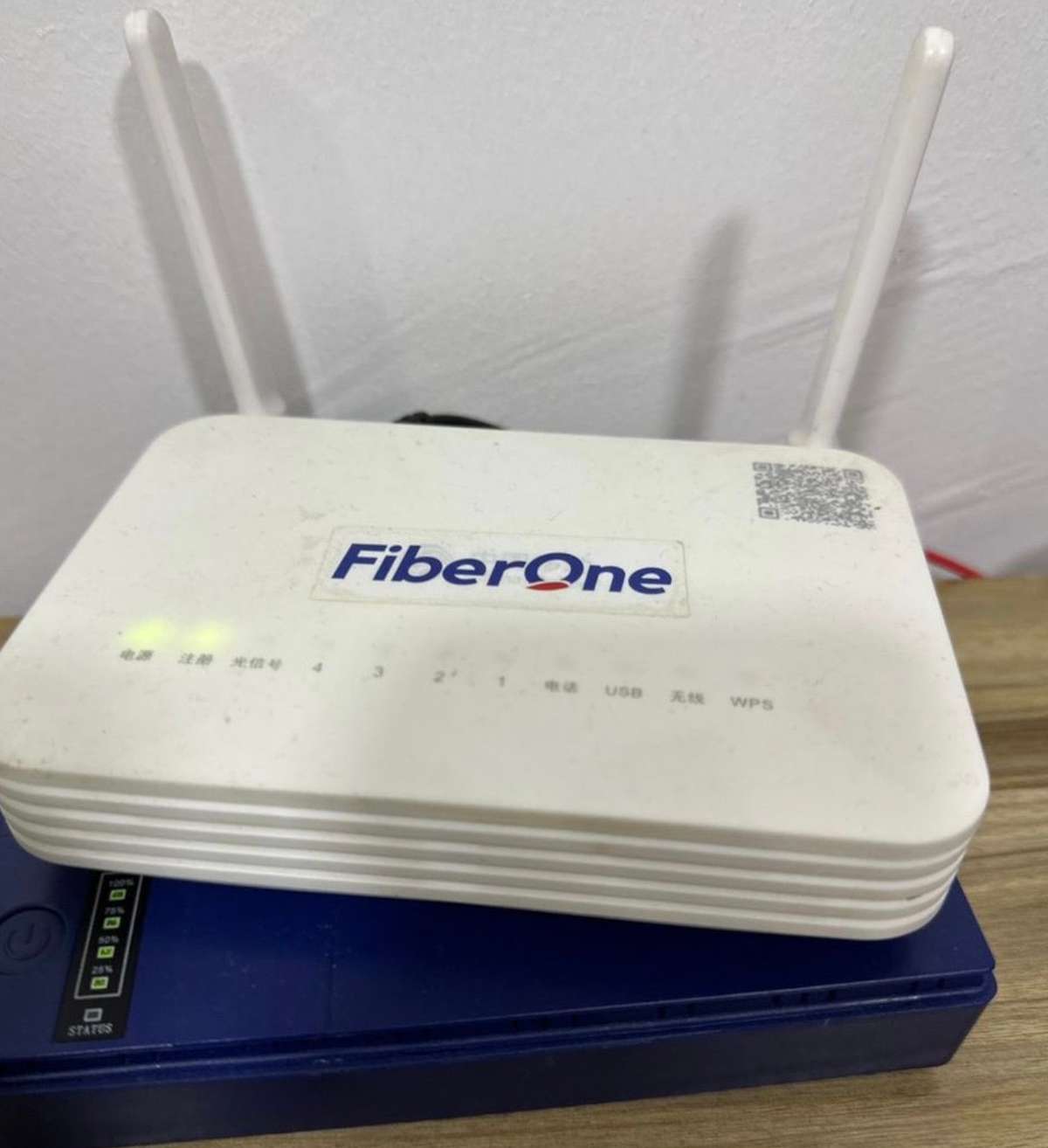
FibreOne's exact installation procedure and equipment arrangement should be confirmed when ordering because installation requirements can differ depending on the property and existing infrastructure. One important consideration is that the internet connection itself isn't the same thing as Wi-Fi coverage throughout your entire house. If you live in a large duplex or multi-floor building, the supplied network equipment may not provide perfect coverage everywhere. You may eventually need a mesh Wi-Fi system or additional access points.
What Can You Use FibreOne For?
A good fibre connection can support considerably more than basic browsing.
Remote work: For Nigerians working for international companies, stable broadband can be particularly valuable for Zoom, Google Meet, Microsoft Teams, cloud applications and large file transfers.
Streaming: Netflix, YouTube, Showmax and other streaming platforms can consume substantial amounts of data. Higher-speed FibreOne plans make it easier for several people to stream simultaneously.
Gaming: Fibre is also attractive to gamers because the connection is wired directly to the home rather than relying on a mobile network. However, speed isn't the only factor affecting gaming. Latency, routing to the game server and network congestion can have a greater effect on gameplay than simply moving from 30Mbps to 120Mbps.
Students: Students sharing a connection with siblings or roommates can use the internet for online classes, research, video lectures, software downloads and entertainment.
For a small household, the entry-level plan could therefore be more sensible than paying for an expensive 120Mbps or 220Mbps package.
FibreOne vs Mobile Data
The biggest advantage of FibreOne is consistency. With mobile broadband, performance can change depending on:
Network congestion
Signal strength
Location
Weather and environmental conditions
Number of users connected to a cell site
A fibre connection goes directly into your premises. That doesn't mean fibre internet can never experience downtime. Fibre cuts, equipment failures, power problems and provider maintenance can still interrupt service. But for a fixed home or office location, fibre can provide a much more suitable foundation for heavy internet usage.
Is 30Mbps Enough for a Nigerian Home?
For many households, yes. You don't necessarily need 220Mbps just because it is the fastest plan. A 30Mbps connection can be adequate for:
Browsing
WhatsApp
Social media
Video calls
HD streaming
Online classes
Light downloads
A few simultaneously connected devices
If several members of the household are streaming, gaming and downloading large files simultaneously, moving to 65Mbps or 120Mbps becomes more reasonable.
FibreOne Broadband: Pros and Cons
What I Like:
FibreOne's biggest advantage is its combination of fibre infrastructure, unlimited plans and multiple speed tiers. The 30Mbps entry plan gives smaller households an option that is considerably cheaper than jumping straight into a premium package. The availability of plans reaching 220Mbps also means customers can scale up as their internet requirements increase.
What Could Be Better:
The installation cost is significant for a new customer. Coverage is also location-dependent, so you cannot assume that FibreOne will be installable simply because the provider operates in Lagos. And like every broadband provider, advertised speed isn't the same as guaranteed real-world Wi-Fi performance in every room.
The key is matching the plan to actual usage rather than simply buying the highest number.
Final Verdict
FibreOne is worth considering if you live in a covered part of Lagos and need a fixed unlimited internet connection for regular heavy usage. Its biggest strengths are the fibre connection, unlimited residential packages and wide range of speeds, from 30Mbps to 220Mbps.
For most Nigerian households, however, I wouldn't automatically recommend the most expensive package. The 30Mbps or 65Mbps plans should be sufficient for many small and medium households, while the 120Mbps and above packages make more sense when multiple people are simultaneously streaming, gaming, working remotely or downloading large files.
The biggest thing to remember is coverage. Before paying the installation fee, check whether FibreOne can actually connect your exact home or office.
Read more: Glo Unlimited Router Review: Price, Speed, Coverage & Installation
Read more: MTN FibreX in Nigeria: The Complete 2026 Guide Free Installation, Coverage, Pricing & Speed
Read more: Spectranet Unlimited Data Review: Price, Speed, Installation & Coverage
Read more: LuliFiber vs WiFiber: Cheapest Unlimited Internet Plans in Nigeria 2026

Author
Adebayo JohnsonSenior tech editor with over 4 years of experience covering mobile and gadget technology. Explore author & articles





