

Google Pixel 11 Review: Gemini Intelligence, Camera Upgrades and Nigeria Price
Google Pixel 11 review covering Nigeria price, Tensor G6 performance, Gemini Intelligence, cameras, battery and whether Google's latest Pixel is worth buying.

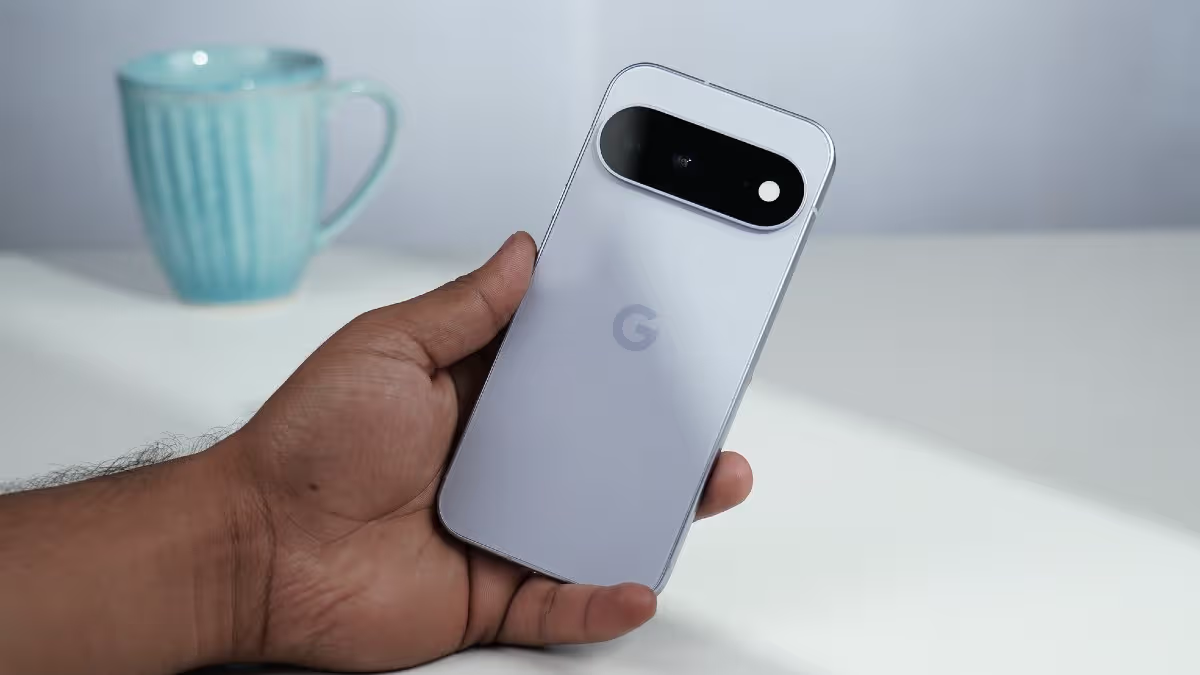
Google has entered its next smartphone generation with the Pixel 11 family, but after examining what's actually changed, this doesn't feel like an upgrade built around one headline specification.
The bigger story is how deeply Google is pushing AI into the phone. The 2026 family consists of the Pixel 11, Pixel 11 Pro, Pixel 11 Pro XL and Pixel 11 Pro Fold, all running the new Tensor G6 platform and built around Gemini Intelligence.
But there are also meaningful hardware improvements that shouldn't disappear behind the AI marketing.
The regular Pixel 11 now gets three rear cameras, including a proper 5x telephoto, while the Pro models get upgraded camera hardware, 120x computational zoom and faster low-light photography. Google has also increased the base storage to 256GB across the three conventional models.
For Nigerian buyers, however, our question is different:
Once import pricing, repairs, network compatibility and alternatives from Samsung and Apple enter the equation, does the Pixel 11 still make sense?
That's what matters more than simply calling it Google's smartest Pixel yet.
Google Pixel 11 Price in Nigeria
We checked the current Nigerian Pixel market rather than simply converting Google's US launch prices into naira.
That's important because Google still doesn't have the same direct retail presence in Nigeria that Samsung and Apple products enjoy. Pixel pricing here is therefore shaped heavily by importers, storage configuration, exchange rates and the amount of stock actually available.
Our market check gives us this picture:
Model | US starting price | Nigerian price |
|---|---|---|
Pixel 11 | $899 | ₦1.2m–₦1.4m |
Pixel 11 Pro | $1,099 | ₦1.41m–₦1.76m |
Pixel 11 Pro XL | $1,299 | ₦1.44m–₦2.15m depending on storage |
Pixel 11 Pro Fold | $1,900 | ₦2.50m–₦2.65m |
Google launched the regular Pixel 11, Pixel 11 Pro and Pixel 11 Pro XL internationally from $899, $1,099 and $1,299 respectively.
The Nigerian market is more interesting. Current market tracking puts a new Pixel 11 Pro 256GB at roughly ₦1.55 million, with observed offers between approximately ₦1.41 million and ₦1.76 million.
For the Pixel 11 Pro XL, we found the 256GB version around ₦1.59 million in the current market, while 512GB units average closer to ₦1.93 million and have been appearing between approximately ₦1.79 million and ₦2.15 million.
The Fold is another level entirely. Current Nigerian stock puts the Pixel 11 Pro Fold 256GB around ₦2.58 million, with the relatively small number of verified listings sitting roughly between ₦2.50 million and ₦2.65 million.
So we wouldn't use the original ₦3.2m–₦3.7m estimate for the Fold anymore. There's enough actual stock in Nigeria now to give buyers a better picture.
Our advice is also not to shop for a Pixel 11 using one national “official price.”
There isn't one. Compare the exact storage capacity, condition and network status of the unit you're buying.
Pixel 11 Specifications at a Glance
Specification | Pixel 11 |
|---|---|
Display | 6.3-inch OLED, 60–120Hz |
Peak brightness | Up to 3,000 nits |
Processor | Google Tensor G6 |
RAM | 12GB |
Storage | 256GB / 512GB |
Main camera | 48MP |
Ultrawide | 13MP |
Telephoto | 10.8MP, 5x optical |
Maximum photo zoom | 30x |
Selfie camera | 10.5MP AF |
Battery | 4,985mAh typical |
Wired charging | Up to 55% in about 30 minutes |
Wireless charging | Qi2.2/Pixelsnap up to 25W |
Water/dust resistance | IP68 |
AI | Gemini Intelligence / Gemini Nano |
Security | Tensor G6 + Titan M3 |
The specification that surprised us most isn't Tensor G6. It's the telephoto camera.
Google has given the standard Pixel 11 a 10.8MP 5x optical telephoto, alongside its 48MP main and 13MP ultrawide cameras. That immediately makes the regular Pixel more interesting for buyers who want camera versatility without moving to the Pro.
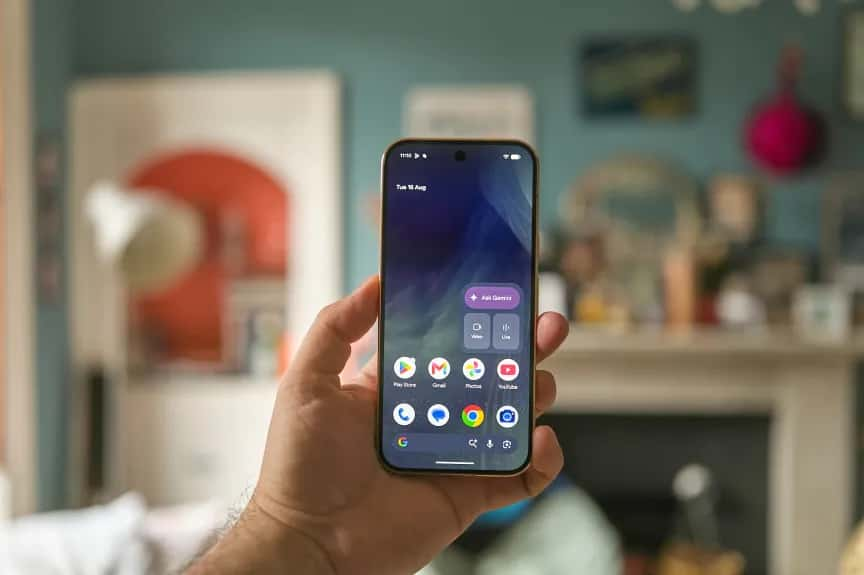
Gemini Intelligence Is the Real Pixel 11 Story
We've reached the point where simply adding a chatbot to a smartphone isn't impressive anymore. ChatGPT exists. Gemini exists. AI features are appearing everywhere. What makes Google's approach more interesting is the attempt to connect Gemini to what you're already doing across the phone.
Gemini Intelligence on Pixel 11 can work across supported apps and handle more complex, multi-step tasks. Google says its Pixel implementation now extends across more than 40 apps, alongside features such as contextual assistance, Gemini Live and proactive information appearing inside the applications you're already using.
That's a much more meaningful direction than putting another AI shortcut on the home screen. The question we would ask after living with any of these features isn't:
Does the phone have AI?
Almost every premium phone does now.
It's:
How many times does the AI actually save you from opening another app or completing a task manually?
That's where Pixel 11 has the opportunity to separate itself.
Tensor G6: Faster, But AI Matters More Than Benchmarks
Every Pixel 11 model moves to Tensor G6. After examining Google's performance figures, the CPU improvement isn't insignificant.
Tensor G6 brings an upgraded CPU that can deliver 25% faster web browsing and 15% quicker app launches compared with the previous generation.
But those aren't the Tensor numbers we'd focus on. Google has increased TPU compute by 50%, with on-device AI workloads running up to 3.5 times faster while using substantially less energy in supported workloads.
That tells us more about what Tensor G6 was designed to accomplish. Google isn't trying to make Pixel interesting solely by winning a CPU benchmark screenshot.
Tensor exists to connect: Gemini + camera processing + voice + translation + contextual assistance + security.
That's the more useful way to judge it. For everyday users, shaving a little time off an app launch is nice.
Having AI processing fast enough to genuinely become part of the phone's everyday workflow could be much more significant.
The Regular Pixel 11 Camera Is Better Than It First Looks
Pixel phones have always leaned heavily on computational photo. But the regular Pixel 11 isn't relying purely on software. Its rear camera system now consists of:
48MP main
13MP ultrawide
10.8MP 5x telephoto with OIS
And up to 30x Super Zoom
That 5x telephoto changes how we'd evaluate the standard model.
A buyer doesn't necessarily have to purchase the Pro just to get useful optical reach.
Google has also increased the size of the main sensor, with its current hardware capturing substantially more light than the previous generation.
For the type of photo many people actually do in Nigeria—events, portraits, food, travel, family photos, social content and outdoor shots—that matters more to us than simply increasing the megapixel number.
The Pro Models Are Where Photo Gets Serious
This is where the gap opens. The Pixel 11 Pro models use a much more ambitious camera system:
50MP main
48MP ultrawide
48MP 5x telephoto
with Pro Zoom reaching 120x
The telephoto sensor itself has also been redesigned and captures more light than before. But we'd be careful with the 120x figure. It sounds spectacular in advertising. It doesn't mean you're getting the equivalent of a massive professional telephoto lens inside your pocket.
At extreme magnification, Google's computational photo becomes a major part of creating the final image. So our reason for choosing a Pixel 11 Pro wouldn't simply be:
It has 120x zoom.
We'd buy it for the larger sensors, better ultrawide, stronger telephoto hardware, improved low-light capability and greater overall camera flexibility. 120x is the bonus.
Magic Capture Might Be More Useful Than 120x Zoom
Magic Capture is one of the camera additions we're more interested in. Instead of forcing you to decide between taking a photo and recording what's happening, the feature can capture video while using Tensor G6 and Google's processing to produce a selection of useful still images from the moment.
Think about: a child's birthday, a football match, a concert, a wedding, graduation, or an unpredictable family moment.
Normally, you're making a decision: Do I record this or take pictures?
Magic Capture is designed to reduce that trade-off.
For parents and casual users, we'd argue that's potentially more valuable than having another extreme zoom number.
Instant Night Sight Solves a Real Camera Problem
Night Sight has been one of Pixel's defining camera features for years. The problem with computational night photography is that waiting for the phone to finish capturing an image can mean missing the moment.
Tensor G6, redesigned software and the new camera hardware allow Instant Night Sight on Pixel 11 Pro and Pro XL to capture supported low-light shots up to 4.5 times faster. This is the type of improvement we prefer.
Not:
Night photography is now AI-powered.
But:
You spend less time holding the phone still waiting for the photograph
That's an upgrade users can actually notice.
Camera Looks Gives Pixel Photo More Personality
Pixel photography traditionally makes a lot of decisions for you. Point. Shoot!
Let Google's computational photography handle the rest. Camera Looks gives users more control over that process by allowing different visual styles to be selected before capturing the photograph. It's available alongside other Pixel 11 camera features including Camera Coach and Magic Capture.
For creators, that can reduce the amount of editing required before posting to Instagram, TikTok or another platform.
But we're glad Google hasn't abandoned the normal point-and-shoot philosophy.
Most Pixel buyers probably still want to pull the phone out, press the shutter and get a good image without thinking about colour science.
Google Is Taking Video Creators More Seriously
Pixel's reputation has historically been stronger for still photography than professional mobile video. Pixel 11 makes another attempt to close that gap.
Creator Suite brings several video-oriented tools together, while the Pro models add Pro Stable Video. The Pro cameras also support Video Boost and Night Sight Video, while Google's current camera stack supports additional tools such as Audio Magic Eraser.
The regular Pixel 11 can record 4K at up to 60fps from both its rear and front cameras. We still wouldn't buy a Pixel purely because a feature is called “Creator Suite.”
The more useful test is whether it reduces the amount of equipment or editing software you need to carry.
For a TikTok creator, small-business owner, YouTuber or journalist shooting primarily on a phone, that's where these additions start becoming valuable.
Battery: Good Size, But Not a Battery Monster
The regular Pixel 11 has a 4,985mAh typical battery. The battery is rated more than 30 hours under its testing conditions. It can reach roughly 55% charge in around 30 minutes with a compatible 30W USB-C PPS charger or higher, and Pixelsnap wireless charging now reaches up to 25W through Qi2.2. Those numbers are respectable.
But Nigerian buyers should keep the competition in perspective. We're now seeing Android manufacturers push batteries well beyond 5,000mAh, particularly among Chinese brands like Xiaomi, OPPO and among others.
So battery capacity isn't where Pixel 11 dominates. Efficiency will matter much more.
For anyone spending ₦1 million-plus, we'd judge the Pixel by whether it comfortably survives a real day involving: 5G/mobile data + camera + WhatsApp + navigation + social media + streaming + hotspot use.
That's a more useful battery test than simply reading 4,985mAh from a specifications page.
Seven Years of Updates Changes the Ownership Equation
One feature we'd include when calculating Pixel 11's value is longevity. The Pixel 11 series comes with seven years of operating-system, security and Pixel Drop updates from launch.
That matters when the phone costs this much. Someone buying a ₦1.5 million smartphone shouldn't feel pressured to replace it two years later because software support is ending.
Long support also makes the Pixel more attractive to people who keep their phones for four or five years.
Whether Nigerian resale values will reward that longevity as strongly as iPhones do is a different question.
The Nigerian Problem Isn't the Pixel 11 — It's Everything Around It
This is where our recommendation becomes more cautious. Google Pixel hardware can be excellent.
Buying one in Nigeria isn't as straightforward as buying an iPhone or Galaxy. Google does not officially retail the Pixel line in Nigeria, so the local market depends heavily on imported devices. Current market research also shows that US-origin Pixel units are particularly common.
That creates issues buyers shouldn't ignore:
after-sales support
replacement parts
accessories
repair expertise
warranty
carrier locks
and resale value
Carrier status deserves special attention. If you're buying an imported Pixel, especially from an independent seller, we'd put your own SIM inside the phone before paying.
Make a call. Turn off Wi-Fi. Load a website using mobile data. Check the SIM status.
Don't accept a seller saying:
It's unlocked.
Verify it yourself.
Pixel 11 vs Pixel 10: Don't Automatically Buy the Newer Phone
This is another place where Nigerian pricing changes the review. A Pixel 11 can be the technically better phone while the Pixel 10 remains the better purchase.
Those are not contradictory statements. If an importer wants a large premium for the Pixel 11 while Pixel 10 stock has already fallen significantly, we'd compare what the new generation actually gives us for that difference.
Pixel 11 makes the strongest argument through:
Tensor G6
deeper Gemini Intelligence
the regular model's 5x telephoto
camera improvements
faster Night Sight on the Pros
new creator tools
And the remaining length of its seven-year support window. If those matter to you, the premium makes sense. If your priority is simply owning a very good Pixel camera and clean Android experience, discounted Pixel 10-series hardware deserves a serious look.
Who Should Buy the Pixel 11?
After going through the complete package, the regular Pixel 11 makes the most sense to us for someone who wants the Pixel experience without automatically paying Pro money. Its 5x telephoto is particularly important.
We'd shortlist it if you:
want Google's version of Android
use Gemini heavily
care about point-and-shoot photography
want optical zoom without buying the Pro
plan to keep your phone for several years
value Google's AI integration more than raw specification chasing
The Pixel 11 Pro or Pro XL makes more sense if photography and video are central to what you do. That's where the 48MP telephoto, stronger ultrawide, 120x Pro Zoom, Instant Night Sight and additional video tools become relevant.
We'd be more cautious if you prioritise: easy Nigerian warranty support, readily available replacement parts, very strong local resale value, or the biggest battery you can get for your money.
Those are areas where the Pixel buying experience in Nigeria still requires compromises.
Is the Google Pixel 11 Worth Buying in Nigeria?
Yes but the price has to make sense. That's our biggest conclusion after looking beyond the launch features. At roughly ₦1.2m–₦1.4m for the regular model, the Pixel 11 becomes an interesting alternative for someone specifically interested in Google's cameras, Gemini integration and clean Android experience.
At ₦1.5m+, we'd start comparing much more aggressively. Because once you're spending that amount, you're no longer choosing a phone in isolation.
You're choosing between the Pixel and whatever Galaxy S-series, foldable, iPhone or previous-generation flagship the same amount of money can buy. And that's exactly how we'd shop.
Frequently Asked Questions
How much is Google Pixel 11 in Nigeria?
Our September 2026 research puts the regular Pixel 11 around ₦1.2 million–₦1.4 million, although Nigerian prices can move quickly because stock is imported rather than sold through a full official Google retail operation. Storage, seller and exchange rates can materially change the price.
How much is Pixel 11 Pro in Nigeria?
We found current new Pixel 11 Pro 256GB pricing around ₦1.41 million–₦1.76 million, with roughly ₦1.55 million representing the middle of the market we examined.
Does Pixel 11 have a telephoto camera?
Yes. This is one of the most important upgrades to the regular phone. The Pixel 11 has a 10.8MP 5x optical telephoto camera with OIS, giving it up to 30x Super Zoom.
Does Pixel 11 have Gemini?
Yes. The Pixel 11 family is designed around Gemini Intelligence and also includes Gemini Nano and Gemini Live support.
What processor does Pixel 11 use?
All Pixel 11 models use Google's Tensor G6 processor. Google's current figures show 25% faster web browsing and 15% faster app launches, while the TPU provides substantially greater AI processing capability than the previous generation.
Is Pixel 11 officially available in Nigeria?
Google still doesn't have the same direct Pixel retail presence in Nigeria that buyers get in its primary markets. Most Nigerian Pixel 11 stock is therefore imported, which makes seller reputation, warranty terms and carrier-lock verification especially important.
Final Verdict
The more we examined the Pixel 11, the less we saw it as simply another “AI phone.” The regular Pixel has quietly become a more complete camera phone.
You now get a 48MP main camera, ultrawide and genuine 5x telephoto without moving to the Pro.
The Pro models then push much further with better camera hardware, Instant Night Sight and 120x Pro Zoom. Tensor G6 matters, but we'd judge it by what it enables rather than the name printed on the specification sheet. Faster AI processing, Magic Capture, deeper Gemini integration and smarter camera processing are more interesting than another synthetic benchmark number.
And that's where Pixel 11 feels different. Google is trying to make the phone do more of the work for you, rather than simply making the processor faster.
For Nigerian buyers, however, we'd put a condition on our recommendation:
Buy the Pixel 11 for what makes Pixel different—not simply because it's Google's newest phone
If you're paying around ₦1.2m–₦1.4m for the regular Pixel 11, its combination of Gemini, 5x optical zoom, seven-year support and Google's computational photography makes a strong argument.
Once your budget moves toward ₦1.5m–₦2m, we'd compare it directly with the current Galaxy, iPhone and discounted Pixel 10 Pro options before transferring money.
And before buying any imported Pixel in Nigeria, we'd verify three things ourselves: the exact storage configuration, the warranty situation and whether the phone is genuinely network-unlocked.
Best for: Photography, Gemini/AI users, clean Android fans and buyers who keep their phones for several years.
Think twice if: Easy Nigerian repairs, local warranty coverage, resale value or maximum battery capacity matter more to you.
Bottom line: Pixel 11's strongest upgrade isn't one specification. It's the combination of a much more useful regular-model camera system and AI that is beginning to operate across the phone instead of living inside a separate chatbot.
Read more: Google Pixel 11 Pro Fold Review: Google’s Smartest Foldable Yet
Read more: Infinix HOT 70 Pro 5G Review: More Power, More AI, but One Display Compromise
Read more: Vivo V80 Review: A 7,200mAh Battery and ZEISS Cameras Make This One to Watch

Author
Adebayo JohnsonSenior tech editor with over 4 years of experience covering mobile and gadget technology. Explore author & articles





