Humanoid Robots Are Coming to Africa — But Can Africans Afford Them?
Chery's Kemi humanoid robot has sparked debate in Nigeria over its reported ₦63 million price. Robotics could transform African factories, healthcare and homes, but cost and jobs remain major hurdles.

A ₦63 Million Humanoid Robot Just Got Nigerians Talking — Is Africa Ready for the Robotics Era?
Humanoid robots are no longer something Africans only see in demonstrations from China, Europe or Silicon Valley. They are beginning to be marketed directly to African consumers.
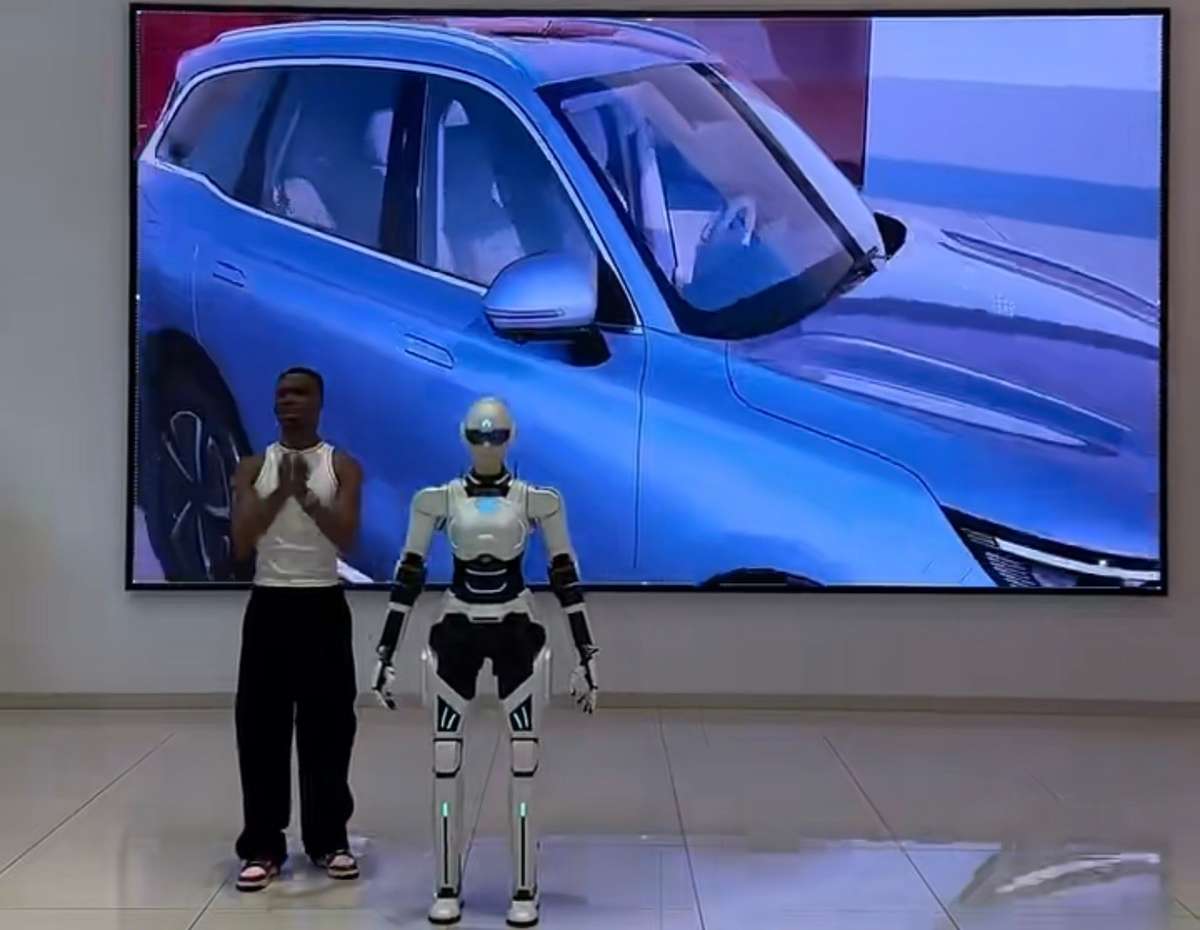
Popular Nigerian influencer Ola of Lagos recently demonstrated Kemi, an AI-powered humanoid robot associated with Chery, showing the machine dancing, taking in Africa tone and being presented for uses ranging from personal assistance to security. Kemi even interacted in a recognisably African-flavoured style. Watch Ola of Lagos' Kemi demonstration
But one number quickly changed the conversation: $45,000, or roughly ₦63 million, the price being associated with the robot in the promotion. Afritech Connect has not independently verified that figure as an official Chery Nigeria retail price, so it should be treated as the advertised price rather than a confirmed nationwide list price.
Still, the reaction raises a much bigger question for Africa's coming robotics industry:
Why spend ₦63 million on a robot to perform work that a human might do for ₦150,000 a month?
Africa's Robotics Problem Could Start With Economics
Imagine a Nigerian business considering a humanoid robot for reception or basic customer service. At ₦150,000 monthly, employing one person costs about ₦1.8 million in base salary annually. Ignoring benefits and other employment costs, ₦63 million represents roughly 35 years of that salary.
That doesn't mean the human and robot are economically equivalent. A robot could potentially operate longer hours, perform dangerous tasks and eventually handle several functions. Humans need breaks, holidays and working-hour protections.
But the calculation illustrates something important. If the cost of introducing automation exceeds the economic value it creates, adopting it simply because it is technologically impressive makes little business sense. That is the same principle we discussed in Afritech Connect's guide on how businesses should measure AI productivity: adoption should ultimately improve measurable business outcomes.
Africa's comparatively low labour costs could therefore slow some forms of humanoid adoption even as robots become increasingly capable.
But Don't Judge Robotics by a Robot Serving Drinks
The strongest economic case for robotics probably isn't replacing a receptionist.
Factories are different. Robots can repeatedly lift heavy objects, work around hazardous materials and perform precision manufacturing for extended periods. Agility Robotics, for example, says its industrial Digit humanoid is designed around roughly 20 hours of daily operating capacity, although the economics involve substantial purchase, deployment, software and maintenance costs.
Warehousing and manufacturing are already becoming major proving grounds for humanoids. Siemens says improvements in batteries, sensors, computing and AI are pushing humanoids closer to production readiness, particularly because their human-like shape allows them to operate in environments originally designed around people.
Healthcare offers another possibility. Humanoid systems are being tested to support rehabilitation exercises and physically assist therapists.
Robotics can also matter in mining, disaster response, agriculture and defence—places where replacing a dangerous human task can be considerably more valuable than replacing an inexpensive one. And eventually, household robots could assist elderly or disabled people, clean homes, carry objects and perform repetitive domestic chores.
The Bigger Opportunity May Be Robot Fleets
The real transformation becomes easier to understand when we stop imagining one expensive humanoid standing inside someone's living room.
Consider a factory operating dozens or hundreds of robots. One robot completes a task. The knowledge required to improve that task could potentially be distributed across an entire fleet. Machines can coordinate production, collect operational data and perform highly repetitive processes consistently.
That is where the economics begin changing. The industry expects costs to fall as well. Deloitte cites projections that humanoid material costs could decline from roughly $35,000 in 2025 to $13,000–$17,000 over the following decade, while manufacturing costs have already been falling substantially.
Today's ₦63-million conversation therefore shouldn't be treated as the permanent price of robotics. Remember what happened with computers, smartphones and solar panels: technologies that initially looked inaccessible can become dramatically cheaper once manufacturing reaches scale.
Then Comes the Uncomfortable Question: Jobs
Africa cannot discuss robots exactly the way Japan, Germany or another ageing economy does. Many developed economies are considering robots partly because they have worker shortages.
Africa has almost the opposite challenge. The International Labour Organization says sub-Saharan Africa faces particularly intense demographic pressure combined with insufficient creation of decent jobs. Northern Africa's youth unemployment rate reached 22.6% in 2025, while young workers across lower-income economies remain overwhelmingly concentrated in informal employment.
Nigeria already struggles to generate enough entry-level opportunities. The Nigerian Institute of Social and Economic Research's Q1 2026 vacancy analysis identified limited graduate entry-level opportunities and major regional disparities in formal employment.
Now imagine highly capable robots becoming cheaper. Receptionists, warehouse workers, factory operators, security personnel and some service roles could face increasing automation pressure. That doesn't mean every robot destroys a job. The International Federation of Robotics argues that automation can increase productivity and competitiveness while creating new tasks and occupations alongside the ones it automates. But Africa cannot simply assume displaced workers will automatically move into better jobs. We explored that deeper employment question in What Is the Ultimate End Game of the Robotics Industry?.
Africa Needs to Prepare Before Robots Become Cheap
The arrival of robots like Kemi should therefore be viewed as an early signal rather than merely an entertaining social-media moment.
Africa already has a developing robotics ecosystem. The African Robotics Network's first continent-wide State of Robotics in Africa assessment, released in 2026, examined robotics activity across all five African regions and highlighted both opportunities and barriers facing the industry.
Governments should start preparing regulations before mass adoption rather than after displacement begins. That doesn't mean taxing robots out of existence.
Africa needs policies covering workplace safety, liability when autonomous machines cause harm, cybersecurity, data collection, military applications and accountability for AI-driven decisions. Labour policy should also consider retraining workers whose repetitive jobs become increasingly automatable.
Education matters just as much. Africa shouldn't aim to become merely a market where foreign companies sell robots. Universities and technical institutions should be developing people who can design, programme, repair and manufacture robotic systems locally.
And businesses need economic discipline. A ₦63-million humanoid might be fascinating. But if a company can achieve the same business outcome more reliably with a person earning ₦150,000 a month, the human may remain the rational investment. Put that same robot inside a dangerous mine, a high-volume factory or an environment requiring 20-hour operation, however, and the calculation can change completely.
That is the hurdle robotics must cross in Africa. The technology doesn't merely have to prove that robots can do human work. It has to prove that using a robot makes more economic and social sense than employing a human to do it.
Today, in many African workplaces, that argument will be difficult to win. But if humanoid prices continue falling while their capabilities continue rising, Africa may have far less time to prepare for that debate than Kemi's dancing suggests.
Read more: EU Tells Advanced-AI Companies to Get Their Models Under Control — But Can Europe Actually Stop One?
Read more: Africa Needs Its Own Data Centres But There Is One Major Problem: Power
Read more: What Is the Ultimate End Game of the Robotics Industry?

Author
Azeez LiadiAzeez is an AI Engineer, Data Scientist, founder, and Senior Tech Writer at Afritech Connect. A top 1% graduate of Lagos State University, he has worked with international startups and… Explore author & articles