Infinix Note 50 Pro Review: Specs, Price & Buying Guide
Is the Infinix Note 50 Pro worth buying? Explore its 5200mAh battery, 90W charging, 144Hz AMOLED display, AI features, cameras, limitations and price.
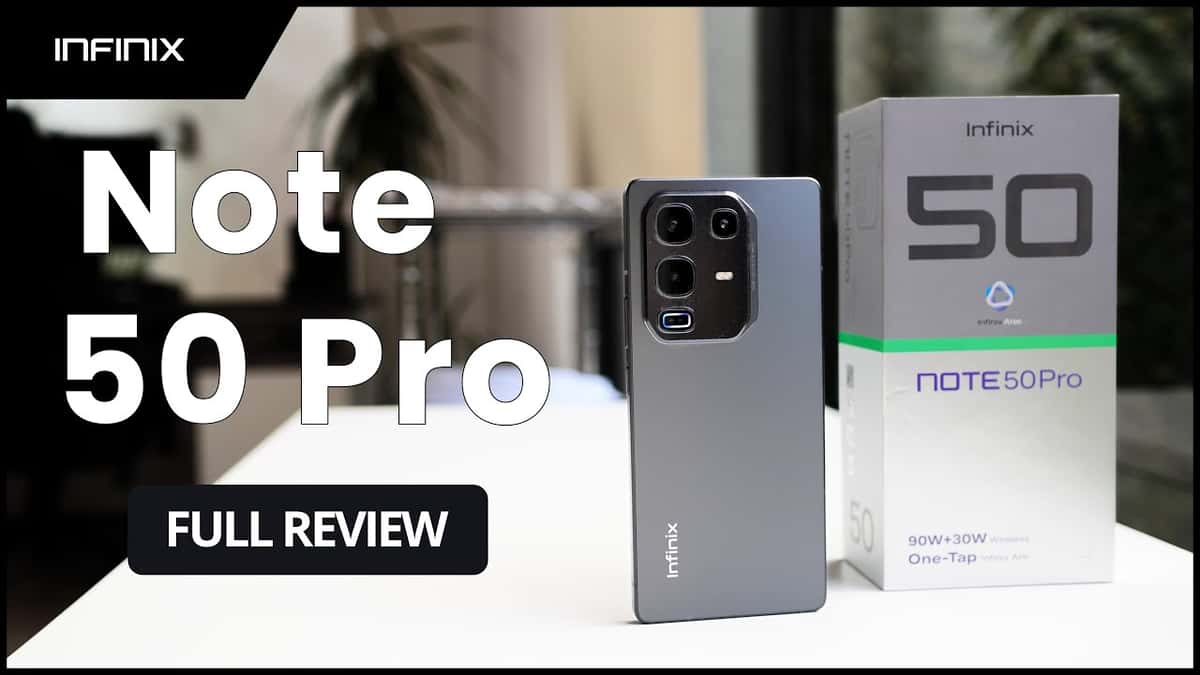
The Infinix Note 50 Pro is one of those smartphones that makes you question how much you really need to spend to get a premium Android experience.
Its combination of a 144Hz AMOLED display, metal frame, 90W wired charging, 30W wireless charging and AI-powered software features gives it an unusually ambitious specification sheet for a mid-range device. But there is a catch. The Note 50 Pro launched in March 2025, and by October 2026, the market has moved forward. Newer smartphones offer faster processors, 5G connectivity and larger batteries at increasingly competitive prices.
So, is the Note 50 Pro still worth buying?
After comparing its hardware, published laboratory results and current retail pricing, I think the answer depends heavily on what you value and how much you're being asked to pay.
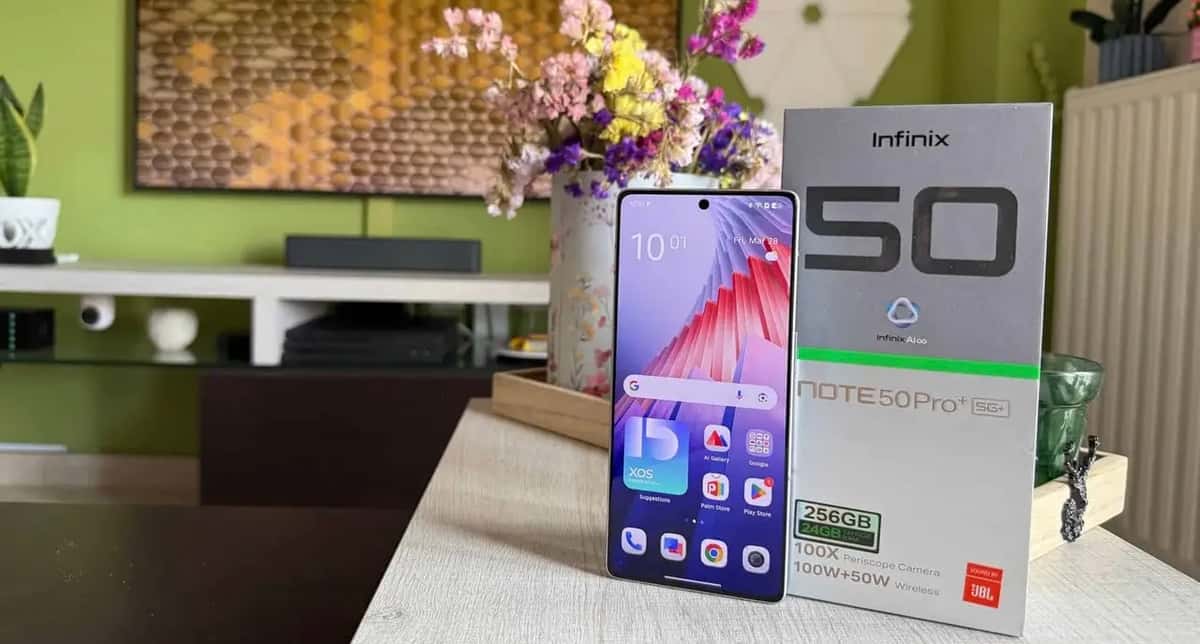
Infinix Note 50 Pro specifications and price
Specification | Infinix Note 50 Pro 4G |
|---|---|
Display | 6.78-inch AMOLED |
Resolution | 1080 × 2436 pixels |
Refresh rate | Up to 144Hz |
Peak brightness | 1,300 nits advertised |
Processor | MediaTek Helio G100 Ultimate, 6nm |
GPU | Mali-G57 |
RAM | 8GB / 12GB physical RAM, market-dependent |
Storage | 256GB UFS 2.2 |
Main camera | 50MP with OIS |
Ultrawide camera | 8MP, 112° field of view |
Selfie camera | 32MP |
Video recording | Up to 2K at 30fps |
Battery | 5,200mAh |
Wired charging | 90W |
Wireless charging | 30W MagCharge |
Reverse charging | Up to 10W wired |
Operating system at launch | Android 15, XOS 15 |
Network | 4G LTE; no 5G |
Durability | IP64 dust and splash resistance |
Audio | JBL-tuned stereo speakers |
Weight | 198g |
International launch price | From $210 USD (historical launch price) |
Nigeria launch price | ₦368,800 |
Nigeria market price | ₦399,000–₦549,999 |
Design: premium materials without flagship pricing
The Note 50 Pro's design is arguably one of its strongest selling points. Instead of relying entirely on plastic construction, Infinix uses an ArmorAlloy metal frame with a manufacturing process designed to improve structural strength. At 7.32mm thick and 198g, the phone manages to feel relatively slim despite its substantial battery and wireless-charging hardware.
The rear includes Bio-Active Halo lighting, which provides visual feedback for notifications, calls and charging activity. It is a distinctive feature, although its usefulness depends on whether you normally place your phone face down.
IP64 protection adds reassurance against dust and splashes, but this is not a waterproof phone. Buyers should not confuse it with devices offering IP68 immersion protection.
Display: 144Hz AMOLED remains a major advantage
The 6.78-inch AMOLED display is one of the clearest reasons to consider the Note 50 Pro. With a resolution of 1080 × 2436 pixels, 144Hz refresh rate and advertised 1,300-nit peak brightness, it offers the kind of display specifications that make everyday navigation, gaming and video playback enjoyable.
The panel supports DCI-P3 colour coverage and 2160Hz PWM dimming, alongside an in-display fingerprint sensor. Independent testing measured approximately 1,054 nits in automatic high-brightness conditions, supporting the view that the display is reasonably capable outdoors. The important distinction is that 1,300 nits represents peak brightness, not continuous full-screen brightness.
For reading, streaming, social media and general productivity, this remains a strong screen even in 2026.
Battery life: 5,200mAh with exceptionally fast charging
Battery capacity is respectable rather than extraordinary. The Note 50 Pro uses a 5,200mAh battery, which should be sufficient for many users to get through a normal day involving messaging, browsing, navigation and entertainment. However, users spending long periods gaming or using mobile data should expect endurance to vary.
Charging is where the phone becomes more impressive. Its 90W wired charging supports three charging profiles—Smart, Turbo and Low-Temperature, allowing users to balance charging speed against heat management.
Infinix advertises a full charge in approximately 38 minutes under its laboratory conditions. The phone also supports 30W wireless MagCharge, an unusually generous feature for its original price category.
For someone who regularly forgets to charge overnight, rapid wired charging can be more valuable than another few hundred milliamp-hours of battery capacity.
Performance: capable, but the processor is showing its age
The MediaTek Helio G100 Ultimate is built on a 6nm process, combining two Cortex-A76 performance cores with six Cortex-A55 efficiency cores. It is a capable processor for everyday tasks. Messaging, social media, video streaming, photography and routine multitasking should not place excessive demands on the hardware.
Gaming is more complicated. Titles such as Call of Duty: Mobile and PUBG Mobile are within the processor's intended performance class, but buyers should not assume the 144Hz screen guarantees 144fps gameplay.
The Mali-G57 GPU is not designed to compete with newer upper-mid-range or flagship graphics processors. The phone also uses UFS 2.2 storage, which is slower than the UFS 3.x and UFS 4.x technologies found in more performance-oriented devices.
For ordinary users, these compromises may be acceptable. For competitive gamers, the Note 50 Pro is becoming a less convincing purchase.
Cameras: a balanced setup with some limitations
The main camera uses a 50MP sensor with optical image stabilization, supported by an 8MP ultrawide and a dedicated flicker sensor. The front camera offers 32MP resolution. OIS is particularly valuable when photographing moving subjects or working in lower-light environments because it helps reduce camera shake.
The ultrawide provides a wider perspective for architecture, landscapes and group photographs, although its lower resolution limits how much detail you can retain when cropping. Video recording reaches 2K at 30fps, which is adequate for casual content creation but falls short of the 4K recording available on some competitors.
The absence of a dedicated telephoto camera is another limitation for users who frequently photograph distant subjects especially going for concert or travel tour.
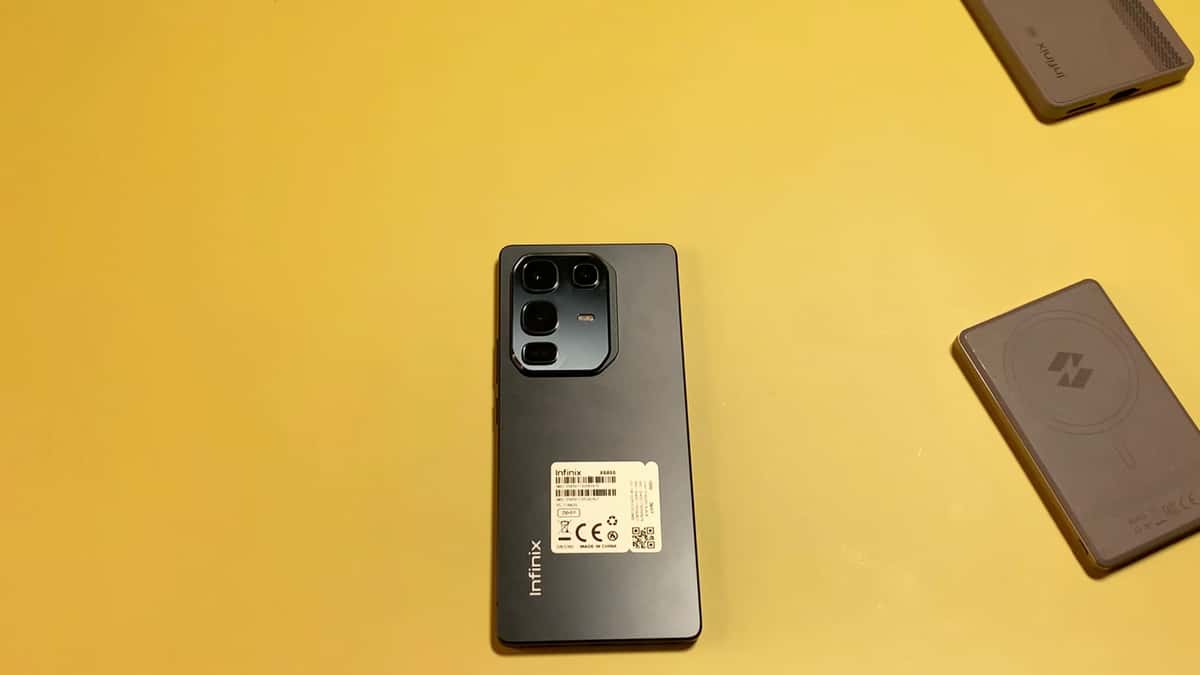
AI features: practical assistance beyond the marketing
The Note 50 Pro introduced One-Tap Infinix AI, designed to make the phone's assistant and productivity features easier to access. Its Folax assistant can help users interact with supported phone functions, while AI-assisted tools cover writing, information retrieval, translation and image-related tasks.
The AI experience is integrated into XOS 15 rather than being restricted to a standalone application. Infinix also introduced a Davido-themed assistant experience for the Nigerian market. The more interesting question is how reliably these features work in everyday situations.
AI tools can help summarize information, prepare messages and automate simple interactions, but accuracy, language support, connectivity and software updates influence their usefulness. I would treat these capabilities as convenient extras rather than the main reason to purchase the device.
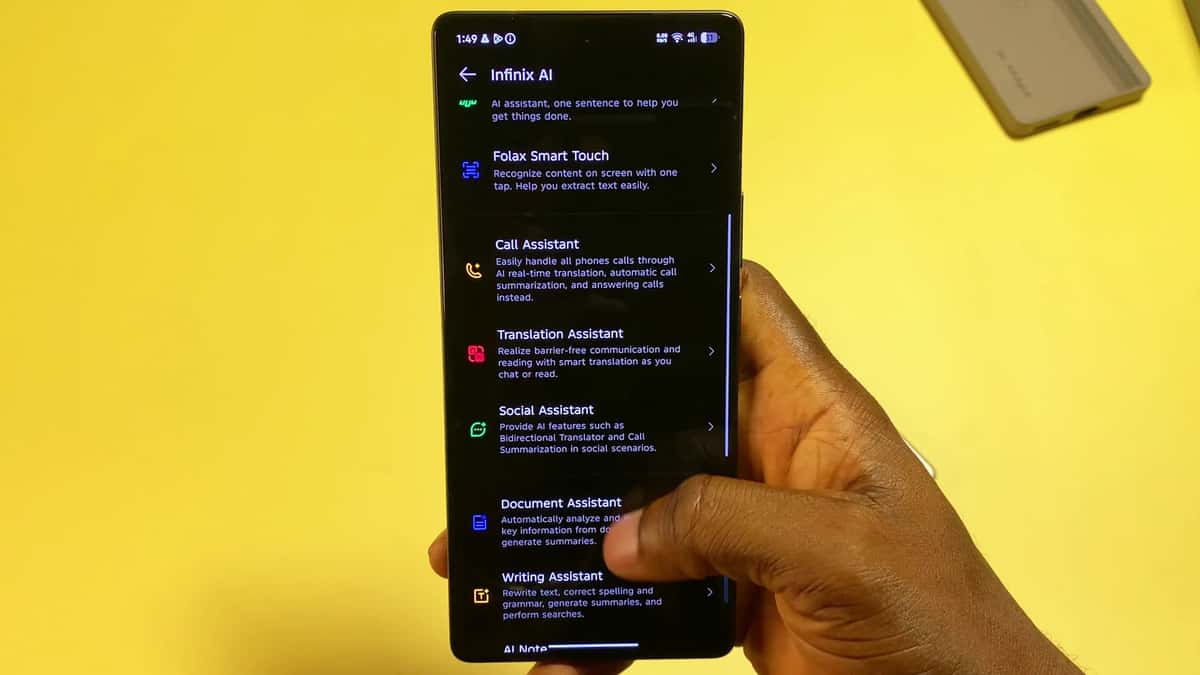
Software support and long-term ownership
The Note 50 Pro launched with Android 15 and XOS 15. Infinix advertised two years of Android updates and 36 months of security patches, making the remaining support period an important consideration for buyers purchasing in 2026.
Before buying, check the device's installed Android version, available updates and remaining security-support window. A discounted phone is not necessarily a bargain if its software support is approaching the end.
Infinix Note 50 Pro price in Nigeria: what should you pay?
Our market research found considerable variation in Nigerian pricing. The phone originally launched at approximately ₦368,800, but late-September 2026 tracking showed new 8GB/256GB units listed between ₦399,000 and ₦549,999.
Pointek also listed the device at ₦406,780, although its listing was out of stock. At around ₦399,000–₦420,000, the Note 50 Pro remains worth considering for buyers who prioritize its AMOLED screen, fast charging and metal construction.
At ₦500,000 or more, I would compare newer 5G smartphones before committing.
Limitations: what you sacrifice
The Note 50 Pro's biggest weakness is its lack of 5G connectivity. The Helio G100 Ultimate is also becoming less competitive for gaming and demanding applications.
Its IP64 rating offers less water protection than IP68 alternatives, and the camera system lacks a dedicated telephoto lens. Finally, the original software-support commitment makes long-term ownership a bigger consideration now than it was at launch. None of these weaknesses makes the phone unusable. They simply matter more when newer competitors are available.
Verdict: is the Infinix Note 50 Pro worth buying?
The Infinix Note 50 Pro remains a capable mid-range smartphone with several features that have aged well. Its 144Hz AMOLED display, 90W charging, 30W wireless charging, metal frame and JBL-tuned stereo speakers still create a compelling everyday package. However, its 4G-only processor, modest gaming headroom and limited remaining software-support window make it harder to recommend at inflated retail prices.
Best for: Students, everyday users, content consumers and professionals who prioritize display quality, charging convenience and premium design.
Think twice if: You need 5G, high-performance gaming, advanced video recording or several more years of software support.
Buying verdict: Worth considering around ₦400,000, but less attractive above ₦500,000 unless its specific features matter more to you than newer alternatives.
Read more: Infinix HOT 70 Pro 5G Review: More Power, More AI, but One Display Compromise
Read more: Redmi Note 15 Review: Great Battery and AMOLED Display, But Should You Buy the 4G Model?
Read more: Redmi Note 15 Pro vs Redmi Note 17 Pro: Price & Specs in Nigeria 2026
Read more: Infinix NOTE 60 Pro Review: Price, Specs, Features and Camera

Author
Nkechi OkaforMobile device specialist focused on smartphones, tablets, and wearables for the African market. Explore author & articles