

iPhone 17 Pro Max vs Xiaomi 17 Pro Max: Which Is Better?
iPhone 17 Pro Max vs Xiaomi 17 Pro Max comparison covering cameras, performance, displays, battery, software, international price and Nigeria price.

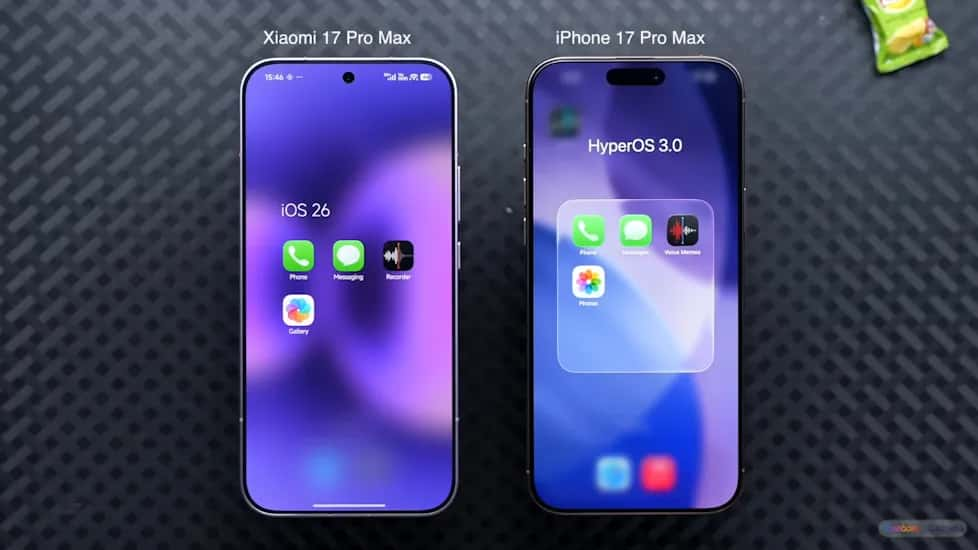
The iPhone 17 Pro Max and Xiaomi 17 Pro Max approach the flagship-phone formula from very different directions.
Apple focuses on its A19 Pro processor, camera consistency, professional video, iOS ecosystem and long battery endurance. Xiaomi responds with Snapdragon 8 Elite Gen 5 performance, Leica cameras, a massive 7,500mAh battery, 100W charging and something Apple doesn't offer: a functional display built into the back of the phone.
Both are 6.9-inch flagships, but choosing between them involves considerably more than comparing screen sizes.
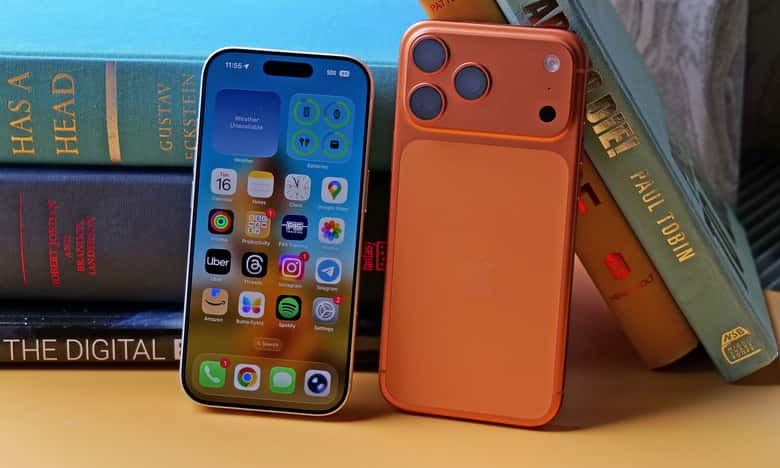
iPhone 17 Pro Max vs Xiaomi 17 Pro Max Specs
Specification | iPhone 17 Pro Max | Xiaomi 17 Pro Max |
|---|---|---|
Main display | 6.9-inch Super Retina XDR OLED | 6.9-inch LTPO AMOLED |
Refresh rate | 1–120Hz ProMotion | Up to 120Hz |
Rear display | No | 2.9-inch AMOLED, 120Hz |
Processor | Apple A19 Pro | Snapdragon 8 Elite Gen 5 |
Storage | 256GB–2TB | 512GB–1TB |
Main camera | 48MP Fusion | 50MP Leica |
Ultra-wide | 48MP | 50MP |
Telephoto | 48MP, up to 8x optical-quality zoom | 50MP periscope, 5x optical |
Front camera | 18MP Center Stage | 50MP |
Battery | Apple doesn't publish mAh | 7,500mAh |
Wired charging | 50% in around 20 mins with compatible adapter | 100W |
Wireless charging | Up to 25W MagSafe | 50W |
Water resistance | IP68 | IP68 |
Software | iOS 26 | Android 16 / HyperOS 3 |
International launch price | From $1,199 (US) | CNY 5,999 ($840); China model |
Nigeria price | ₦1.78m–₦2.55m+ for 256GB | ₦1.37m–₦1.78m+ |
Display: Xiaomi's Second Screen Changes the Comparison
Both phones provide excellent 6.9-inch OLED displays with adaptive refresh rates up to 120Hz. Apple's Super Retina XDR panel reaches up to 3,000 nits outdoor peak brightness and includes ProMotion, Always-On functionality and an anti-reflective coating.
Xiaomi's main LTPO AMOLED display is similarly flagship-grade, but its real advantage sits on the back.
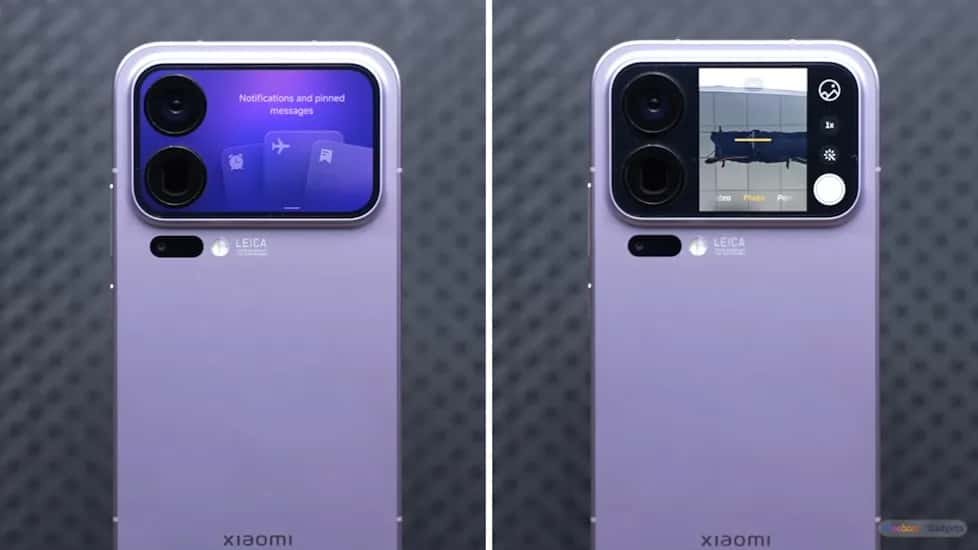
The 2.9-inch Dynamic Back Display can show notifications, wallpapers and useful information, but its best application is photography. You can use it as a viewfinder when taking selfies with the rear cameras. That means Xiaomi's 50MP main and 5x telephoto cameras can effectively become selfie cameras when required.
Display winner: Xiaomi 17 Pro Max
Performance: Two Different Flagship Platforms
Apple uses the A19 Pro, combining a six-core CPU, six-core GPU, Neural Accelerators and hardware-accelerated ray tracing.
Xiaomi uses Qualcomm's Snapdragon 8 Elite Gen 5, paired with up to 16GB RAM and 1TB storage.
Either phone has considerably more performance than most users need for messaging, social media, photography or streaming. The differences become more relevant during demanding gaming, video editing and prolonged workloads.
Apple also redesigned the thermal system of the 17 Pro Max around a vapor chamber, while Xiaomi's large chassis gives Qualcomm's flagship platform room to handle sustained performance. This isn't a comparison where one phone feels fast and the other slow. Both sit near the top of their respective ecosystems.
Cameras: Apple for Video, Xiaomi for Photography Flexibility
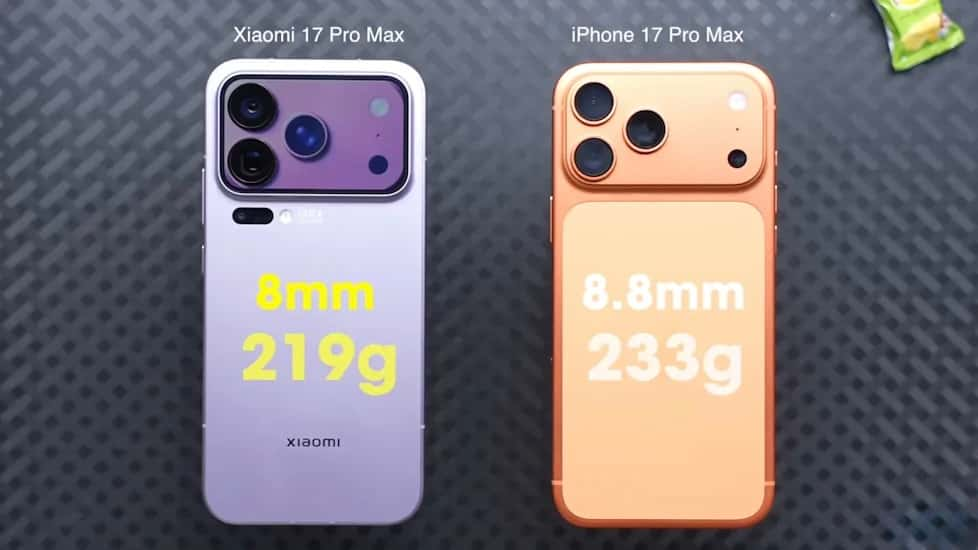
Apple equips the 17 Pro Max with three 48MP Fusion cameras, including main, ultra-wide and telephoto hardware.
The telephoto system provides 4x optical zoom and an 8x optical-quality option. Apple also remains particularly strong for video, supporting Dolby Vision, ProRes RAW, Apple Log 2 and professional workflows that make the iPhone attractive to filmmakers and creators.
Xiaomi counters with three 50MP Leica cameras, including a 50MP main sensor, 50MP ultra-wide and 50MP periscope with 5x optical zoom. Its rear screen introduces another advantage: photographers can compose high-quality selfies using those rear cameras.
For straightforward point-and-shoot consistency and professional video, we'd choose the iPhone. For experimentation, telephoto photography and rear-camera selfies, Xiaomi is arguably more interesting.
Battery and Charging: Xiaomi Wins on Hardware
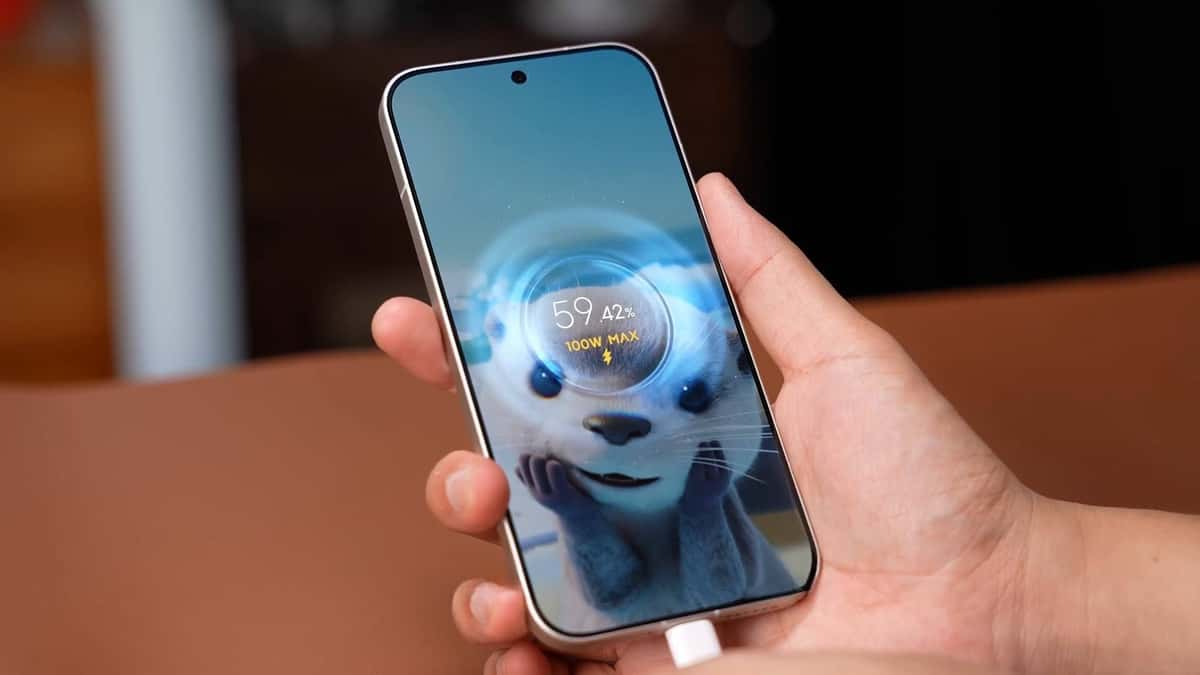
This is the least complicated category. Xiaomi packs a 7,500mAh battery into the 17 Pro Max and supports 100W wired charging, 50W wireless charging and 22.5W reverse wireless charging.
Apple doesn't publish the iPhone's battery capacity, but rates the 17 Pro Max for up to 37 hours of video playback. It can reach approximately 50% in 20 minutes using a compatible 40W-or-higher adapter.
The iPhone offers excellent endurance, but Xiaomi's combination of enormous capacity and significantly faster charging makes it the more impressive battery package on paper.
Battery hardware winner: Xiaomi 17 Pro Max
iOS vs HyperOS: Ecosystem Matters More Than Specifications
The software decision may ultimately matter more than processor benchmarks.
The iPhone integrates tightly with Mac, Apple Watch, AirPods and iPad. Features such as AirDrop, Continuity and Apple's wider ecosystem remain compelling reasons to stay with iOS.
Xiaomi offers considerably more Android flexibility through HyperOS 3, while the Snapdragon platform and extensive customization options appeal to users who prefer greater control over their devices.
There's an important caveat: the Xiaomi 17 Pro Max remains primarily a China-market model rather than a conventional globally distributed Xiaomi flagship.
Imported devices therefore require additional attention to ROM, network-band compatibility, software services and warranty coverage.
Nigeria Price: Xiaomi Is Considerably Cheaper
Pricing makes this comparison particularly interesting in Nigeria. Current iPhone 17 Pro Max 256GB market prices can begin around ₦1.78 million, although listings extend well beyond ₦2 million depending on retailer and warranty. Higher-storage versions cost substantially more.
Xiaomi pricing is more complicated because most units are imports. Current price tracking puts the 17 Pro Max around ₦1.37 million, while individual Nigerian retailer listings for higher-memory configurations can reach roughly ₦1.78 million.
At comparable prices, buyers should confirm storage, ROM, warranty and regional compatibility rather than simply choosing the cheapest listing.
Which Should You Buy?
Choose the iPhone 17 Pro Max if professional video, iOS, long-term ecosystem integration and consistent cameras matter most. It is also the safer purchase in markets where Apple has established official distribution and support. Choose the Xiaomi 17 Pro Max if you want more adventurous hardware. Its 7,500mAh battery, 100W charging, 5x periscope camera and Dynamic Back Display provide features Apple simply doesn't match directly.
Final Verdict
The iPhone 17 Pro Max is the more polished and predictable flagship. It combines excellent performance, strong battery endurance, sophisticated cameras and one of the industry's most established device ecosystems.
The Xiaomi 17 Pro Max is more experimental and arguably more exciting. Its rear display isn't merely decorative; it makes the main cameras more useful. Add a 7,500mAh battery, 100W charging, Snapdragon 8 Elite Gen 5 and Leica camera hardware, and Xiaomi delivers an unusually ambitious flagship.
Our pick for video and ecosystem: iPhone 17 Pro Max
Our pick for battery, charging and hardware innovation: Xiaomi 17 Pro Max
If both phones were officially available everywhere at comparable prices, this would be an exceptionally close contest. Xiaomi's limited international availability, however, gives Apple an important practical advantage for global buyers.
Read more: Xiaomi 17 Pro Max Review: Two Screens, Huge Battery and Serious Cameras
Read more: iPhone 18 Pro Max vs Samsung Galaxy S26 Ultra: Which Flagship Should You Buy?
Read more: Xiaomi 18 Pro Max Review: Should You Buy Xiaomi New Flagship?

Author
Nkechi OkaforMobile device specialist focused on smartphones, tablets, and wearables for the African market. Explore author & articles





