iPhone 18 Pro Max vs Samsung Galaxy S26 Ultra: Which Flagship Should You Buy?
iPhone 18 Pro Max vs Samsung Galaxy S26 Ultra comparison covering performance, cameras, battery, displays, gaming, AI, Nigerian prices and value.

The iPhone 18 Pro Max and Samsung Galaxy S26 Ultra represent two very different interpretations of a premium smartphone.
Apple's latest flagship focuses on the new A20 Pro processor, variable-aperture photography, professional video tools and substantially improved battery endurance. Samsung counters with a 200MP main camera, two dedicated telephoto cameras, built-in S Pen, Galaxy AI, DeX and a QHD+ AMOLED display.
There's also a substantial price difference for Nigerian buyers. The Galaxy S26 Ultra has been available long enough for the local market to develop, while the newly released iPhone 18 Pro Max is still carrying an early-adopter premium.
So our comparison isn't simply about which specification is higher. It's about what you're actually getting for your money.
iPhone 18 Pro Max vs Galaxy S26 Ultra Specs
Specification | iPhone 18 Pro Max | Galaxy S26 Ultra |
|---|---|---|
International Starting Price | $1,299 | $1,299.99 at US launch |
Nigeria Price, 256GB | Early-market pricing ₦3m+ | ₦1.35m–₦1.88m |
Display | 6.9-inch Super Retina XDR OLED | 6.9-inch Dynamic AMOLED 2X |
Resolution | 2868 × 1320 | QHD+ |
Refresh Rate | Adaptive up to 120Hz | 1–120Hz |
Processor | Apple A20 Pro | Snapdragon 8 Elite Gen 5 for Galaxy |
RAM | Not officially specified by Apple | 12GB on 256GB/512GB; 16GB on 1TB |
Storage | 256GB–2TB | 256GB–1TB |
Main Camera | 48MP, variable aperture | 200MP f/1.4 |
Ultra-Wide | 48MP | 50MP |
Telephoto | 48MP, 4x optical | 10MP 3x + 50MP 5x |
Front Camera | 18MP Center Stage | 12MP |
Battery | Apple doesn't publish mAh | 5,000mAh |
Official Video Playback | Up to 45 hours | Usage dependent |
Wired Charging | 50% in ~15 min with compatible 60W+ adapter | Up to 60W |
Wireless Charging | MagSafe | Up to 25W |
Water Resistance | IP68 | IP68 |
Stylus | No | Built-in S Pen |
OS | iOS 27 | Android 16 / One UI 8.5 |
Apple officially equips the iPhone with a six-core CPU, seven-core GPU, hardware-accelerated ray tracing and Dual 16-core Neural Engines. Samsung's S26 Ultra uses the Snapdragon 8 Elite Gen 5 for Galaxy and pairs 256GB and 512GB storage with 12GB RAM, while the 1TB configuration moves to 16GB.
Display: Two Excellent Screens With Different Advantages
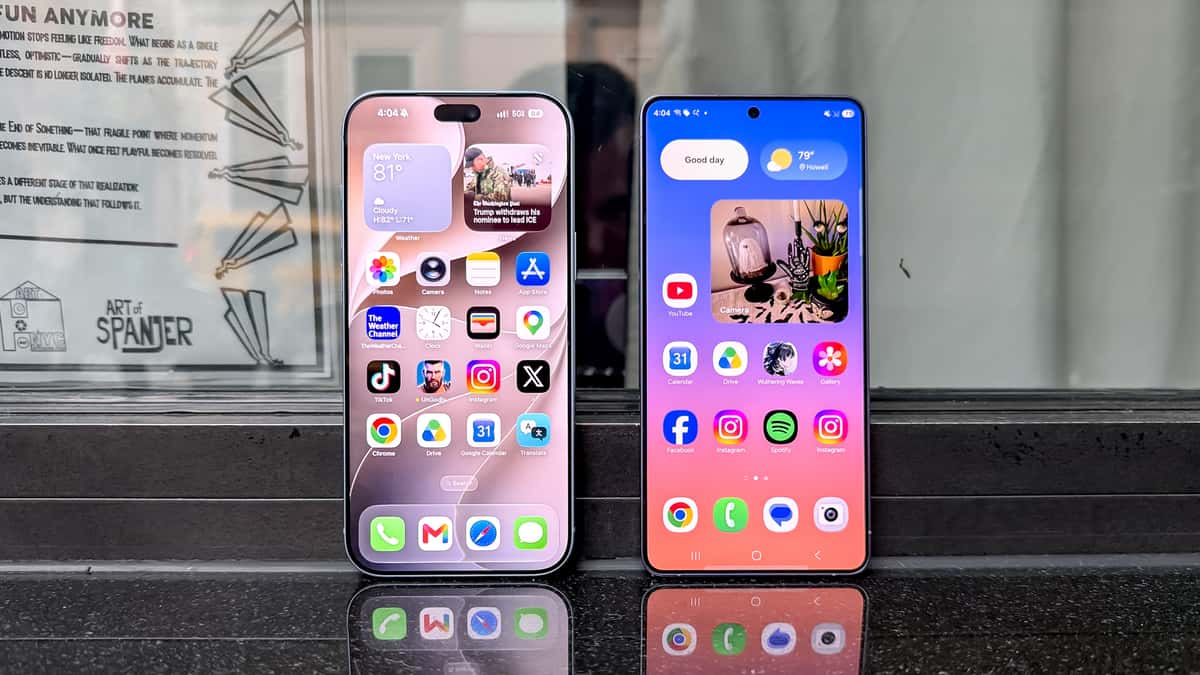
Both phones give you enormous 6.9-inch OLED displays with adaptive refresh rates reaching 120Hz.
Samsung uses a QHD+ Dynamic AMOLED 2X panel with an adaptive 1–120Hz refresh rate. Apple uses a 2868 × 1320 Super Retina XDR OLED panel with ProMotion, Always-On functionality, an anti-reflective coating and up to 3,000 nits of claimed outdoor peak brightness.
In practice, resolution alone shouldn't determine your purchase. Both displays are exceptionally sharp.
Samsung becomes more distinctive for productivity because of the built-in S Pen. Handwriting, document annotation, precise selections and drawing directly on the display give the S26 Ultra capabilities the iPhone doesn't attempt to replicate.
Apple's redesigned Dynamic Island can now display up to three Live Activities simultaneously, which makes better use of the space around the front camera system.
Performance: A20 Pro Is a Serious Upgrade
Apple's A20 Pro is manufactured using a 2nm process and combines a six-core CPU, seven-core GPU, Neural Accelerators inside the GPU and two 16-core Neural Engines.
Apple claims 50% more memory bandwidth than A19 Pro and up to 40% faster GPU performance. More importantly for demanding workloads, Apple redesigned the thermal system around a larger next-generation vapor chamber.
Samsung is hardly underpowered. The Snapdragon 8 Elite Gen 5 for Galaxy is one of Qualcomm's highest-performance mobile platforms and is paired with Samsung's own thermal management.
But recent controlled testing gives us a useful indication of the difference. One current benchmark set recorded:
Benchmark | iPhone 18 Pro Max | Galaxy S26 Ultra |
|---|---|---|
Geekbench 6 single-core | 4,735 | 3,785 |
Geekbench 6 multi-core | 12,800 | 11,563 |
3DMark Wild Life Unlimited | 230 fps | 179 fps |
Those results favour the A20 Pro in that particular test environment, but benchmark scores shouldn't be treated as identical to every real application.
For WhatsApp, social media, web browsing and streaming, both phones already provide far more performance than most users need. The difference becomes more relevant for AAA gaming, video editing, sustained graphics workloads and computational applications.
Gaming and Sustained Performance
Gaming is where Apple's thermal redesign becomes especially interesting. Previous high-performance iPhones could deliver excellent peak benchmark results but lose performance as temperatures increased during extended workloads. Apple says the redesigned vapor chamber on the iPhone 18 Pro generation has three times the surface area of the previous system and enables substantially higher sustained performance.
Recent independent testing also found the iPhone 18 Pro Max running demanding games without obvious lag during intensive sessions.
Samsung's advantage is different. Android gives the S26 Ultra access to a broad catalogue of games and greater flexibility around emulation, game settings and multitasking. Samsung also has years of experience tuning its Ultra phones around sustained Snapdragon workloads.
We therefore wouldn't choose solely from a benchmark chart. The games you actually play and whether they are better optimised for iOS or Android—matter just as much.
Camera: Variable Aperture vs Serious Zoom Hardware
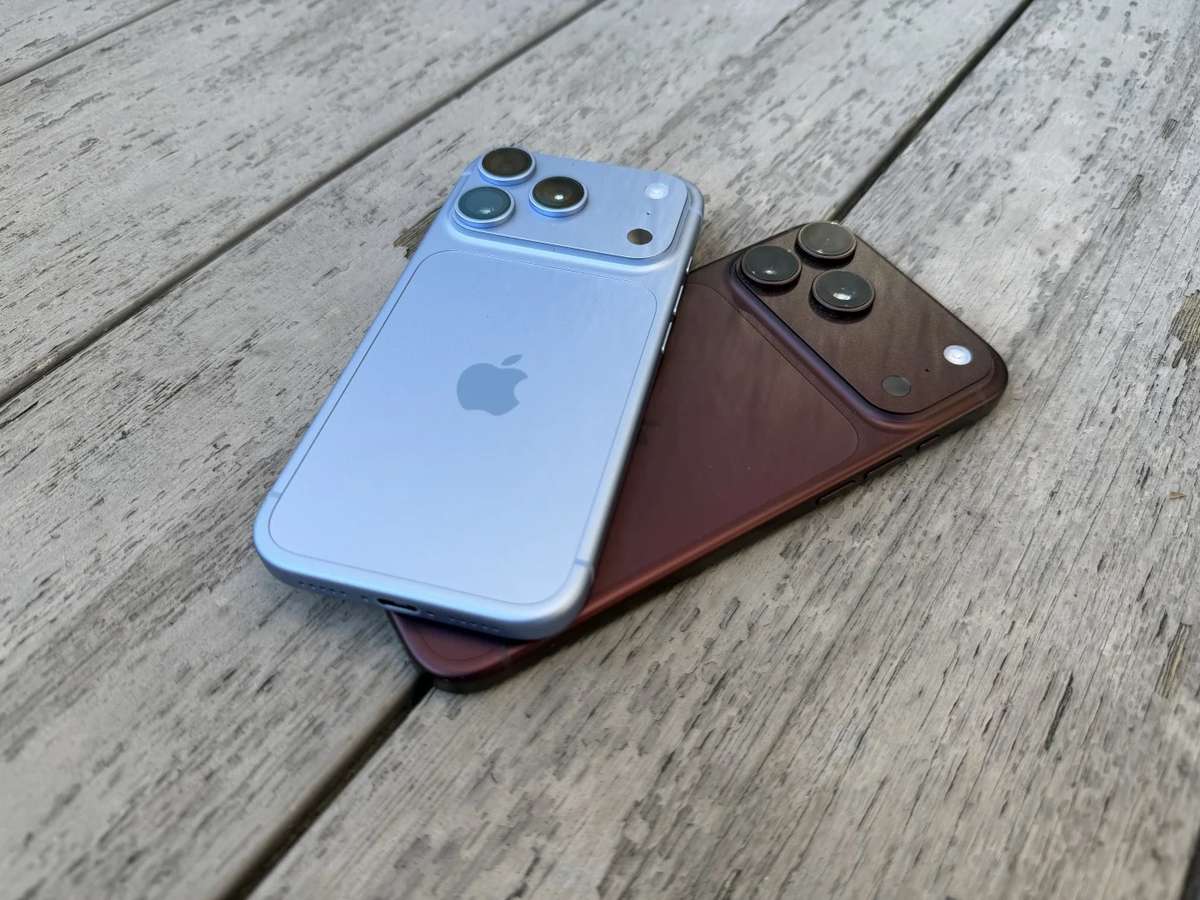
This is arguably the most interesting part of the comparison. Apple now uses three 48MP Fusion cameras.
The main camera introduces a physical variable aperture with f/1.48, f/1.8, f/2.8 and f/4.0 positions. Six mechanical aperture blades allow the camera to control incoming light and depth of field rather than depending entirely on computational blur.
There's also a 48MP ultra-wide and 48MP 4x tetraprism telephoto. Apple additionally provides an 8x optical-quality option from the telephoto system.
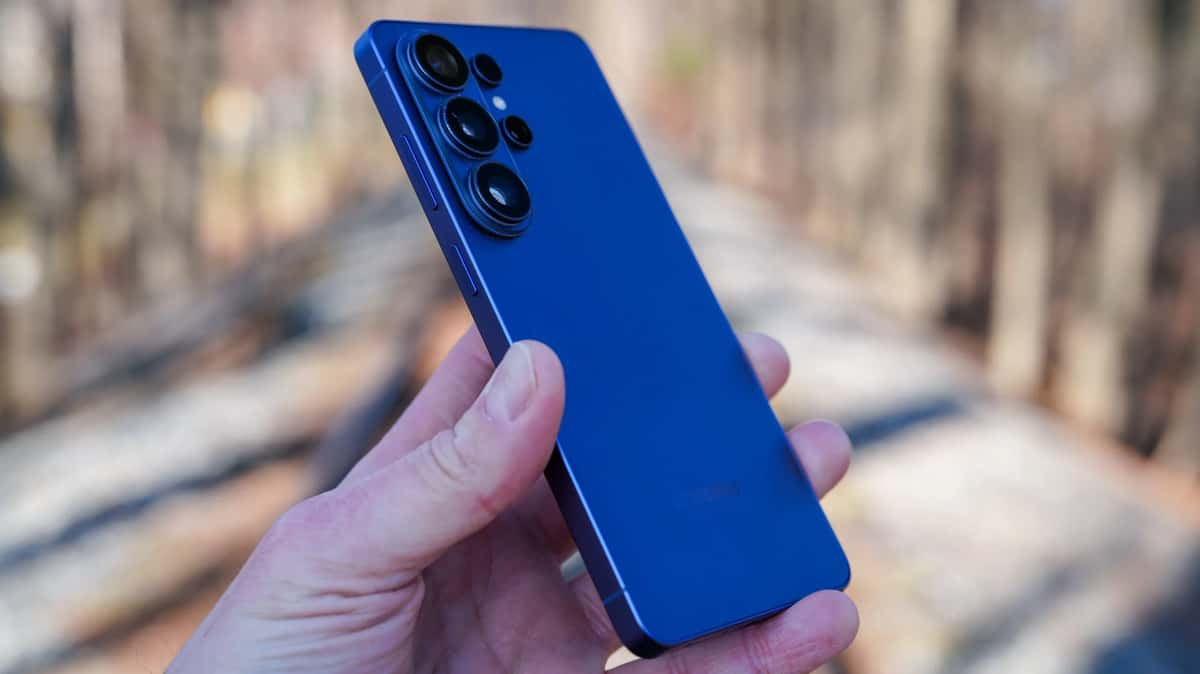
Samsung takes a different approach. Its four-camera system consists of a 200MP f/1.4 main camera, 50MP ultra-wide, 10MP 3x telephoto and 50MP 5x telephoto. Samsung provides 2x and 10x optical-quality zoom positions and digital Space Zoom reaching 100x.
If you regularly photograph concerts, wildlife, sporting events or distant subjects, Samsung's dedicated 3x and 5x cameras provide more focal-length flexibility.
The iPhone's variable aperture becomes more interesting for photographers who want greater creative control over the main camera.
Video: iPhone Offers an Unusually Deep Professional Toolkit
Video is one area where specification sheets don't tell the entire story. The iPhone 18 Pro Max supports 4K Dolby Vision, ProRes, ProRes RAW, Apple Log 2, ACES and Genlock, alongside manual controls for aperture, shutter speed and white balance. ProRes recording can reach 4K/120fps when recording externally.
Samsung counters with 8K/30fps and 4K/120fps Pro Video, making the S26 Ultra extremely capable in its own right.
For TikTok, Instagram and normal family videos, both phones are arguably excessive.
The difference becomes more important for professional creators who need smartphone footage to fit into established editing and colour-management workflows.
Battery: Independent Testing Favors the iPhone
Samsung uses a 5,000mAh battery, while Apple doesn't officially publish the iPhone's battery capacity.
Apple instead rates the iPhone 18 Pro Max for up to 30 hours of typical use, 45 hours of local video playback and 40 hours of streamed video playback.
Independent testing gives us a better cross-platform comparison. In one controlled web-surfing battery test, the iPhone 18 Pro Max lasted 18 hours and 27 minutes, while the Galaxy S26 Ultra managed 16 hours and 10 minutes with adaptive refresh enabled and 16 hours and 40 minutes at 60Hz.
That's useful evidence for Nigerian buyers who spend long periods away from a charger. Samsung does have strong charging specifications: up to 60W wired charging, with Samsung claiming around 75% in approximately 30 minutes under its test conditions, plus up to 25W wireless charging.
Apple says a compatible 60W-or-higher USB-C adapter can take the Pro Max to roughly 50% in 15 minutes.
Galaxy AI vs Apple Intelligence
Software may matter more than another 10% benchmark difference. Samsung's ecosystem emphasizes Galaxy AI, multitasking, S Pen productivity and Samsung DeX. Its latest AI tools include prompt-based Photo Assist, Now Nudge, improved Now Brief and more natural-language interaction with Bixby.
DeX remains particularly useful for professionals because the Galaxy can become part of a desktop-style workflow when connected to a larger display.
Apple takes a more tightly integrated approach with Apple Intelligence and Siri AI in iOS 27. Siri AI adds personal context, onscreen awareness and deeper interaction with information across Apple's ecosystem.
Your existing hardware therefore matters. Someone already using a MacBook, Apple Watch and AirPods gets additional continuity from the iPhone. Someone using Galaxy accessories or relying heavily on Windows, DeX and Android customization may prefer Samsung's approach.
Nigeria Price Changes the Entire Comparison
This is where specifications become secondary. Our latest Nigerian market check found new Galaxy S26 Ultra 256GB units roughly between ₦1.35 million and ₦1.88 million, depending on seller, warranty and source. A Konga listing we checked was ₦1.699 million, while Jumia had 256GB units around ₦1.75 million.
The iPhone 18 Pro Max only became internationally available on September 18, so Nigerian stock is still in the early-import phase.
Early Nigerian asking prices around ₦3 million or more for 256GB therefore need context. They shouldn't automatically be interpreted as the phone's eventual stable Nigerian street price. That's important because both phones occupy essentially the same $1,299 starting tier internationally, yet their Nigerian prices currently look dramatically different.
Buyers who don't need the iPhone immediately may want to watch how local supply develops rather than treating launch-week import pricing as permanent.
Which One Makes More Sense for You?
The iPhone 18 Pro Max makes more sense if your priorities include Apple's ecosystem, professional video workflows, variable-aperture photography, very high CPU/GPU performance or the stronger battery result we've seen in controlled testing.
The Galaxy S26 Ultra becomes more interesting if you prioritize long-range camera flexibility, S Pen productivity, Samsung DeX, Android customization or the substantially lower Nigerian prices we're currently seeing.
For gaming, the decision is less straightforward than simply choosing whichever benchmark number is higher. The A20 Pro produces extremely strong graphics results and Apple has significantly upgraded cooling, while Android gives Samsung broader flexibility around games and software.
For mobile productivity, the S26 Ultra has hardware features the iPhone simply doesn't replicate: S Pen and DeX.
Final Verdict
These are two exceptional flagships built around different priorities. The iPhone 18 Pro Max brings Apple's new A20 Pro, improved vapor-chamber cooling, excellent measured battery endurance, variable-aperture photography and one of the deepest professional video toolsets available on a smartphone.
Samsung's Galaxy S26 Ultra counters with a 200MP main camera, dedicated 3x and 5x telephoto cameras, QHD+ AMOLED display, S Pen, DeX, Galaxy AI and a significantly lower current Nigerian street price.
For Nigerian buyers, that price gap deserves serious consideration. At roughly ₦1.35m–₦1.88m for a new 256GB S26 Ultra versus early-market iPhone 18 Pro Max prices around ₦3m or higher, you're not currently choosing between two similarly priced flagships.
You're potentially paying well over ₦1 million extra to enter Apple's newest Pro Max generation immediately after launch.
That equation could change as iPhone supply stabilizes. So rather than treating either phone as universally superior, we'd make the decision around four things: ecosystem, camera priorities, professional workflow and the actual Nigerian price on the day you're buying.
If you need S Pen, DeX or long-range zoom, those are capabilities that can't be recreated simply by buying the faster phone. Likewise, if your workflow depends on ProRes RAW, Apple Log 2, ACES, Macs and other Apple devices, Samsung's lower price doesn't automatically make it the right tool.
At this level, the better purchase is the phone whose unique features you will actually use—not the one with the longest specification sheet.
Read more: Google Pixel 11 vs Galaxy S26 vs iPhone 17: Which Flagship Should You Buy in Nigeria?
Read more: iPhone Duo vs Samsung Galaxy Z Fold8: Specs, Price and Which Foldable Should You Buy?
Read more: Samsung Galaxy Watch Ultra 2 vs Apple Watch Ultra 3: Which Premium Smartwatch Should You Buy in Nigeria?

Author
Nkechi OkaforMobile device specialist focused on smartphones, tablets, and wearables for the African market. Explore author & articles