POCO F9 Ultra vs F8 Ultra: Specs, Price in Nigeria & Upgrade Guide
POCO F9 Ultra vs F8 Ultra comparison covering performance, AI, gaming, cameras, battery, specifications and estimated Nigeria prices.

If you bought the POCO F8 Ultra around eight months ago, the new F9 Ultra raises an interesting question: is this a meaningful upgrade, or just another expensive flagship refresh? The F8 Ultra already has a Snapdragon 8 Elite Gen 5 processor, a 6.9-inch AMOLED display, 100W charging, wireless charging and a serious camera system. The F9 Ultra keeps much of that foundation but adds a much larger battery, a faster display and a more ambitious graphics system.
So the answer depends on what you want from your next phone.
POCO F9 Ultra vs F8 Ultra Specifications and Price
Feature | POCO F8 Ultra | POCO F9 Ultra |
|---|---|---|
Launch | November 2025 | September 2026 |
Display | 6.9-inch AMOLED | 6.9-inch AMOLED |
Resolution | 2608 × 1200 | 2608 × 1200 |
Refresh rate | 120Hz | 185Hz |
Processor | Snapdragon 8 Elite Gen 5 | Snapdragon 8 Elite Gen 5 |
RAM | Up to 16GB | Up to 16GB |
Storage | Up to 512GB | Up to 1TB |
Main camera | 50MP | 200MP |
Telephoto | 50MP periscope | 50MP 5x periscope |
Ultra-wide | 50MP | 50MP |
Battery | 6,500mAh | 8,050mAh |
Wired charging | 100W | 100W |
Wireless charging | 50W | 50W |
Audio | Bose stereo speakers + subwoofer | Bose stereo speakers + subwoofer |
Water resistance | IP68 | IP68 |
International starting price | $729 | $799 |
Estimated price | ₦1.2m–₦1.5m | ₦1.3m–₦2.0m |
The specifications are from POCO’s official product pages. Nigerian prices are estimates based on international pricing and currency conversion, not confirmed local retail prices.
Performance: More Similar Than Different
This is the first thing to understand. Both phones use the Snapdragon 8 Elite Gen 5, so the F9 Ultra is not moving to a completely new flagship processor generation. That means the F8 Ultra is still a very powerful phone.
For everyday use, gaming and demanding apps, you should not expect the F9 Ultra to feel like a completely different class of device. However, POCO has improved the F9 Ultra’s graphics system with the VisionBoost D8 chipset, which supports AI-assisted image enhancement, smart frame-rate features and Game HDR in supported games. The F8 Ultra also has VisionBoost D8, so this is not an entirely new feature. The F9 Ultra’s advantage is more about how the newer device combines the graphics system with its display and cooling improvements.
Upgrade verdict: If your F8 Ultra already performs well, the F9 Ultra is not a must-have performance upgrade.
Gaming: The F9 Ultra Has the More Interesting Advantage
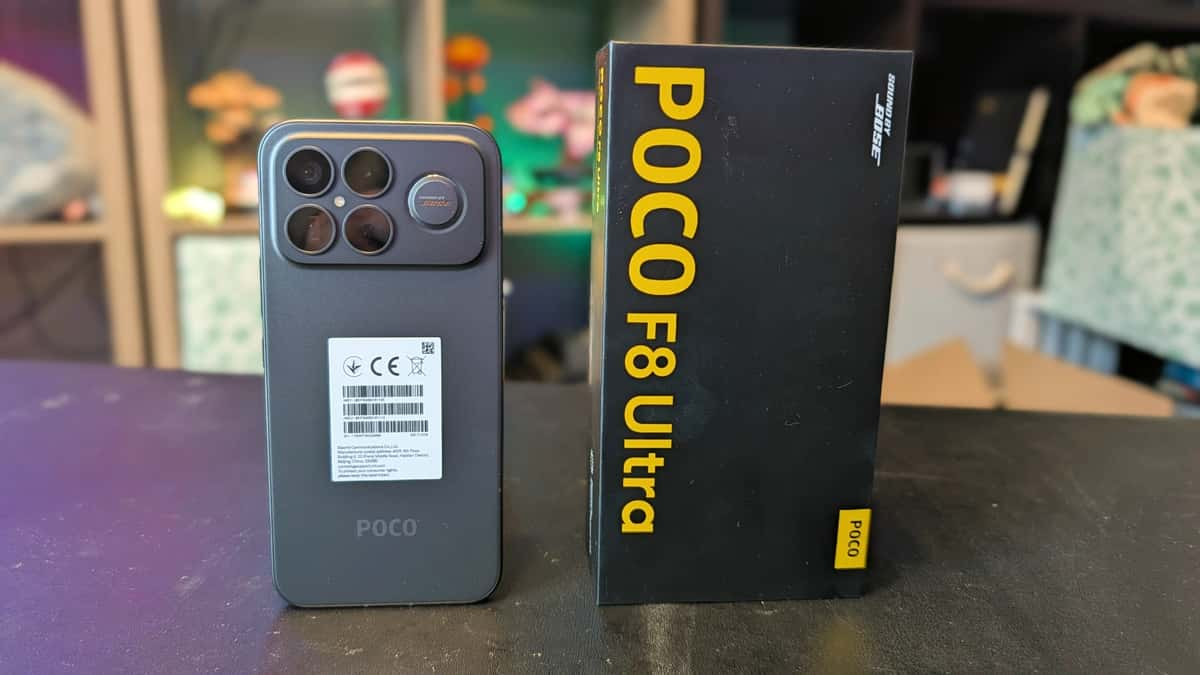
Gaming is where the F9 Ultra starts to justify its existence. The phone has a 185Hz display, compared with 120Hz on the F8 Ultra. That does not mean every game will run at 185fps. The actual frame rate depends on the game, graphics settings and software support. But for supported titles, the higher refresh rate can make movement feel smoother and improve responsiveness. The F9 Ultra also has a larger 8,050mAh battery, compared with 6,500mAh on the F8 Ultra. That is a substantial increase. For someone who spends hours gaming, the larger battery could be more useful than a small processor improvement. The F9 Ultra also uses POCO’s 3D IceLoop cooling system with a larger liquid heat-pipe area and graphite coverage designed to improve heat dissipation under heavy loads.
Upgrade verdict: If you are a serious mobile gamer, the F9 Ultra is a more convincing upgrade than it is for an ordinary user.
AI Features: More Graphics AI Than Chatbot AI
The F9 Ultra’s AI story is mainly about performance and image processing. POCO says the VisionBoost D8 chipset uses pre-trained AI models to improve image details and support smoother visuals through motion interpolation. The Snapdragon 8 Elite Gen 5 also includes Qualcomm’s AI engine. But I would not buy the F9 Ultra expecting a completely different AI experience from the F8 Ultra. The F8 Ultra already has the same processor generation and VisionBoost D8 graphics system. So the AI upgrade is more about how the phone handles supported games, visuals and image processing, rather than a major new AI assistant experience.
Upgrade verdict: The F9 Ultra is better positioned for AI-assisted graphics, but this is not a reason alone to upgrade from the F8 Ultra.
Camera: The F9 Ultra Looks More Ambitious
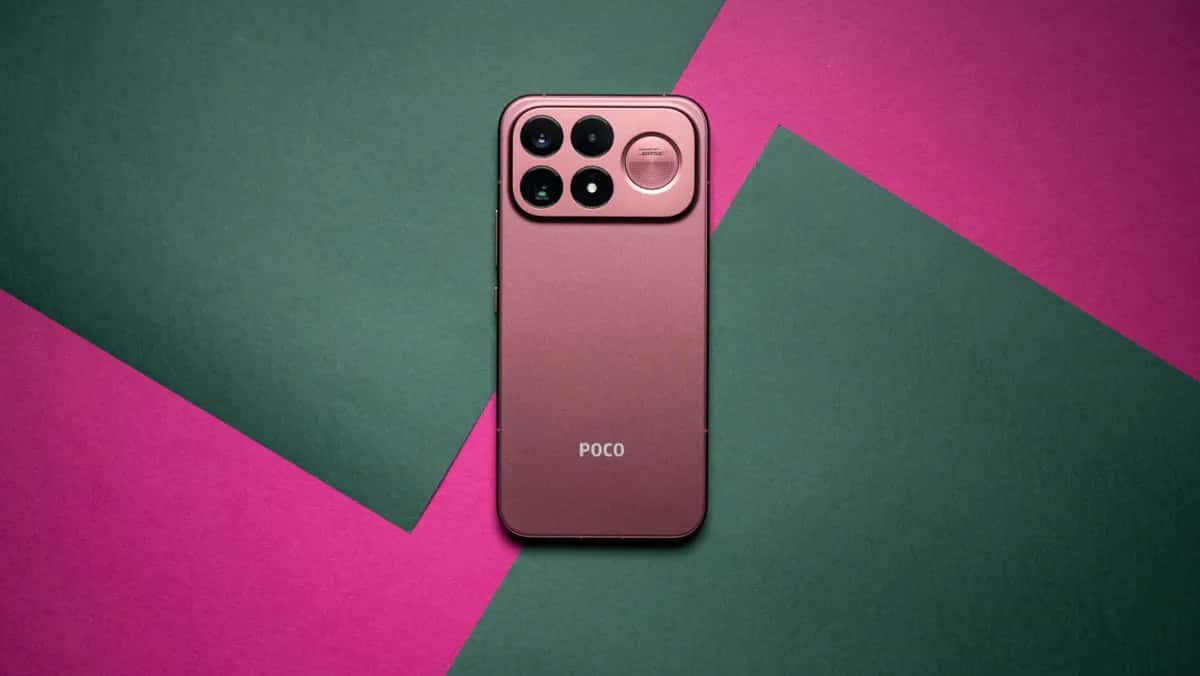
The F8 Ultra has a 50MP Light Fusion 950 main camera, a 50MP periscope telephoto and a 50MP ultra-wide camera. The F9 Ultra moves to a 200MP main camera, alongside a 50MP 5x periscope telephoto and a 50MP ultra-wide camera. That is a meaningful change on paper. The higher-resolution main camera could offer more detail and flexibility for cropping, while the dedicated 5x telephoto is useful for distant subjects. But megapixels alone do not guarantee better photos. The real difference will depend on the sensor, image processing, low-light performance and how consistently the camera performs.
Upgrade verdict: If photos matters to you, the F9 Ultra is the more interesting option. But I would still wait for independent camera testing before calling it a major upgrade.
Battery: This Is the Biggest Practical Improvement
The F8 Ultra already has a large 6,500mAh battery. The F9 Ultra increases that to 8,050mAh. That is a much bigger difference than the processor change. Both phones support 100W wired charging and 50W wireless charging, so the F9 Ultra does not improve charging speed on paper. Instead, the upgrade is about how long the phone can last before you need to charge it. For users who spend long hours on mobile data, gaming or watching videos, that could be a very useful improvement.
Upgrade verdict: The battery is one of the strongest reasons to choose the F9 Ultra.
Price in Nigeria: Is the Difference Worth It?
The F8 Ultra launched internationally from $729, while the F9 Ultra starts at $799. Using an illustrative exchange rate of ₦1,600 to $1, the starting prices convert to approximately:
F8 Ultra: ₦1,166,400
F9 Ultra: ₦1,278,400
That is a difference of about ₦112,000 before shipping, taxes and retailer margins.
However, Nigerian retail prices can vary considerably, especially for imported phones.
A realistic budgeting range would be around ₦1.2m–₦1.5m for the F8 Ultra and ₦1.3m–₦2.0m for the F9 Ultra, depending on the storage version and seller.
So the F9 Ultra is not necessarily a huge price jump at the starting configuration, but the higher-storage versions could become much more expensive.
Should F8 Ultra Owners Upgrade?
If you already own the F8 Ultra, I would not recommend upgrading simply because the F9 Ultra is newer.
The F8 Ultra still has:
A flagship Snapdragon processor.
A 6.9-inch AMOLED display.
100W wired charging.
50W wireless charging.
A capable triple-camera system.
Bose audio.
IP68 protection.
The F9 Ultra is more attractive if you specifically want:
A much larger battery.
A 185Hz display.
A 200MP main camera.
Up to 1TB storage.
Improved gaming endurance.
The newest POCO flagship design and features.
Final Verdict
The POCO F9 Ultra is a stronger overall flagship, but the F8 Ultra is still very good. The F9 Ultra’s biggest improvements are not the processor. They are the 8,050mAh battery, 185Hz display, 200MP camera and larger storage options. For a new buyer, the F9 Ultra is the more attractive choice if the price difference is manageable. For an existing F8 Ultra owner, I would only upgrade if you genuinely need better battery life, want the newer camera system or spend a lot of time gaming.
The F9 Ultra is the better phone, but the F8 Ultra is still a phone you can comfortably keep for another year.

Author
Adebayo JohnsonSenior tech editor with over 4 years of experience covering mobile and gadget technology. Explore author & articles