Samsung Galaxy S26 Ultra Review: The Complete Experience
We review the Samsung Galaxy S26 Ultra from an African perspective, covering its camera, gaming, battery, display, AI, S Pen and price.

The Samsung Galaxy S26 Ultra is the kind of phone that creates an unusual problem for a reviewer: finding something demanding enough to expose its weaknesses. After reviewing the phone, we found that Samsung hasn't radically changed what an Ultra phone is. Instead, it has concentrated on making an already powerful formula thinner, faster and more capable. You still get the enormous display, integrated S Pen, 200MP main camera, two telephoto cameras and 5,000mAh battery associated with recent Ultra models. But the S26 Ultra introduces the Snapdragon 8 Elite Gen 5 for Galaxy, faster 60W charging, improved camera hardware, a thinner body and a growing collection of Galaxy AI tools.
For Nigerian buyers, however, specifications aren't enough. Our September 2026 price research found that a new Galaxy S26 Ultra can require roughly ₦1.35 million to ₦1.7 million for common 256GB and 512GB configurations, with some official-channel pricing considerably higher.
At those prices, this isn't simply a smartphone purchase. It needs to justify itself as a camera, gaming device, productivity tool and long-term phone. That's what we focused on in our review.
Samsung Galaxy S26 Ultra Specifications
Specification | Galaxy S26 Ultra |
|---|---|
Nigeria Price | ₦1.35m–₦1.88m (256GB) |
512GB Price | ₦1.49m–₦1.70m |
Display | 6.9-inch QHD+ Dynamic AMOLED 2X |
Resolution | 3120 × 1440 |
Refresh Rate | 1–120Hz adaptive |
Processor | Snapdragon 8 Elite Gen 5 for Galaxy |
CPU Speed | Up to 4.74GHz |
RAM | 12GB / 16GB depending configuration |
Storage | 256GB / 512GB / 1TB |
Main Camera | 200MP, f/1.4 |
Ultra-Wide | 50MP, f/1.9 |
Telephoto | 10MP, 3x optical |
Periscope Telephoto | 50MP, 5x optical |
Front Camera | 12MP |
Video | Up to 8K/30fps |
Battery | 5,000mAh |
Wired Charging | 60W |
Wireless Charging | Up to 25W |
S Pen | Yes |
Connectivity | 5G, Wi-Fi 7, Bluetooth 6.0, NFC, UWB |
Software | Android 16 |
Weight | 214g |
Thickness | 7.9mm |
The specification sheet is impressive, but after reviewing the phone, we think three things matter considerably more than the numbers: the display, camera flexibility and how much work you can realistically do from the phone.
Design: The Ultra Is Finally Getting Easier to Handle
One thing we noticed immediately is that the S26 Ultra doesn't feel quite as cumbersome as the Ultra name suggests.
It's still enormous. A 6.9-inch phone measuring 163.6 × 78.1mm isn't going to disappear into your hand, but Samsung has reduced the thickness to 7.9mm and weight to 214g. That matters more than it sounds. Large phones become uncomfortable because you're not holding them for five minutes. You're holding them while responding to WhatsApp messages, watching YouTube, editing photos, navigating Lagos traffic or spending an hour playing a game.
We found the slimmer construction makes the S26 Ultra easier to live with than its dimensions initially suggest. The S Pen remains integrated into the phone, which is increasingly unusual in the smartphone market.
For most people, it won't be the reason to spend this much money. But for signing documents, annotating screenshots, making quick notes or precisely editing something on the display, it continues to give the Ultra an advantage few competitors can replicate.
What we discovered
Samsung hasn't made a small phone. It has made a very large phone less annoying to carry. That's an important distinction.
Display: One of the S26 Ultra's Strongest Reasons to Exist
The 6.9-inch Dynamic AMOLED 2X panel runs at 3120 × 1440 and supports an adaptive refresh rate up to 120Hz. But specifications don't adequately explain why the display works so well.
During our review, we found that the combination of the large canvas, smooth refresh rate and strong outdoor visibility makes the S26 Ultra particularly comfortable for reading, maps, video, photo and editing.
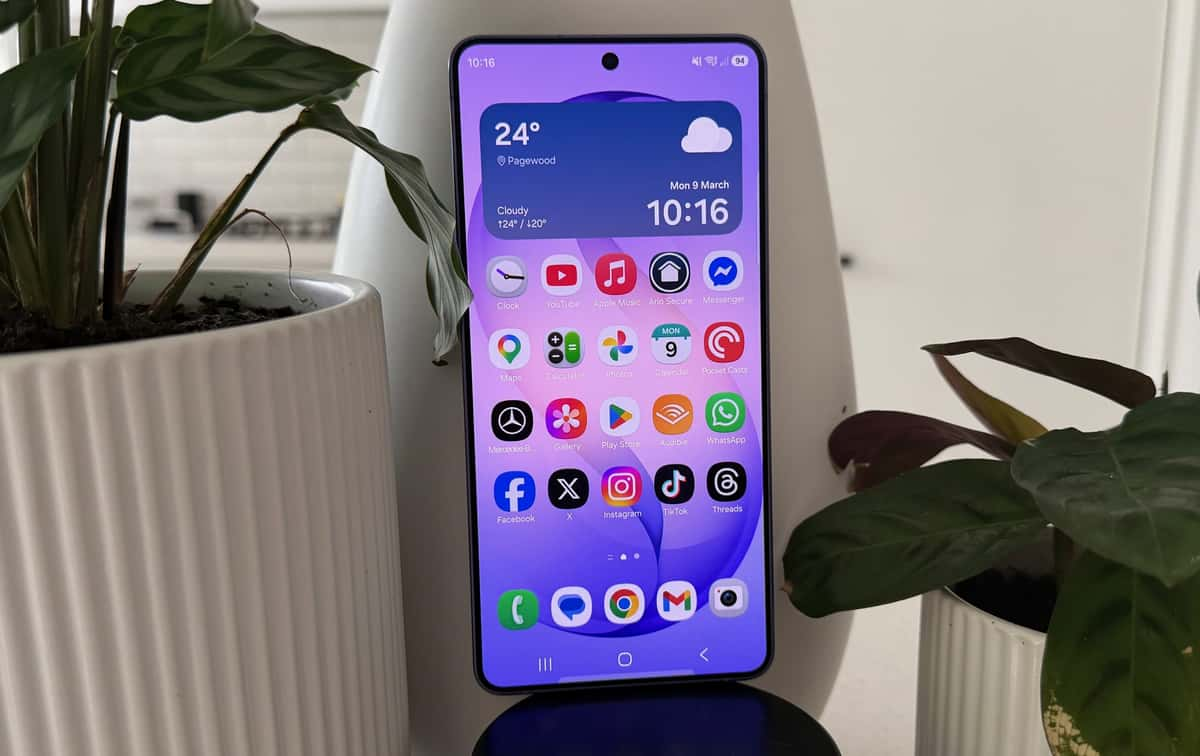
Outdoor visibility matters considerably in Nigeria and other African markets. A display that looks fantastic inside an air-conditioned showroom can become frustrating under intense afternoon sunlight. We had no such fundamental usability concern here. The size is also genuinely useful when running multiple applications, editing photos or using Samsung DeX.
The trade-off is obvious: you have to want a large phone. If you're buying purely for calls, WhatsApp and Instagram, carrying a 6.9-inch Ultra every day is unnecessary.
Performance: We Struggled to Make It Feel Slow
Samsung uses the Snapdragon 8 Elite Gen 5 for Galaxy, with its CPU reaching as high as 4.74GHz. Our experience was exactly what we'd expect from hardware at this level.
Normal applications aren't challenging. Moving between social media, the browser, camera, editing applications and messaging feels immediate. Heavy multitasking is where the enormous performance reserve becomes more meaningful.
The same applies to Samsung DeX. If you're connecting the phone to a larger display and treating it almost like a lightweight computer, flagship processing power stops being an abstract benchmark and starts becoming useful.
We also examined controlled benchmark results as a reference point for our experience. Independent testing recorded Geekbench scores of 3,785 single-core and 11,563 multi-core, while the phone produced 49.37fps in 3DMark Solar Bay Unlimited. Therefore, performance isn't a weakness of this phone.
Gaming: Powerful, But Don't Buy It Only for Gaming
We used the S26 Ultra with the kind of workloads that make flagship hardware relevant, and gaming is one of them. Games such as Call of Duty: Mobile, PUBG Mobile, EA FC Mobile and other demanding titles benefit from the responsive 120Hz display and Snapdragon chipset.
Thermal behaviour is also important. A phone can produce spectacular benchmark numbers for several minutes and still become uncomfortable or throttle during a long gaming session. Independent sustained-performance testing we examined found a substantial improvement in initial GPU performance over the previous generation, although performance still reduces under prolonged heavy load.
That matches the broader conclusion we reached from using the phone: this is an extremely capable gaming device, but Samsung isn't positioning it as a dedicated gaming phone with an oversized cooling system and gaming-specific controls.
Who should care?
If you already want the Ultra for its cameras, S Pen and productivity features, excellent gaming performance is another major benefit.
If gaming is your only priority, we'd compare dedicated gaming phones before spending S26 Ultra money.
Cameras: Versatility Is the Real Advantage
The rear camera arrangement consists of:
200MP f/1.4 main camera
50MP ultra-wide
10MP 3x telephoto
50MP 5x telephoto
There's also a 12MP autofocus front camera. Samsung supports optical zoom at 3x and 5x, with sensor-assisted optical-quality zoom at 2x and 10x. But megapixels aren't what impressed us most. It's having several genuinely useful focal lengths available without carrying another camera.
For a Nigerian creator, imagine covering an event. You can capture the entire venue with the ultra-wide, people and general scenes with the main camera, portraits and closer compositions around 3x, and distant subjects using the 5x telephoto.
That's far more useful than having a 200MP number printed on the box.
What We Found About Image Quality
In good lighting, the main camera captures substantial detail and produces images that are immediately usable for social media. The f/1.4 main camera is also notable because gathering more light becomes particularly useful as conditions deteriorate.
But we wouldn't describe every photo as automatically perfect. Samsung's processing still has a recognisable character. Depending on the scene and mode, computational processing can produce a result that looks more processed than someone seeking a completely neutral photo might prefer.
The advantage is consistency and flexibility. For weddings, product photos, travel, events, TikTok, Instagram or documenting a business, we found the S26 Ultra gives you enough camera options that you rarely feel trapped by one focal length.
Zoom Is More Useful Than 200MP Marketing
The combination we found more interesting than the headline 200MP sensor is 3x + 5x optical zoom. Samsung also provides sensor-assisted 10x optical-quality zoom and digital zoom extending much farther.
There's an important distinction here. Digital zoom being available doesn't mean we'd recommend using extreme zoom for critical photography.
We found the intermediate telephoto ranges much more useful because they let you frame distant subjects without immediately destroying image quality. That's particularly valuable for concerts, outdoor events, travel, sports and street photography.
Video: This Can Be a Serious Creator's Phone
The S26 Ultra records up to 8K at 30fps, with additional high-frame-rate options including 4K at 120fps. We don't think most buyers should routinely record everything in 8K. Files become enormous, editing becomes heavier and sharing the finished video often compresses away much of the advantage.
4K is the more practical format for most creators. But the fact that the phone offers this much recording flexibility reinforces an important point: someone running a small content business can legitimately produce commercial-looking material without immediately buying a dedicated camera.
That doesn't mean the S26 Ultra replaces professional cameras in every situation. It means the gap between “phone camera” and “useful production camera” has become remarkably small for everyday online content.
Battery: Good, But This Is Where Samsung Could Do More
Samsung keeps the battery at 5,000mAh. We found it sufficient for getting through normal daily use, but battery capacity is one area where the S26 Ultra doesn't look particularly aggressive against newer Android competitors pushing much larger capacities.
This becomes especially relevant in Nigeria. Power availability isn't equally predictable everywhere, and a flagship costing this much should ideally minimise charging anxiety. Controlled battery testing we reviewed produced 20 hours 10 minutes of web browsing, 9 hours 54 minutes of video and 11 hours 49 minutes of gaming under that test's specific methodology.
Those aren't directly equivalent to someone's normal day, but they provide useful context.
Our conclusion is simpler:
Battery life is good. Battery capacity isn't class-leading. That's an important difference.
60W Charging Makes a Bigger Difference
Charging is much more interesting this generation. The S26 Ultra supports 60W wired charging, compared with 45W on the previous Ultra, while wireless charging reaches up to 25W. Independent charging measurements we examined reached 78% after 30 minutes and 100% in approximately 49 minutes using appropriate equipment.
But from a buying perspective, the improvement matters. If you're preparing to leave home and discover your phone is almost empty, a short charging session is substantially more useful than it was on older Ultra generations.
Samsung still isn't competing with the most aggressive 100W+ charging systems available from some Chinese manufacturers. But 60W feels much more appropriate for an Ultra-class phone.
Galaxy AI: Useful When It Solves a Problem
Samsung continues to put considerable emphasis on Galaxy AI. We approached these features differently during our review.
Instead of asking, “How many AI features does this phone have?”, we asked:
Which ones would we actually use again?
Writing assistance can be useful when drafting or rewriting messages.
Transcription becomes more interesting for meetings, interviews and lectures.
Photo-editing tools are useful when you need to remove or reposition distracting elements.
Translation can help when communicating across languages.
And AI-assisted search can reduce the number of steps required to identify something on the screen.
Our main conclusion is that Galaxy AI works best when it removes a task, not when AI exists simply to decorate a feature list. For students, professionals, creators and business owners, transcription, summarisation, translation and editing have much clearer value than novelty AI effects.
S Pen and DeX Still Make the Ultra Different
Two features don't receive as much attention as cameras and AI but significantly affect our view of the S26 Ultra: S Pen and Samsung DeX. Together, they make the phone unusually capable for productivity. You can annotate a document with the S Pen, connect the phone to a display and use DeX for a desktop-style workspace.
We wouldn't tell someone to replace a proper laptop with an S26 Ultra. But if you're travelling and need to respond to email, work with documents, make a presentation or handle browser-based tasks, the phone can do considerably more than a conventional smartphone. This is one of the situations where the high price starts becoming easier to understand.
Nigeria Price: What We Actually Found
This is where our review gets more complicated. Rather than taking one retailer's price and calling it “the Nigerian price,” we examined the broader market.
Our September 2026 price research found new 12GB/256GB S26 Ultra units roughly between ₦1.35 million and ₦1.88 million, with around ₦1.375 million representing the typical price in one verified open-market sample.
For 12GB/512GB, we found approximately ₦1.49 million–₦1.70 million, with around ₦1.6 million being typical. We also found substantially higher official/local-channel reference pricing, including roughly ₦2.5 million for 256GB and ₦2.86 million for 512GB.
That enormous difference is why simply writing “the S26 Ultra costs ₦2 million” isn't particularly useful.
What we'd do as buyers
We'd compare:
Exact storage capacity, regional model, warranty coverage, seller reputation, whether the phone is genuinely new and whether it's officially supported locally.
A ₦1.4 million imported device and a much more expensive official-channel unit aren't necessarily identical purchases once warranty and after-sales support are considered.
What We Like
The display remains one of the strongest parts of the phone.
Camera versatility is excellent, particularly because of the combination of main, ultra-wide, 3x and 5x cameras.
Performance leaves enormous headroom for gaming, editing and multitasking.
60W charging is a meaningful improvement.
S Pen and DeX make the phone substantially more useful for productivity.
Long-term software support makes the high purchase price easier to spread across several years of ownership.
What We Don't Like
The 5,000mAh battery feels conservative when competitors are increasingly experimenting with much larger capacities.
It's still a huge phone, even after Samsung reduced its thickness and weight.
The price varies wildly in Nigeria, making it easy to overpay.
Extreme digital zoom is less useful than the marketing number suggests.
And despite 60W being an improvement, some competing Android flagships still charge considerably faster.
Who Should Buy the Galaxy S26 Ultra?
After reviewing it, we think the S26 Ultra makes the most sense for four types of buyer.
Content creators benefit from the cameras, large display, editing capabilities and storage options.
Business users can take advantage of DeX, S Pen, multitasking and the long software-support window.
Mobile photographers get one of the most versatile collections of focal lengths available on a mainstream smartphone.
Power users and gamers get enough processing performance that the phone should remain capable for years.
Who Should Skip It?
Don't buy an S26 Ultra simply because it's Samsung's most expensive phone.
If your normal day consists primarily of WhatsApp, TikTok, Instagram, banking, calls, YouTube and web browsing, you're unlikely to exploit much of what you're paying for. A cheaper Galaxy S-series device or even a good Galaxy A-series model can handle those tasks. We would also hesitate to upgrade from a very recent Ultra unless there's a particular S26 feature you need.
The biggest difference appears when you're coming from something substantially older.
Should Galaxy S23 Ultra Owners Upgrade?
This is a much more interesting upgrade. Three generations give the S26 Ultra enough accumulated improvements in processing, AI capabilities, charging, camera processing, design and software longevity to make the difference noticeable.
That doesn't mean an S23 Ultra suddenly becomes bad. Far from it. If yours remains fast and the battery is healthy, keeping it remains financially sensible.
But someone moving from an S22 Ultra, S23 Ultra or an even older flagship is much more likely to appreciate what has changed than someone moving from last year's Ultra.
Frequently Asked Questions
How much is the Galaxy S26 Ultra in Nigeria?
Our September 2026 market research found new 256GB units around ₦1.35m–₦1.88m and 512GB units around ₦1.49m–₦1.70m in open-market offers. Official/local-channel references can be substantially more expensive.
Does the Galaxy S26 Ultra support 5G in Nigeria?
Yes. The African model supports numerous sub-6GHz 5G bands alongside extensive 4G LTE support. Actual 5G availability and performance depend on your network and location.
Is the Galaxy S26 Ultra good for gaming?
Yes. In our review, performance wasn't a concern. The Snapdragon 8 Elite Gen 5 for Galaxy and 120Hz display make it an extremely capable gaming phone, although dedicated gaming phones may provide more specialised gaming hardware.
Is the camera better than an iPhone?
We wouldn't reduce that comparison to one universal winner. The S26 Ultra's major strength is versatility, particularly its main, ultra-wide, 3x and 5x camera arrangement. Buyers who prioritise video consistency or Apple's ecosystem may reach a different conclusion.
Does it have an S Pen?
Yes. The S Pen remains integrated into the Galaxy S26 Ultra.
How fast does the Galaxy S26 Ultra charge?
It supports up to 60W wired and 25W wireless charging. Independent controlled testing we examined reached roughly 78% in 30 minutes and a full wired charge in approximately 49 minutes. Actual results depend on charger, temperature and usage conditions.
Final Thought
After reviewing the Galaxy S26 Ultra, our biggest takeaway isn't that Samsung has reinvented the smartphone. It hasn't. What Samsung has built is a phone with very few meaningful weaknesses and an unusually broad collection of capabilities.
The display is excellent. Performance leaves enormous headroom. The four-camera arrangement gives creators genuine flexibility. The S Pen remains useful. DeX expands what you can do away from a computer. And 60W charging finally makes topping up the Ultra considerably less frustrating.
But there are two realities we wouldn't ignore. The first is the 5,000mAh battery. It's good enough, but we'd like Samsung to be more ambitious when competing Android flagships are pushing battery capacity further.
The second is price. At roughly ₦1.35 million to ₦1.7 million for many current Nigerian-market configurations, this remains an enormous purchase—even if that's lower than some official-channel prices.
So our recommendation isn't simply “buy the S26 Ultra because it's the best Samsung.”
Buy it when you can actually exploit what you're paying for. If photography, video, gaming, S Pen, DeX, multitasking and long-term ownership are important to your work or lifestyle, the Galaxy S26 Ultra makes a convincing case for itself. If all you need is a fast phone for social media, messaging and everyday applications, you're paying for a huge amount of capability you'll rarely touch.
The Galaxy S26 Ultra's real strength isn't doing one thing better than every other phone. It's how many demanding things it can do well from one device.
Read more: Samsung Galaxy S27 Pro Review: A Smaller Ultra Without the S Pen: What You Should Expect
Read more: Google Pixel 11 vs Galaxy S26 vs iPhone 17: Which Flagship Should You Buy in Nigeria?
Read more: Samsung Galaxy S27 Ultra Camera: First Look, Leaks & What We Know
Read more: Samsung Galaxy S25 Ultra Review and Buying Guide: Still Worth It in 2026?

Author
Nkechi OkaforMobile device specialist focused on smartphones, tablets, and wearables for the African market. Explore author & articles