





Samsung Galaxy Z Flip8 Review: A Better Flip Phone, but the Price Is Getting Harder to Ignore
Samsung Galaxy Z Flip8 review covering its slimmer design, 4.1-inch cover screen, cameras, battery life, performance and price.
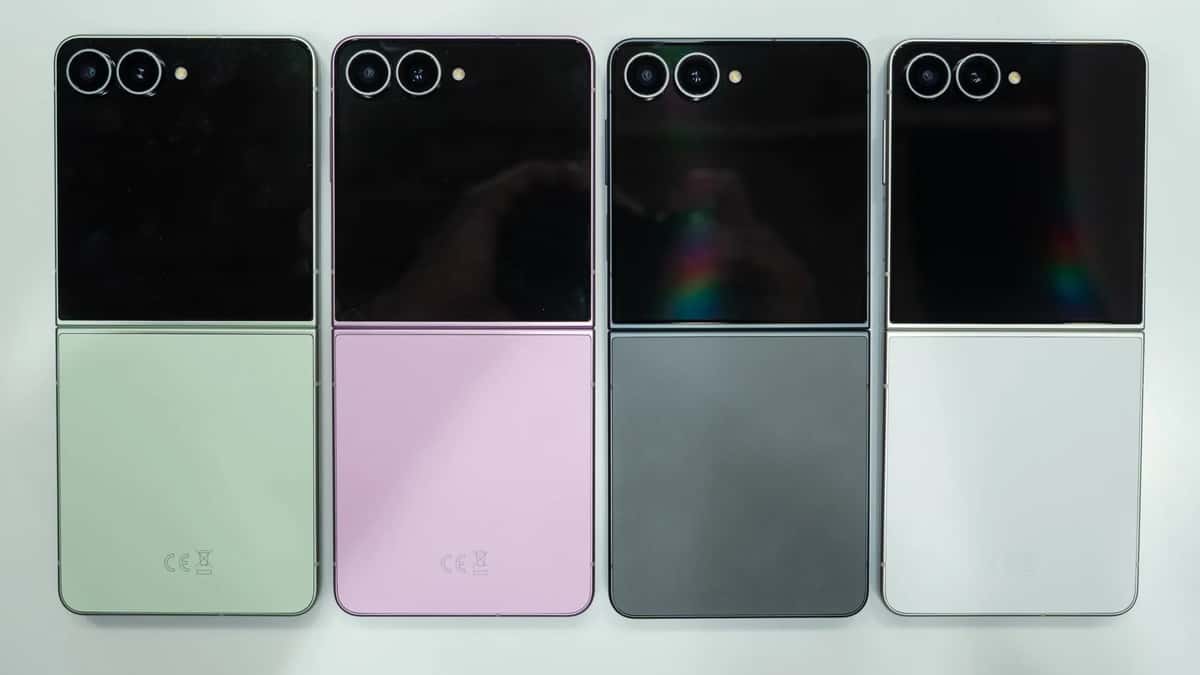
The Galaxy Z Flip8 is the kind of phone whose improvements become clearer once you stop looking for one dramatic headline feature.
Samsung has made its latest clamshell foldable thinner and lighter, improved how useful the cover display can be, pushed performance forward and kept one of the best reasons for owning a flip phone: a flagship-sized smartphone that folds into something genuinely pocketable.
But there is an uncomfortable part of the equation. The Flip8 starts at $1,199.99 in the US, $100 above the previous generation’s launch price. At that level, refinement alone has to work much harder to justify the purchase.
Samsung Galaxy Z Flip8 specifications
Specification | Galaxy Z Flip8 |
|---|---|
Main display | 6.9-inch Dynamic AMOLED 2X, 1080 × 2520, adaptive 1–120Hz |
Cover display | 4.1-inch Super AMOLED, 948 × 1048, 60/120Hz |
Processor | Exynos 2600; chipset may vary by market |
RAM | 12GB |
Storage | 256GB / 512GB |
Main camera | 50MP, f/1.8, OIS |
Ultrawide | 12MP, f/2.2 |
Selfie camera | 10MP, f/2.2 |
Battery | 4,300mAh |
Charging | 25W wired, 15W wireless |
Dimensions unfolded | 75.4 × 166.9 × 6.1mm |
Dimensions folded | 75.4 × 85.7 × 13.1mm |
Weight | 180g |
Software | Android 17 / One UI 9 |
US price | $1,199.99 (256GB); $1,399.99 (512GB) |
Nigeria price | ₦1,499,000–₦1,850,000 |
Design: Samsung's refinement is working
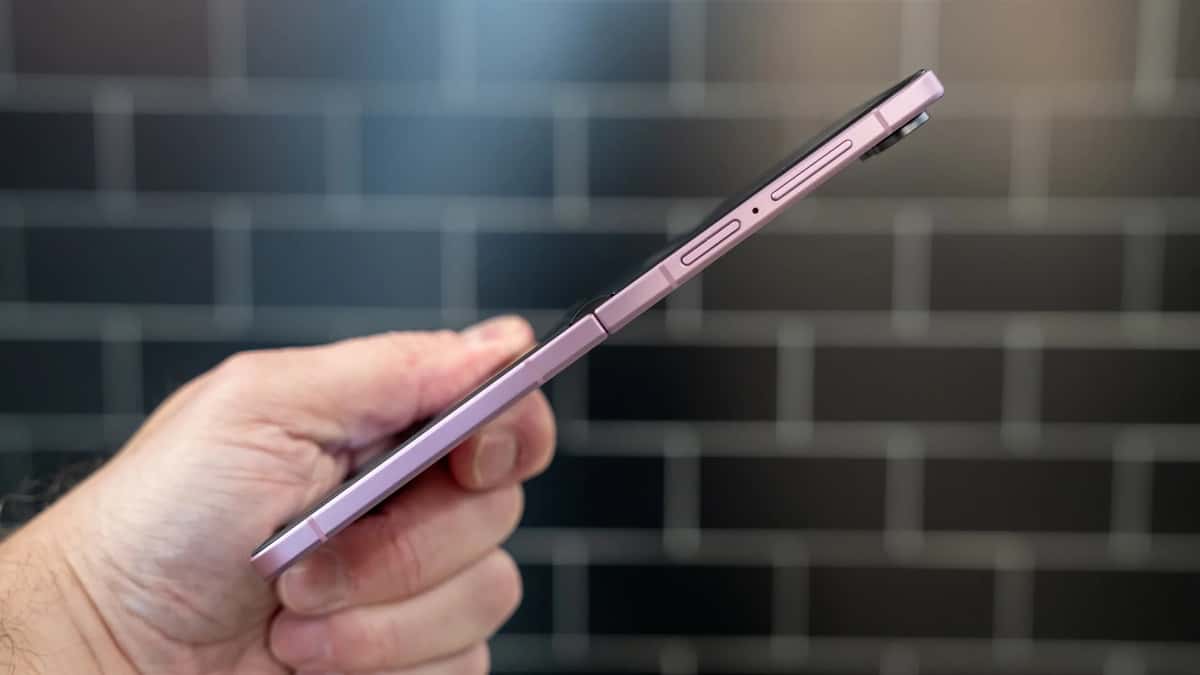
At 180g and 6.1mm unfolded, the Flip8 is eight grams lighter than the Flip7, while its folded thickness has dropped to 13.1mm.
Those numbers look minor on a specification sheet, but weight and thickness matter disproportionately on a foldable. The whole point of this form factor is portability, and shaving material away without turning the phone into an obviously compromised device makes sense.
Folded, it occupies considerably less vertical pocket space than a conventional flagship. Open it and you still get a large 6.9-inch Dynamic AMOLED 2X display with an adaptive 1–120Hz refresh rate.
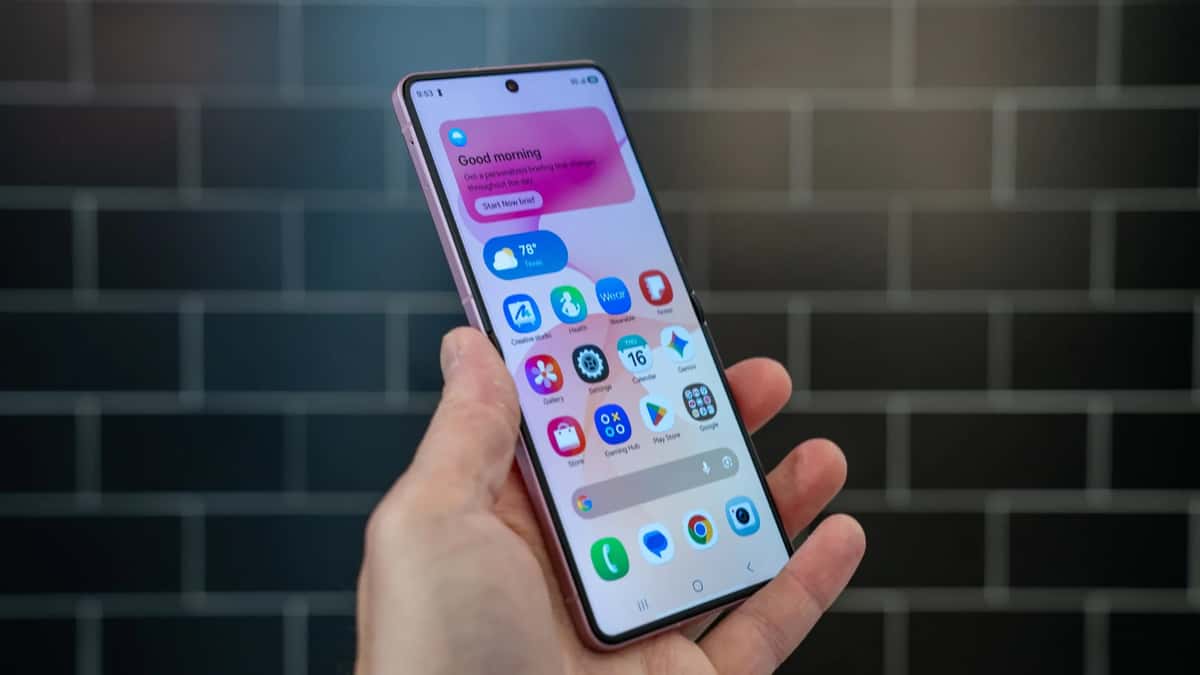
The crease has not magically disappeared, so anyone waiting for an entirely crease-free Samsung foldable will have to keep waiting. But that is increasingly less important than the overall usability of the hardware.
The FlexWindow is becoming genuinely useful
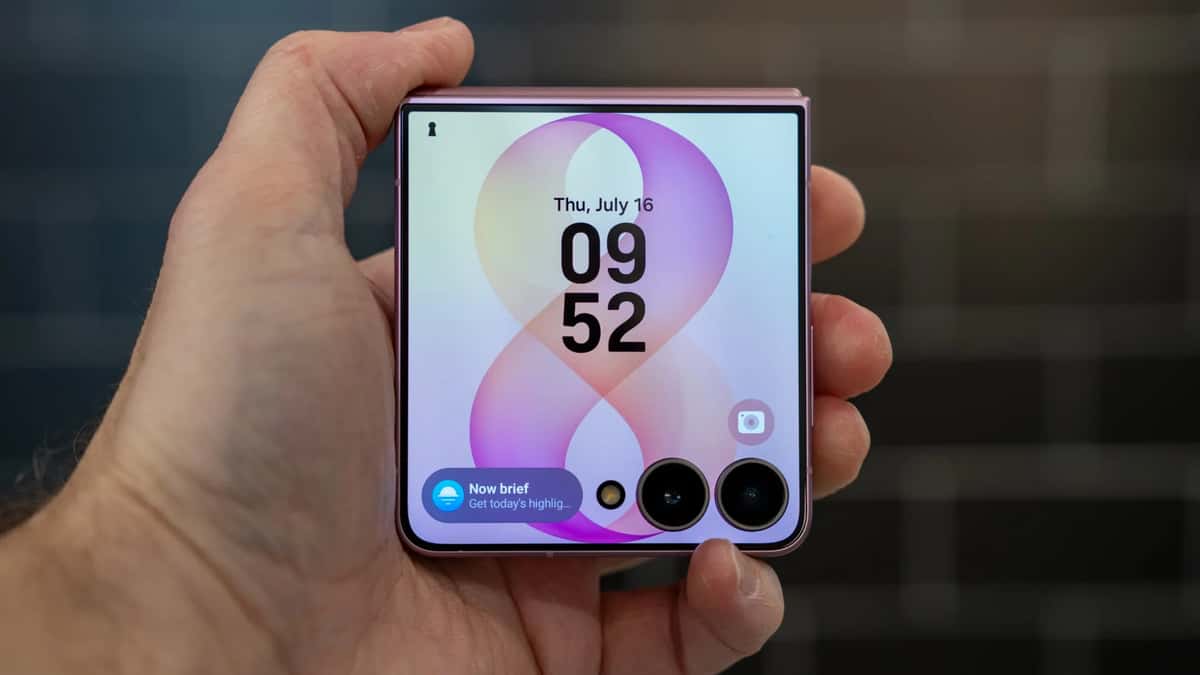
The 4.1-inch cover screen remains one of the Flip8's most important features. Rather than treating it as an oversized notification panel, the software increasingly makes it possible to deal with short interactions without opening the phone. Notifications, widgets, quick information and supported applications fit naturally into this workflow.
Samsung has also integrated features such as Now Brief and Gemini-powered interactions into the FlexWindow. That changes the way a flip phone works. The best cover screen isn't simply the largest one; it is the one that reduces how frequently you need the main display. For checking something quickly, controlling media or responding to information, opening a 6.9-inch screen every time defeats part of the purpose of owning a clamshell.
Performance is flagship-grade
Performance shouldn't be a concern here. Samsung lists the Exynos 2600 for the model detailed in its international launch specifications, paired with 12GB of RAM and either 256GB or 512GB of storage. Processor availability can differ between regions.
In normal use, this class of hardware has far more processing headroom than messaging, browsing, photography and multitasking require. Gaming and heavier workloads are where sustained performance and the thermal limitations of such a thin folding chassis become more relevant.
The bigger software story is One UI 9 and Samsung's expanding AI layer. Some features are useful; others will depend heavily on individual workflows. I wouldn't buy a $1,200 phone primarily for AI features. The stronger argument remains the combination of Android, compact folding hardware and a useful external display.
Cameras: the folding design remains the advantage
The rear system pairs a 50MP f/1.8 main camera with OIS with a 12MP ultrawide, while the internal selfie camera remains 10MP. The camera hardware isn't revolutionary, but the Flip form factor gives it an advantage conventional phones cannot easily reproduce.
Fold the phone halfway and it becomes its own stand. Turn on the cover-screen preview and the 50MP main camera can effectively become your selfie camera. For solo photos, group shots, video and content creation, that flexibility is more meaningful than adding another mediocre sensor simply to increase the camera count.
Battery life is better than the 4,300mAh number suggests
Samsung has retained a 4,300mAh battery, with 25W wired and 15W wireless charging. Samsung rates 25W charging at around 55% in 30 minutes under its test conditions.
Independent battery testing is encouraging. The device recorded a 14-hour, 14-minute active-use score and reached 56% after 30 minutes and a full charge in 79 minutes using Samsung's 25W adapter.
That is respectable endurance for a compact foldable. Charging speed, however, is becoming difficult to defend. At this price, 25W feels conservative when much cheaper Android phones have moved substantially beyond it.
Galaxy Z Flip8 price in Nigeria
Our Nigerian market check found a fairly wide range. Justfones lists the Flip8 from approximately ₦1,499,000, while another Nigerian retailer, Redwhale, lists a brand-new unit at ₦1,849,999.
I would therefore budget roughly ₦1.5 million to ₦1.85 million rather than treating one figure as the definitive Nigerian price. Exchange rates, storage capacity, warranty coverage, imported stock and retailer margins can move foldable pricing quickly.
Internationally, Samsung's US store lists the unlocked 256GB model at $1,199.99 and 512GB at $1,399.99 before trade-ins or promotional discounts.
Verdict: should you buy the Galaxy Z Flip8?
The Galaxy Z Flip8 is a very good flip phone trapped inside a difficult value proposition. Its 180g body is impressively light, the 6.9-inch main display gives you conventional flagship screen space when unfolded, and the 4.1-inch FlexWindow makes the phone useful without constantly opening it. Camera flexibility remains another legitimate reason to choose a Flip over a normal smartphone.
What holds it back is Samsung's conservative approach to areas such as charging and camera hardware while increasing the entry price.
For a Flip7 owner, I would skip this generation. The differences aren't substantial enough to make another premium purchase sensible.
For someone coming from a Flip5, Flip6 or a conventional smartphone, the decision is more interesting. The Flip8 is thinner, mature and increasingly good at making the folding form factor useful rather than merely fashionable.
Best for: Buyers who value portability, cover-screen functionality, flexible photography and the clamshell design.
Think twice if: Battery capacity, very fast charging, camera versatility or maximum hardware value for your money matters more than having a phone that folds.
Read more: Samsung Galaxy A07 Review: Price, Specs, Camera and Battery Life
Read more: Samsung Galaxy S25 Ultra Review and Buying Guide: Still Worth It in 2026?
Read more: Samsung Galaxy Z Fold8 Review: Price, Specs and Features

Author
Nkechi OkaforMobile device specialist focused on smartphones, tablets, and wearables for the African market. Explore author & articles
Related Articles

Samsung Galaxy A57 Review: Price and Specs
Samsung Galaxy A57 review covering its price, Exynos 1680 performance, 120Hz AMOLED display, cameras, battery, AI features and whether it is worth buying.

Samsung Galaxy A07 Review: Price, Specs, Camera and Battery Life
Samsung Galaxy A07 review covering its 6.7-inch display, performance, 50MP camera, 5,000mAh battery, software support and whether it offers good value.

Samsung Galaxy Z Fold8 Review: Price, Specs and Features
Samsung Galaxy Z Fold8 review covering its Nigeria price, 7.6-inch AMOLED display, Snapdragon 8 Elite Gen 5, cameras, battery, Galaxy AI and whether you should buy it.

Samsung Galaxy S27 Pro Review: A Smaller Ultra Without the S Pen: What You Should Expect
Samsung Galaxy S27 Pro leaks reveal a 6.6-inch display, 5,200mAh battery, 200MP camera and Snapdragon 8 Elite Gen 6 Pro. Here is what Nigerians should expect.
Infinix HOT 70 Pro 5G Review: More Power, More AI, but One Display Compromise
Infinix HOT 70 Pro 5G review covering its Dimensity 7100 performance, 50MP Sony camera, 6,000mAh battery, AI features, design, limitations and price.
Vivo V80 Review: A 7,200mAh Battery and ZEISS Cameras Make This One to Watch
Vivo V80 review covering its 7,200mAh battery, 144Hz AMOLED display, ZEISS cameras, Snapdragon 7 Gen 4 performance, global price expectations and Nigeria price

Huawei Mate 90 Series Review: Huawei’s Flagship Phones Push Cameras, Battery and HarmonyOS Further
Huawei Mate 90 series review covering the Mate 90, Mate 90 Pro and Mate 90 Pro Max, including cameras, performance, battery and price.
Comments (0)
Leave a comment
Comments cannot be edited or deleted after posting. Please review your comment before submitting.
No comments yet. Be the first to share your thoughts using the form above.