

Should Your Business Accept Crypto Payments? The Benefits, Risks and Hidden Costs
Thinking about accepting Bitcoin or stablecoins at checkout? Explore how crypto payments work, customer concerns, price volatility, security, refunds and regulations in Nigeria and Kenya.
Why businesses are considering crypto payments
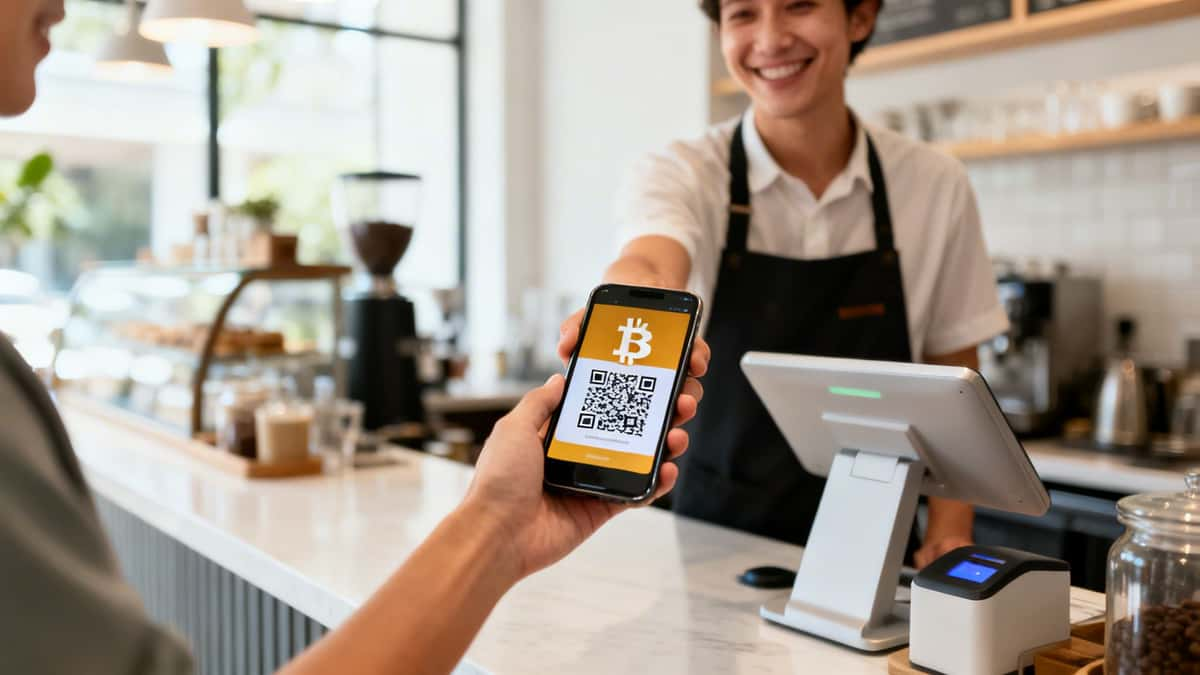
A customer walks into a shop, chooses a product and asks to pay with cryptocurrency. The cashier displays a QR code, the customer scans it with a crypto wallet, confirms the transaction and the business receives its payment. No card terminal is required, and the transaction can be completed without the traditional banking checkout process. This is becoming an increasingly visible use of cryptocurrency. Some small businesses, online merchants and service providers are experimenting with digital assets as another way to accept payments, particularly when serving customers who already use crypto or operate across borders.
But should your business do the same? Accepting cryptocurrency can offer another payment option, but it also introduces risks that a conventional merchant may not be prepared to manage. A business should not adopt it simply because crypto is gaining attention. It needs to consider customer demand, settlement, price volatility, security, refunds and local regulations before introducing it at checkout.
The central question is not whether cryptocurrency is becoming popular. It is whether accepting it will make the business more accessible and profitable without making everyday operations harder.
Bitcoin, Ethereum and stablecoins: what is the difference for a merchant?
Not all cryptocurrencies behave in the same way. Bitcoin and Ethereum are volatile assets. Their market prices can rise or fall significantly, sometimes within a single day. If a retailer receives $100 worth of Bitcoin and keeps it in the wallet, the dollar value of that payment may change before the business uses it.
Stablecoins such as USDC and USDT are designed to maintain a relatively stable value against a reference currency, usually the US dollar. A customer paying $50 in a dollar-pegged stablecoin is generally expected to transfer approximately $50 in value. However, stablecoins are not identical to cash in a bank account. Their value depends on the issuer, reserve arrangements, redemption access, the blockchain network and market confidence. A stablecoin can temporarily trade below its intended peg, and a wallet or service provider can introduce additional risks.
For merchants, the difference is important. Accepting Bitcoin means accepting exposure to a fluctuating market price unless the payment is converted quickly. Accepting a stablecoin can reduce that particular risk, but it does not remove custody, compliance or settlement concerns.
The benefits: cross-border customers and payment flexibility
Crypto payments can be useful when a business serves customers who already hold digital assets. A software company selling subscriptions internationally, a travel business serving foreign customers or a digital service provider working with overseas clients may find that crypto offers an additional route to receive payments. There may also be settlement advantages. Blockchain transactions can move across borders without following exactly the same payment process as a card network or bank transfer. Depending on the network, provider and jurisdiction, this can make certain transactions faster or more convenient.
For physical shops, QR-code payments can also be relatively simple to introduce. The merchant displays a payment address or a transaction-specific code, and the customer scans it using a compatible wallet. However, convenience depends on the customer's experience. The customer needs a funded wallet, must understand the network and must be comfortable paying with crypto. A payment method that is easy for a crypto enthusiast may be unfamiliar or intimidating to someone who prefers a bank transfer, card or mobile money.
Businesses should therefore treat crypto as an additional option rather than a replacement for familiar payment methods.
The biggest risk: your sales revenue can lose value
Imagine a shop sells an item for $20 and receives the equivalent amount in Bitcoin. The business is not trading cryptocurrency, speculating on the market or trying to make an investment. It has simply accepted payment for a product. But if Bitcoin falls after the transaction and the merchant continues holding it, the value of that sale falls too.
The recent Binance security incident explains how a market event can affect people and businesses beyond the exchange itself. On October 30, 2026, report has it that cryptocurrency prices fell after Binance disclosed a potential security issue. Bitcoin dropped to a six-week low of $77,646, while Ether reached a two-month low of $2,238.76. BNB also fell by more than 8% over 24 hours. The incident was not proof that every crypto wallet or payment provider had been compromised. Nor does it mean a merchant with or without a Binance account would lose money directly because of the exchange's security problem. The wider concern is market sentiment regarding a major incident can prompt investors to sell, putting downward pressure on prices across the market.
Consider the $20 shop payment again. If the asset falls by 3%, the merchant's holding is worth about $19.40 before fees. A 10% fall would reduce it to $18. A 50% fall would leave only $10. The business may have no interest in waiting for the market to recover. It needs money to pay suppliers, wages, rent and electricity, or to restock inventory. A retailer cannot always tell a supplier that payment will be delayed until Bitcoin returns to last week's price.
This is the hidden cost of accepting volatile crypto: the merchant can become exposed to market movements without ever intending to become an investor.
Direct wallet payments or crypto payment gateways?
Businesses generally have two approaches.
Direct wallet payments: Involve receiving cryptocurrency into a wallet controlled by the merchant. This gives the business direct access to the funds, but it also makes the business responsible for private-key security, transaction verification, network selection and record keeping. A customer could send funds on the wrong network, transfer the wrong amount or use an address that does not belong to the business. Blockchain payments are generally difficult or impossible to reverse once confirmed.
Crypto payment gateways: Sit between the customer and the merchant. Depending on the provider, they can generate payment requests, monitor confirmations, convert cryptocurrency into fiat currency and provide transaction records. Stripe explains that businesses can reduce exposure to price movements through automatic conversion or by accepting suitable stablecoins. It also highlights security, regulatory, accounting and refund risks.
A payment processor does not eliminate every risk. The business must still evaluate the provider's reliability, fees, custody arrangements, supported countries, settlement currency and payout timing. It should also check whether the provider is authorised to offer the relevant services in its market.
Should a business convert crypto to fiat immediately?
For a retailer whose costs are mainly in naira, Kenyan shillings or another local currency, holding volatile crypto may introduce unnecessary financial uncertainty. A business that accepts Bitcoin for a sale but pays its supplier in naira has two separate financial exposures: the cryptocurrency price and the exchange rate used when converting it.
Immediate conversion can reduce the time the merchant remains exposed to crypto price movements. Some processors offer automatic conversion and settle the merchant in a conventional currency. Others may transfer the cryptocurrency directly to the merchant's wallet, leaving conversion decisions to the business. Stablecoins can also reduce volatility relative to Bitcoin or Ether, but they should not automatically be treated as risk-free cash equivalents.
The practical decision should be based on the business's cash-flow needs. If the company needs predictable money to restock inventory every week, it should not depend on a volatile asset recovering its value before the next supplier payment is due.
Refunds, accounting and transaction reconciliation
A successful blockchain transaction does not automatically make customer service straightforward. If a customer returns an item, the business needs a clear refund policy. Should the customer receive the original crypto amount or the equivalent local-currency value of the purchase? If the cryptocurrency has changed in price, those two approaches can produce different outcomes.
The business should communicate its policy before accepting payment. It should also retain the transaction ID, payment date, asset, network, amount received, exchange rate at the time of payment, fees and any conversion or refund records.
Accounting should reflect the local-currency value of the transaction when it was received, with subsequent changes and disposals recorded in line with applicable accounting and tax rules.
A QR code is only the beginning of the process. The business still needs a reliable way to verify that the correct amount arrived and to match the transaction with the customer's purchase.
When accepting crypto makes commercial sense
Crypto payments are more likely to make sense when a business has customers who actively request them, sells internationally, or operates in an industry where digital-asset payments are already familiar. They are less compelling when most customers prefer existing payment methods, the business operates on tight margins, or management cannot absorb unpredictable changes in the value of its receipts.
Customer confidence deserves particular attention. Some customers associate cryptocurrency with scams, speculative trading, exchange failures or complicated wallet processes. Introducing a crypto option without explaining how it works could make a business appear less trustworthy to people who simply want a safe and familiar checkout experience.
The business should not make customers feel that crypto is preferred, safer or more modern than the payment methods they already trust. It should remain optional, clearly labelled and easy to ignore.
What African businesses should know about crypto regulation
African fintech markets are developing quickly, but the rules governing virtual assets differ between countries. Nigeria and Kenya illustrate why businesses need to understand the local framework rather than assume that a payment method accepted elsewhere is automatically permitted at home.
Nigeria: The regulatory environment has been evolving. The Investments and Securities Act 2025 strengthened the Securities and Exchange Commission's framework for digital assets and virtual-asset service providers. In July 2026, the Nigerian Presidency also announced the Virtual Assets Coordination Executive Order, establishing a council chaired by the Central Bank of Nigeria, with the SEC and Nigeria Revenue Service among the participating agencies. The order states that registration responsibility depends on the activity and asset involved. Securities-related activities fall under the SEC, while payment, settlement and custody services involving non-security virtual assets are assigned to the CBN. It also provides for coordination on tax policy and a regulatory sandbox.
For a Nigerian retailer, accepting a customer's crypto payment for its own goods is not necessarily the same activity as operating an exchange, providing custody or processing payments for other merchants. The distinction matters. Businesses should obtain appropriate legal and tax advice before choosing a provider or building a crypto-payment service.
Kenya: The Virtual Assets Service Providers Act 2025 came into effect on November 4, 2025. It gives the Central Bank of Kenya and the Capital Markets Authority responsibility for licensing and supervising virtual-asset service providers, depending on the activity. A public notice from the authorities said licensing would commence after the relevant regulations were issued and that no VASPs had yet been licensed under the Act at the time of that notice. Draft 2026 regulations set out proposed requirements covering licensing, consumer protection, custody, cybersecurity and stablecoin issuance.
The important point for merchants is that a payment gateway or wallet provider may fall under rules that do not apply in the same way to a shop simply selling its own products. Businesses should verify the current licensing position and the exact services their provider offers.
A practical checklist before adding crypto to checkout
Before accepting cryptocurrency, business owners should be able to answer these questions:
Will customers actually use it? Check real customer demand rather than adopting crypto for publicity.
Which assets will you accept? Understand the difference between volatile coins and stablecoins.
How will you settle the money? Decide whether payments will be converted immediately or held in a wallet.
Who controls the funds? Review wallet security, private-key access, provider custody and recovery procedures.
What happens when something goes wrong? Establish procedures for wrong networks, underpayments, delayed confirmations and refunds.
Can your accounts team reconcile it? Record the local-currency value, transaction ID, fees and conversion details.
Is the provider compliant? Check its authorisation, supported jurisdictions and regulatory obligations.
The bottom line: a payment option should serve the customer, not complicate the business
Cryptocurrency can provide another way for businesses to receive money, particularly from customers who already use digital assets or need cross-border payment options. Stablecoins and automatic conversion can also reduce some of the volatility associated with holding Bitcoin or Ether. But accepting crypto is not automatically a competitive advantage. A business can lose money through price movements, make refunds difficult, expose itself to wallet security problems or create confusion for customers who prefer familiar payment methods.
For most small retailers, the sensible approach is to keep existing payment options available, test crypto only where there is genuine demand, and avoid holding volatile assets unless the business has a clear reason and the financial capacity to accept the risk.
The best checkout system is not the one with the most payment options. It is the one customers trust and the business can manage reliably.
Read more: AI Makes Building Easier: Execution Is What Turns Ideas Into Companies
Read more: Google Ads vs Meta Ads vs TikTok Ads vs LinkedIn Ads: Which Is Best for Your Business?
Read more: How to Get Your First 50 Customers as an Early-Stage Startup in Africa

Author
Azeez LiadiAzeez is an AI Engineer, Data Scientist, founder, and Senior Tech Writer at Afritech Connect. A top 1% graduate of Lagos State University, he has worked with international startups and… Explore author & articles





