Tecno Pova 8 Pro 5G Review: Price, Specs and What Nigerians Should Know
Tecno Pova 8 Pro 5G review with Nigeria price, 144Hz AMOLED, Dimensity 7400 Ultimate, 6,500mAh battery, gaming features and 50MP OIS camera.

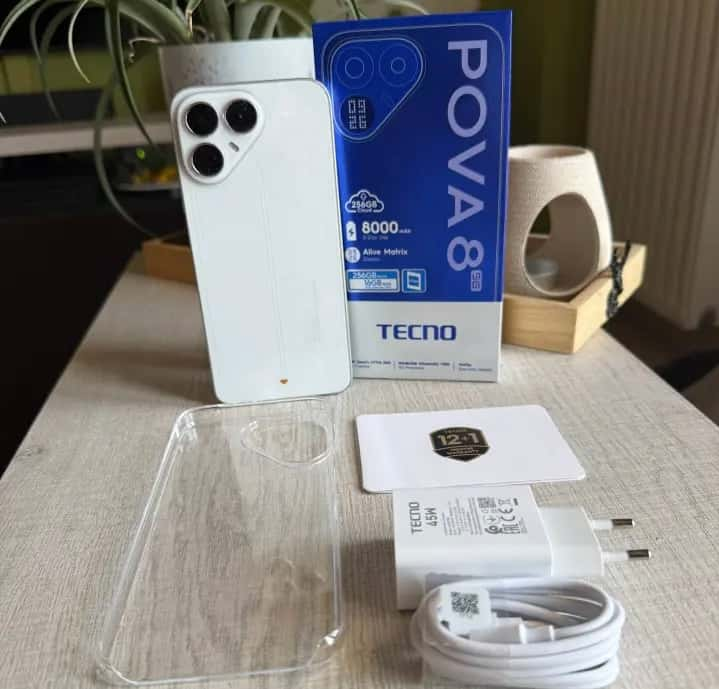
The Pova 8 Pro 5G is one of TECNO's more ambitious attempts at building a gaming-focused mid-range phone without turning it into an enormous dedicated gaming device. After examining the specifications and current launch information, three things stand out to us: the 144Hz AMOLED display, 6,500mAh battery and dual-chip gaming setup.
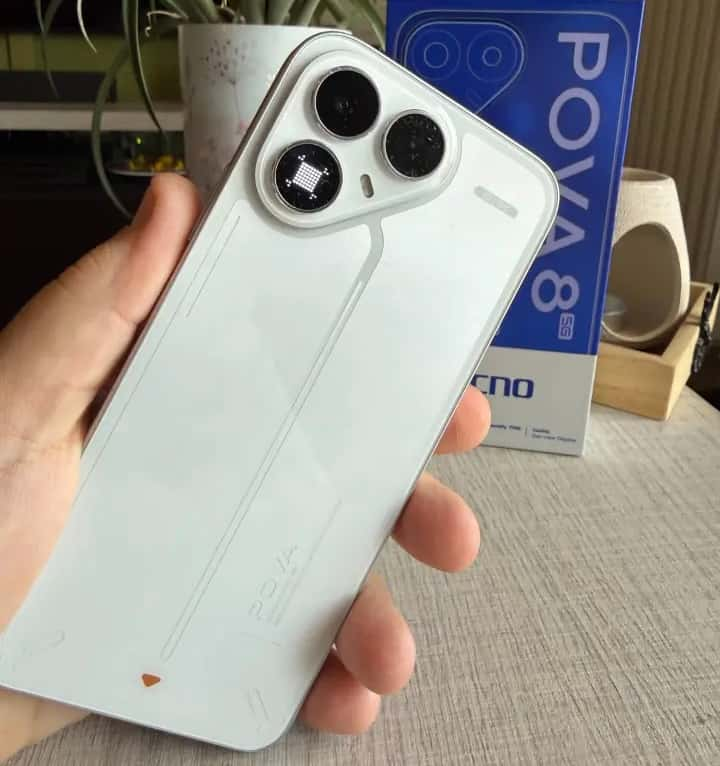
But there's considerably more going on. TECNO has paired the MediaTek Dimensity 7400 Ultimate with its own P1 graphics chip, added a 5,000mm² vapor chamber for cooling and surrounded the rear cameras with an unusual lighting system called the Alive Matrix Display.
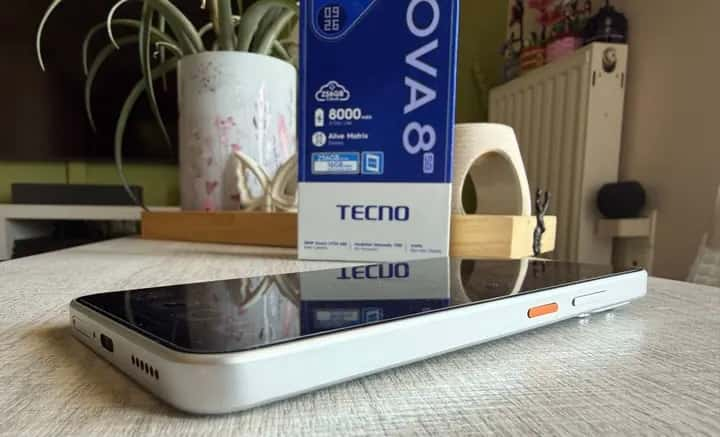
At only 7.39mm thick and 189g, it's also surprisingly thin and light for something carrying a 6,500mAh battery.
For Nigerian buyers, however, specifications aren't enough. The more important question is whether the Pova 8 Pro offers enough performance to justify its local price when Redmi, Infinix and Samsung are fighting for the same money.
Tecno Pova 8 Pro 5G Price in Nigeria
We haven't found a confirmed official TECNO Nigeria recommended retail price that we'd be comfortable presenting as the definitive nationwide price. However, our Nigerian market check found the Pova 8 Pro listed around ₦420,000 by a local TECNO-focused price retailer/tracker. The important qualification is that this is a market price snapshot, not a permanent official Nigerian price. Configuration matters too.
TECNO Pova 8 Pro has: 8GB + 256GB, 12GB + 256GB and 12GB + 512GB
configurations, and it also have virtual/extended RAM at “24GB RAM.” We wouldn't confuse 12GB physical RAM + 12GB extended memory with 24GB of physical RAM.
Internationally, the phone launched in India at ₹49,999 for 8GB/256GB and ₹54,999 for 12GB/512GB.
For Nigerian buyers, we'd consider around ₦400,000–₦450,000 the price range, especially if you're getting the correct 5G model and a proper warranty.
Pova 8 Pro 5G Specs at a Glance
Specification | Tecno Pova 8 Pro 5G |
|---|---|
Display | 6.78-inch AMOLED |
Resolution | 2644 × 1208 |
Refresh rate | Up to 144Hz |
Processor | Dimensity 7400 Ultimate 5G |
Graphics | Mali-G615 MC2 + TECNO P1 chip |
RAM | 8GB/12GB physical RAM |
Storage | 256GB/512GB |
Main camera | 50MP Sony LYTIA 700C, OIS |
Ultrawide | 8MP |
Selfie camera | 13MP |
Battery | 6,500mAh |
Charging | 45W |
Cooling | 5,000mm² vapor chamber |
Protection | IP66/IP68/IP69/IP69K |
Software | Android 16 / HiOS 16 |
Weight | 189g |
Thickness | 7.39mm |
Those numbers tell us this isn't simply another inexpensive Pova with a huge battery. The display and gaming hardware are where TECNO has spent much of the specification budget.
Alive Matrix Display: Useful or Just Decoration?
The most unusual feature isn't actually the front display. It's the Alive Matrix Display surrounding the rear camera area. TECNO uses 177 independently controlled Mini LED beads to produce animated white lighting effects. The lighting can react to more than 49 scenarios, including incoming calls, messages, gaming and file transfers.
We wouldn't call it an essential feature. Your games won't run faster because lights are flashing on the back of the phone. But it gives the Pova 8 Pro something many mid-range phones lack: identity.
Gaming-oriented smartphones frequently use aggressive styling, RGB lights and oversized camera modules. TECNO's implementation is comparatively restrained while still making the Pova recognisable. Whether you consider that futuristic or unnecessary decoration will come down to taste.
The 144Hz AMOLED Is More Important
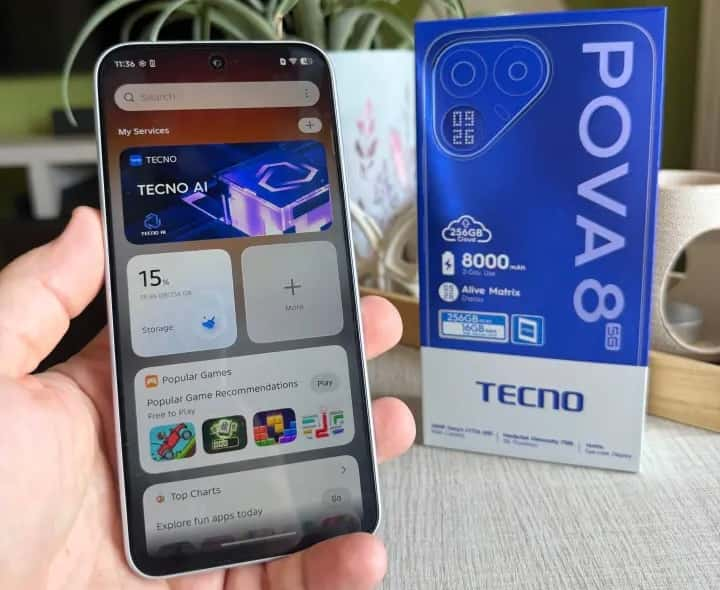
The screen matters considerably more to us. You're getting a 6.78-inch HyperLux AMOLED with a 2644 × 1208 resolution and selectable 60Hz, 90Hz, 120Hz and 144Hz refresh rates.
TECNO specifies: 700 nits normal brightness | 1,600 nits HBM | 4,500 nits peak brightness. That 4,500-nit number shouldn't be interpreted as the entire screen continuously operating at 4,500 nits outdoors. HBM is the more useful figure when thinking about sustained high-brightness visibility. The panel also supports a quoted 2,800Hz instantaneous touch-sampling rate, while Gorilla Glass 7i protects the front.
For gaming, that's a strong package. Outside gaming, 144Hz should also make scrolling through TikTok, Instagram, X and webpages look particularly fluid. But we'd still use an adaptive/lower refresh setting when maximum battery life matters.
Dimensity 7400 Ultimate: How Powerful Is It?
The Pova 8 Pro uses the MediaTek Dimensity 7400 Ultimate 5G.
It's a 4nm octa-core platform with:
4 × Cortex-A78 cores at up to 2.6GHz
4 × Cortex-A55 efficiency cores at up to 2.0GHz
Graphics come from the Mali-G615 MC2. TECNO says it has an AnTuTu result of 1,010,744, although we'd treat that as a manufacturer benchmark rather than an Afritech Connect independent test result. The practical takeaway is more important. This is a performance-focused mid-range chipset, not a Snapdragon 8 Elite-class flagship processor.
For WhatsApp, TikTok, YouTube, browsing, multitasking and normal Android use, we'd expect plenty of performance headroom. Gaming is where the second chip becomes relevant.
The P1 Graphics Chip Needs Some Explanation
TECNO markets the Pova 8 Pro as a dual gaming chipset phone because the Dimensity 7400 Ultimate works alongside the company's P1 graphics chip.
The P1 supports features including:
frame interpolation
game super resolution
video super resolution
Tecno Pova 8 Pro has up to 144FPS for gaming. But we wouldn't translate that into:
Every game runs natively at 144FPS.
It doesn't. Some of the higher frame-rate experience relies on real-time frame interpolation, where additional frames are generated between natively rendered frames.
Game support also matters. For example, TECNO says its PUBG Mobile 144FPS Ultra Extreme implementation uses P1 frame generation and is expected through a major PUBG Mobile update by October 2026. That's important as the 144Hz display tells you what the screen can show. It doesn't guarantee every game engine will render 144 native frames every second.
Cooling Could Matter More Than the Benchmark
One feature we'd pay close attention to is the 5,000mm² vapor chamber. TECNO calls the system 5K IceShield VC Cooling. That's relevant because gaming performance isn't only about how fast the processor runs during the first five minutes.
Heat builds during longer sessions. When a phone can't dissipate that heat effectively, the chipset can reduce performance to control temperature. We don't have controlled Afritech Connect thermal measurements for this phone, so we wouldn't claim the Pova 8 Pro never throttles. But including a large vapor chamber makes much more sense for a gaming phone than simply advertising a high benchmark number.
6,500mAh Battery Is a Real Advantage
This is another specification that makes sense for Nigeria. The Pova 8 Pro carries a 6,500mAh battery with 45W wired charging. That's considerably larger than the traditional 5,000mAh capacity we've seen across many Android phones.
For someone spending hours on: gaming, TikTok, YouTube, mobile data, hotspot and social media. That additional capacity can be genuinely useful.
It becomes even more relevant in places where electricity isn't consistently available.
TECNO claims the battery can retain at least 80% of its capacity after 2,000 complete charging cycles under its controlled laboratory conditions.
We'd treat that as a longevity claim rather than a guarantee that every Nigerian user's battery will behave identically for six years. Heat, charging habits and usage patterns matter.
45W Charging Is Good, Not Exceptional
There's a trade-off. A 6,500mAh battery is large. 45W charging isn't particularly aggressive for that capacity. It should still be considerably more convenient than slow charging, but buyers shouldn't assume this is one of the fastest-charging phones simply because it's gaming-focused.
Some competing Chinese Android devices push substantially higher charging wattages. We'd rather have the large battery than sacrifice capacity purely to chase a charging-speed headline, but it's worth knowing where the compromise sits.
Camera: Better Than We'd Expect From a Pova
Photo isn't usually the first reason we'd recommend a Pova. But TECNO has made the camera more interesting this time. The main camera is a 50MP Sony LYTIA 700C sensor with optical image stabilisation, accompanied by an 8MP ultrawide.
The front camera is 13MP. OIS is particularly useful because it physically compensates for some hand movement, helping with lower-light photography and video stability.
We still wouldn't buy the Pova 8 Pro primarily for photo. TECNO's Camon family remains more photography-focused. But having OIS plus an ultrawide means this isn't a bare-minimum gaming-phone camera system either.
For someone who games heavily but still wants a reasonably versatile everyday camera setup, that's a welcome balance.
IP69K Sounds Impressive, but Don't Abuse It
Another unusual specification is the collection of protection ratings.
TECNO advertises:
IP66
IP68
IP69
IP69K
TECNO's IP68/IP69 testing follows IEC 60529:2019, while IP69K testing follows ISO 20653:2023 under controlled laboratory conditions.
That's impressive protection for this category. But we'd still avoid calling the phone “waterproof.” Water resistance is tested under defined conditions, and seals can deteriorate with damage and age. The practical benefit is additional protection against accidents, dust and demanding environments—not permission to deliberately abuse the phone underwater.
Android 16, HiOS 16 and Connectivity
The Pova 8 Pro ships with HiOS 16 based on Android 16.
Connectivity includes:
5G
Wi-Fi 6
Bluetooth 5.4
NFC
GPS/GLONASS/BeiDou/Galileo
USB Type-C
Infrared remote control
There's also an under-display fingerprint reader, hardware gyroscope, Dolby Atmos and Hi-Res Audio support.
For gamers, we're particularly pleased to see the hardware gyroscope. That's more meaningful for motion-controlled aiming than another decorative gaming specification.
Who Should Buy the Tecno Pova 8 Pro 5G?
Based on the hardware we've researched, we'd shortlist it for:
Mobile gamers
Heavy social-media users
People who watch lots of video
Users prioritising battery endurance
Buyers who want 144Hz AMOLED
People who need 256GB or 512GB storage
Buyers wanting 5G without entering flagship pricing
We'd look elsewhere if the main priority is having the strongest camera phone possible. We'd also compare alternatives carefully if the Nigerian selling price climbs substantially above ₦450,000. That's where value starts becoming much more competitive.
Pova 8 Pro vs the Competition
Around the ₦400,000, we'd compare this phone with whatever Redmi, Infinix, POCO and Samsung devices are actually available at the time of purchase. The Pova's strongest argument isn't one isolated features.
It's the combination of:
144Hz 1.5K-class AMOLED
Dimensity 7400 Ultimate
P1 graphics chip
5,000mm² vapor chamber
6,500mAh battery
50MP OIS main camera
and IP69K-class protection
That gives it a fairly clear identity. But we wouldn't pay an enormous premium simply for the Alive Matrix lights. The display, battery, cooling and performance hardware are where the real value lies.
Final Verdict
After researching the Pova 8 Pro 5G more closely, we'd describe it as a gaming-focused mid-range phone that makes several sensible hardware decisions rather than simply looking like a gaming phone.
The Alive Matrix lighting gets attention, but it isn't the reason we'd buy it. The 144Hz AMOLED, Dimensity 7400 Ultimate, P1 graphics processor, 5,000mm² vapor chamber and 6,500mAh battery matter considerably more.
The camera package is also more complete than we expected, with a Sony LYTIA 700C main sensor, OIS and an actual ultrawide rather than a largely decorative secondary sensor. 45W charging isn't class-leading for a 6,500mAh battery. The Dimensity 7400 Ultimate shouldn't be mistaken for a current flagship chipset.
And TECNO's 144FPS marketing needs context because some of that experience depends on supported games and frame-generation technology rather than every title rendering natively at 144FPS.
Pricing will ultimately decide the value. Our current Nigerian market check found a price reference of approximately ₦420,000, while TECNO's official Nigerian retail pricing remains something we'd verify before treating any one listing as definitive.
At roughly ₦400,000–₦450,000, we'd consider the Pova 8 Pro 5G a compelling option for someone whose priorities are gaming, battery endurance and display quality. Push the price substantially higher, and we'd start comparing the available Redmi, POCO, Infinix and Samsung alternatives much more aggressively.
Our verdict: one of TECNO's more convincing gaming-focused Pova phones on paper, but the 144Hz display, cooling and 6,500mAh battery are stronger reasons to buy it than the flashy rear LEDs.
Read more: Redmi Note 15 Pro vs Redmi Note 17 Pro: Price & Specs in Nigeria 2026
Read more: Redmi 17 vs Tecno Pova 6 Neo: Which 7,000mAh+ Battery Phone Should You Buy?

Author
Adebayo JohnsonSenior tech editor with over 4 years of experience covering mobile and gadget technology. Explore author & articles