

Tecno Spark 30 Pro vs Infinix Note 50: Budget Battle
We compare the Tecno Spark 30 Pro and Infinix Note 50 after reviewing their displays, cameras, gaming, battery, charging and current Nigeria prices.

The Tecno Spark 30 Pro and Infinix Note 50 target buyers who want AMOLED displays, good cameras and enough performance for everyday Android use without paying flagship prices.
After reviewing both phones and researching their current Nigerian market position, however, we don't think the decision is as simple as choosing the newer or more expensive phone.
The Spark 30 Pro gives you a 108MP camera, AMOLED display, expandable storage and a lower purchase price. The Note 50 costs more but adds a 144Hz AMOLED display, aluminium frame, optical image stabilisation, faster wired charging and wireless charging.
The question is whether those improvements are noticeable enough to justify paying more.
Tecno Spark 30 Pro vs Infinix Note 50 Specs
Specification | Tecno Spark 30 Pro | Infinix Note 50 |
|---|---|---|
Nigeria Price | ₦240K–₦300K | ₦300K–₦312K |
Display | 6.78" AMOLED | 6.78" AMOLED |
Refresh Rate | 120Hz | 144Hz |
Resolution | 1080 × 2436 | 1080 × 2436 |
Processor | Helio G100 | Helio G100 Ultimate |
RAM | 8GB | 8GB |
Storage | 128GB / 256GB | 256GB |
Main Camera | 108MP | 50MP with OIS |
Selfie | 13MP | 13MP |
Battery | 5,000mAh | 5,200mAh |
Wired Charging | 33W | 45W |
Wireless Charging | No | 30W |
Water Resistance | IP54 | IP64 |
Network | 4G | 4G |
The important thing we found is that megapixels and refresh-rate numbers alone don't tell you which phone is better to own.
Design: Note 50 Feels More Expensive
The difference becomes apparent in construction. The Spark 30 Pro is thin and attractive, but the Note 50 uses an aerospace-grade aluminium frame and has a more premium overall feel. It also carries stronger IP64 protection compared with IP54 on the Spark.
During our comparison, we found the Note 50 feels closer to a mid-range device than its pricing might suggest. The Spark isn't poorly designed, it simply doesn't disguise its budget positioning as effectively.
Our pick: Infinix Note 50
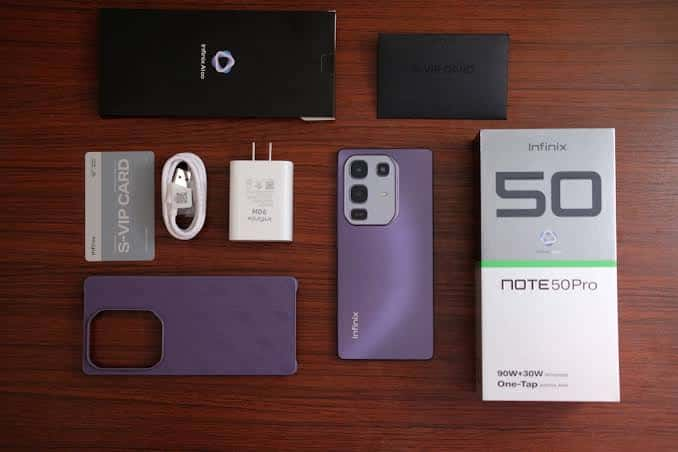
Display: 144Hz Sounds Bigger Than It Feels
Both phones use 6.78-inch Full HD+ AMOLED displays, which is already a major strength at this end of the market. The Spark 30 Pro runs at 120Hz, while the Note 50 reaches 144Hz.
We found the Note 50 slightly smoother when scrolling and navigating quickly, but we wouldn't buy it solely for the extra 24Hz. A good 120Hz AMOLED panel already feels extremely fluid.
The advantage becomes more relevant for users who play games capable of taking advantage of higher frame rates.
Our pick: Note 50, but the gap is small
Performance: Much Closer Than the Names Suggest
Tecno uses the Helio G100, while Infinix uses the Helio G100 Ultimate. For WhatsApp, Chrome, Instagram, TikTok, YouTube and normal multitasking, we found very little reason to choose one phone purely on processor branding.
Both use essentially the same class of MediaTek platform. Gaming is similar. Games such as Call of Duty: Mobile, PUBG Mobile, Free Fire and EA FC Mobile are playable, but neither device should be mistaken for a performance-focused gaming phone.
The Note 50's faster storage and 144Hz display improve the overall experience, but the difference isn't transformational.
Our pick: A tie for everyday performance
Cameras: 108MP Doesn't Automatically Win
This was one of the more interesting parts of our comparison. Tecno gives the Spark 30 Pro a 108MP main camera, while Infinix uses a 50MP main camera.
On paper, Tecno wins immediately.
In actual photo, it's more complicated. The Note 50's 50MP camera includes optical image stabilisation (OIS), which helps reduce movement when taking photos and recording video. The Spark's 108MP camera can capture plenty of detail in favourable light, but megapixel count alone doesn't guarantee a better final photograph.
We found the Spark particularly appealing when detail and daylight photo are priorities, while the Note 50 provides the more balanced camera package.
For social-media creators who frequently shoot handheld photos and video, we'd lean toward the Note 50.
Our pick: Infinix Note 50 for versatility; Spark 30 Pro if 108MP daylight detail is your priority.
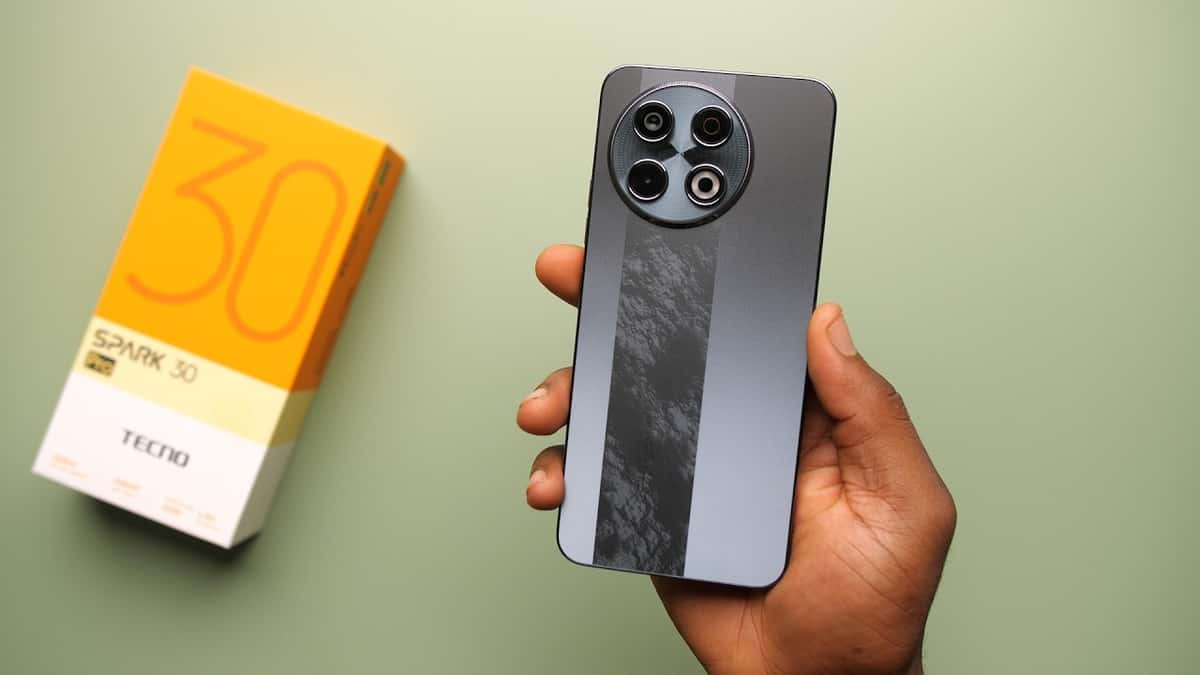
Battery and Charging: Note 50 Pulls Away
The Spark 30 Pro uses a 5,000mAh battery with 33W charging. The Note 50 increases capacity slightly to 5,200mAh and supports 45W wired charging.
A 200mAh difference isn't enough for us to declare one phone dramatically better for battery life. Charging is where we noticed the more meaningful specification advantage.
The Note 50 charges faster and also supports 30W wireless charging, something still uncommon in this price category. That gives Infinix a feature the Spark simply can't match.
Our pick: Infinix Note 50
Storage: Tecno Has One Hidden Advantage
The Note 50 comes with 256GB storage and 8GB RAM, which is generous.
Spark 30 Pro is available with 128GB or 256GB, also with 8GB of physical RAM plus memory expansion. But Tecno has another advantage: microSD expansion.
That can matter for Nigerian buyers who keep large offline video, music or photo libraries and would rather buy inexpensive removable storage than pay more for a higher-capacity phone.
So while the Note 50 gives you more storage as standard, the Spark is more flexible.
Nigeria Price: This Changes Our Recommendation
Our latest price research shows why we wouldn't recommend either phone without checking the current market first.
We found a Spark 30 Pro 128GB listing around ₦240,000, while another current tracker had weak stock around ₦299,999.
For the Note 50 8GB/256GB, the Nigerian reference price we found is around ₦311,500, although current availability and seller pricing vary.
That means our buying decision depends on the gap. If you find the Spark 30 Pro around ₦240,000–₦260,000, we think it offers compelling value.
If a seller wants close to ₦300,000 for the Spark, the Note 50 becomes much harder to ignore if you can find it around ₦310,000. You're getting 256GB storage, OIS, 45W charging, wireless charging, IP64 protection and the aluminium frame for a relatively small additional amount.
That's more useful than simply saying one phone is “cheaper.”
Which One Should You Buy?
Buy the Tecno Spark 30 Pro if you find it substantially cheaper, want expandable storage, like its 108MP camera or simply want a good AMOLED phone without stretching your budget.
Buy the Infinix Note 50 if you're willing to spend more for OIS, 144Hz AMOLED, stronger construction, 45W wired charging, 30W wireless charging and 256GB storage.
For students primarily using social media, streaming and school applications, we'd save the money if the Spark is significantly cheaper.
For creators and buyers planning to keep their phone longer, we'd consider paying extra for the Note 50's broader hardware package.
Frequently Asked Questions
Which is better for gaming?
We found their underlying performance relatively close because both use Helio G100-class hardware. The Note 50 has the advantage of a 144Hz display, but neither is a dedicated gaming phone.
Which has the better camera?
The Spark 30 Pro gives you 108MP, but the Note 50's 50MP camera has OIS. We prefer the Note 50's overall flexibility, particularly for handheld shooting.
Which has better battery life?
The Note 50 has a slightly larger 5,200mAh battery versus 5,000mAh, but we think its more meaningful advantage is charging: 45W wired plus 30W wireless versus 33W wired on the Spark.
Which offers better value?
It depends on the price gap. Around ₦240,000, we'd consider the Spark 30 Pro excellent value. If the Spark approaches ₦300,000 and the Note 50 remains around ₦310,000, we'd spend the extra money on the Note 50.
Final Verdict
After comparing both phones, we don't think the Infinix Note 50 is dramatically faster than the Spark 30 Pro. That's not where the extra money goes.
Instead, you're paying for a collection of smaller upgrades: OIS, 144Hz AMOLED, aluminium construction, IP64 protection, 45W wired charging, 30W wireless charging and 256GB storage as standard.
Together, those improvements make the Note 50 feel like the more complete device. But price changes everything.
If we found the Spark 30 Pro around ₦240,000–₦260,000, we'd have no problem recommending it to someone who wants maximum value.
If both phones are separated by only ₦10,000–₦30,000, we'd choose the Infinix Note 50. That's the key finding from our comparison: the Note 50 is the better-equipped phone, but the Spark 30 Pro becomes the smarter purchase when the discount is large enough.
Read more: Tecno POP 20 Review: A ₦160,000 Budget Phone With a 120Hz Display and 5,000mAh Battery
Read more: Redmi Note 15 Review: Great Battery and AMOLED Display, But Should You Buy the 4G Model?
Read more: Tecno Spark Go 3 Pro Review: IP69, 5,200mAh Battery & Price

Author
Dolapo AnifowosheTech enthusiast and technical data scientist who loves to play with numbers. Explore author & articles





