

Apple Watch Series 12 vs Series 11: Is the Upgrade Worth It?
Apple Watch Series 12 vs Series 11 comparison covering health tracking, performance, battery, design and Nigerian prices to see whether the upgrade is noticeable.

The Apple Watch Series 12 looks remarkably similar to the Series 11, which raises an obvious question: if you already own last year's watch, will you actually notice the difference?
Visually, probably not. Internally, however, Apple has made one of its more meaningful recent changes to health sensing. Series 12 introduces the S11 chip, redesigned Health Sensing System, five-second background heart-rate measurements, more frequent HRV readings and the new Readiness system. Apple has also improved outdoor-workout endurance and short charging sessions.
The catch is that normal battery life remains 24 hours, while Series 11 already handles most of the fundamental Apple Watch experience extremely well.
So our comparison comes down to where you'll genuinely notice the difference.
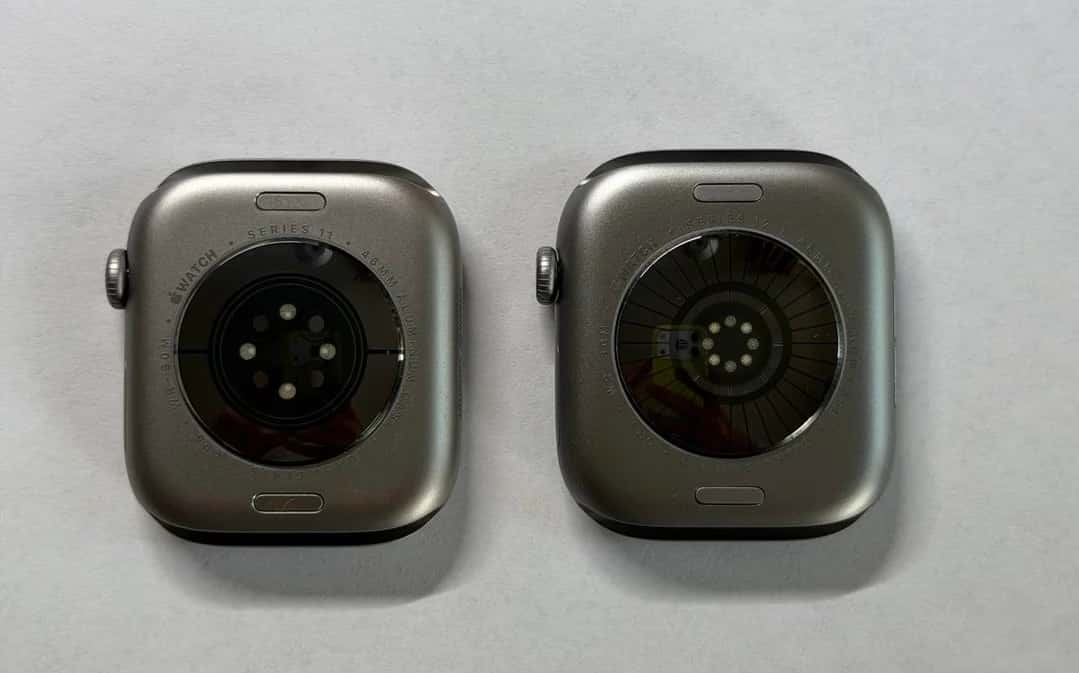
Apple Watch Series 12 vs Series 11 Specs
Specification | Apple Watch Series 11 | Apple Watch Series 12 |
|---|---|---|
Original US Price | From $399 | From $399 |
Current Nigeria Price | ₦530K–₦850K | ₦780K–₦930K |
Sizes | 42mm / 46mm | 42mm / 46mm |
Processor | S10 | S11 |
Storage | 64GB | 64GB |
Display | LTPO3 Always-On OLED | LTPO3 Always-On OLED |
Peak Brightness | 2,000 nits | 2,000 nits |
Background Heart Rate | Periodic sampling | Every 5 seconds |
HRV | Existing HRV measurements | Up to 24× more frequent |
Recovery HRV | No | Yes |
Readiness | No | Yes |
Sound Recognition | No Series 12 system | Yes |
Battery Life | Up to 24 hours | Up to 24 hours |
Low Power Mode | Up to 38 hours | Up to 38 hours |
Outdoor Workout | About 8 hours | Up to 10 hours |
15-Minute Charge | Up to 8 hours use | Up to 12 hours use |
Water Resistance | WR50 | WR50 |
Dust Resistance | IP6X | IP6X |
Both generations started at $399 in the US, so Apple hasn't raised the entry price despite the new sensors and S11 processor.
Design: You Probably Won't Notice Much
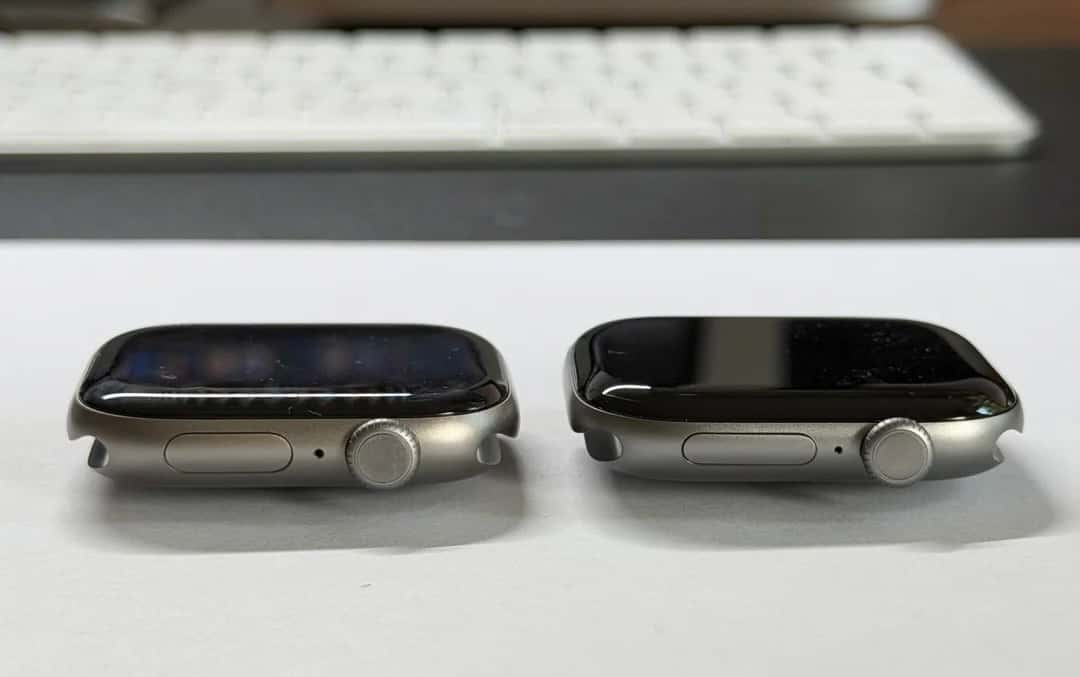
Put Series 11 and Series 12 beside each other and most people aren't going to immediately identify the newer watch.
Both retain 42mm and 46mm case options, the familiar Digital Crown and side button, and an Always-On LTPO3 OLED display capable of reaching 2,000 nits. Series 11 already had a very good display, so Series 12 doesn't provide the kind of visual jump that would make a one-year-old watch suddenly look dated.
There are still meaningful material changes. Series 12 introduces new finishes, brings ceramic back as a case option and uses Ceramic Shield 2 on aluminium models, which Apple claims is 60% tougher than the Ion-X glass used on previous aluminium models.
That matters for durability, but it doesn't fundamentally change how the watch looks on your wrist.
Noticeable gap: Small
Health Tracking: This Is the Real Series 12 Upgrade
Flip the watches over and the comparison becomes considerably more interesting.
Series 12 introduces Apple's redesigned Health Sensing System, with new optical and electrical heart sensors and larger, more power-efficient green LEDs.
The practical difference is measurement frequency. Apple says Series 12 measures heart rate every five seconds throughout the day. HRV is also measured up to 24 times more frequently, with Apple separating Recovery HRV from broader HRV information.
That's a much bigger change than another display tweak. More frequent measurements potentially give the watch a denser picture of how your cardiovascular signals change throughout the day rather than relying on more widely spaced readings.
Apple says it tested the new heart-rate system against competing wearables using more than 1,000 participants and describes Series 12 as its most accurate wearable heart-rate system. That remains an Apple-controlled study claim rather than an Afritech Connect laboratory result, so we'd treat the improvement in sampling frequency as the more important independently understandable change.
Noticeable gap: Significant for health-focused users
Readiness Could Be the Most Useful New Feature
Collecting more health data is only useful if the watch does something understandable with it.
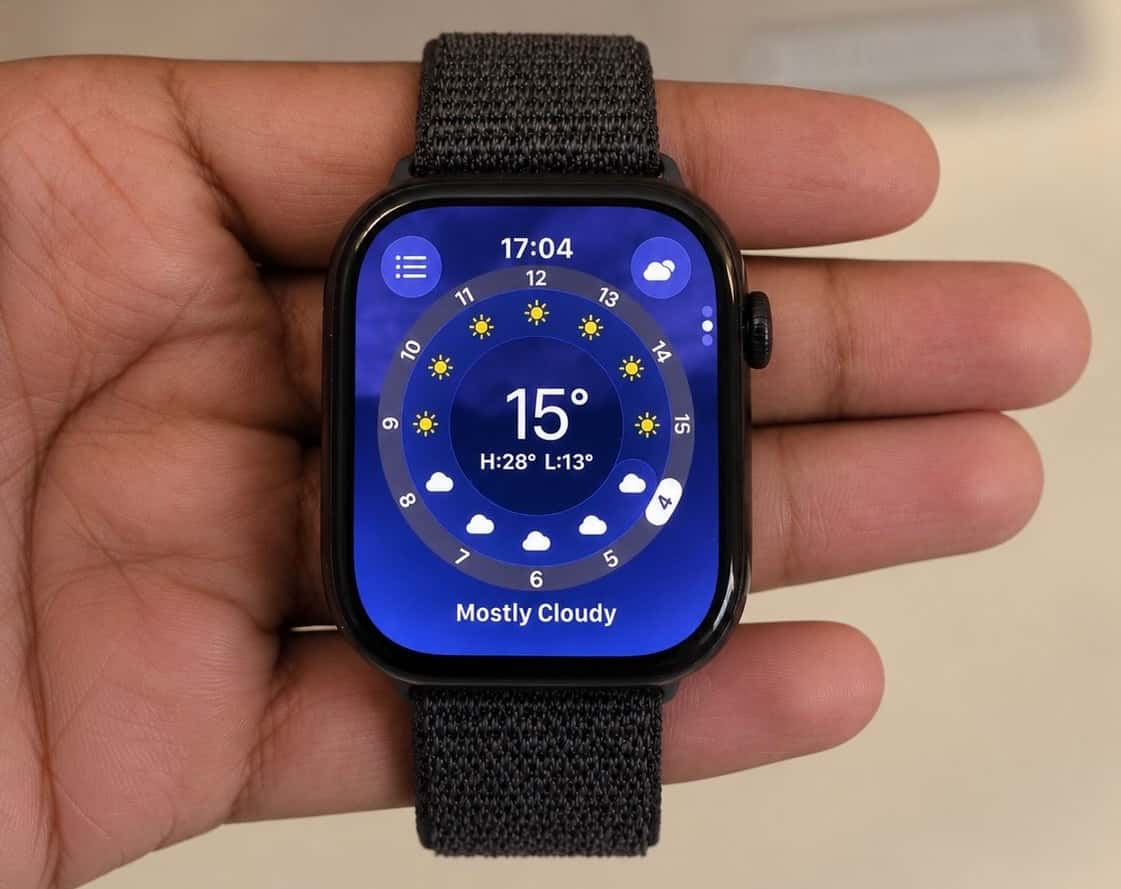
That's where Readiness becomes interesting. Series 12 analyses recent activity, training load, vitals and sleep information to generate a daily score from 0 to 10. It then translates that score into recommendations such as Recover, Pace Yourself, Ready or Go For It. The score can also change during the day as new information becomes available.
For someone who simply closes Activity rings and tracks an occasional walk, this isn't necessarily a reason to replace a Series 11.
For runners, gym users and people who actively monitor recovery, however, Readiness changes the way the health data is presented. Instead of simply giving you another graph, Apple is attempting to turn several measurements into a more practical indication of how prepared your body may be for the day.
Series 12 also introduces Recovery HRV, which Apple positions specifically around identifying daily stress and recovery signals. These remain wellness and fitness tools rather than medical diagnoses.
Performance: S11 Matters More Behind the Scenes
Series 11 uses Apple's S10 chip, with a 64-bit dual-core processor, four-core Neural Engine and 64GB of storage. Series 12 moves to S11 while retaining 64GB storage.
But we wouldn't upgrade simply because the number changed from S10 to S11. The more interesting difference is what Apple is doing with the additional processing capability.
S11 powers the new Health Sensing System and also supports redesigned machine-learning algorithms for step counting and distance measurements during indoor walks and runs. Apple claims this produces its most accurate smartwatch step tracking yet.
Recent independent review coverage also found Series 12 quicker in some basic interactions and Siri AI tasks, although that doesn't mean Series 11 suddenly feels slow. Checking notifications, opening Workout, starting a timer and reading messages aren't going to feel like completely different experiences.
Noticeable gap: Small for everyday use
Audio Intelligence Is New — But Not a Reason to Upgrade Yet
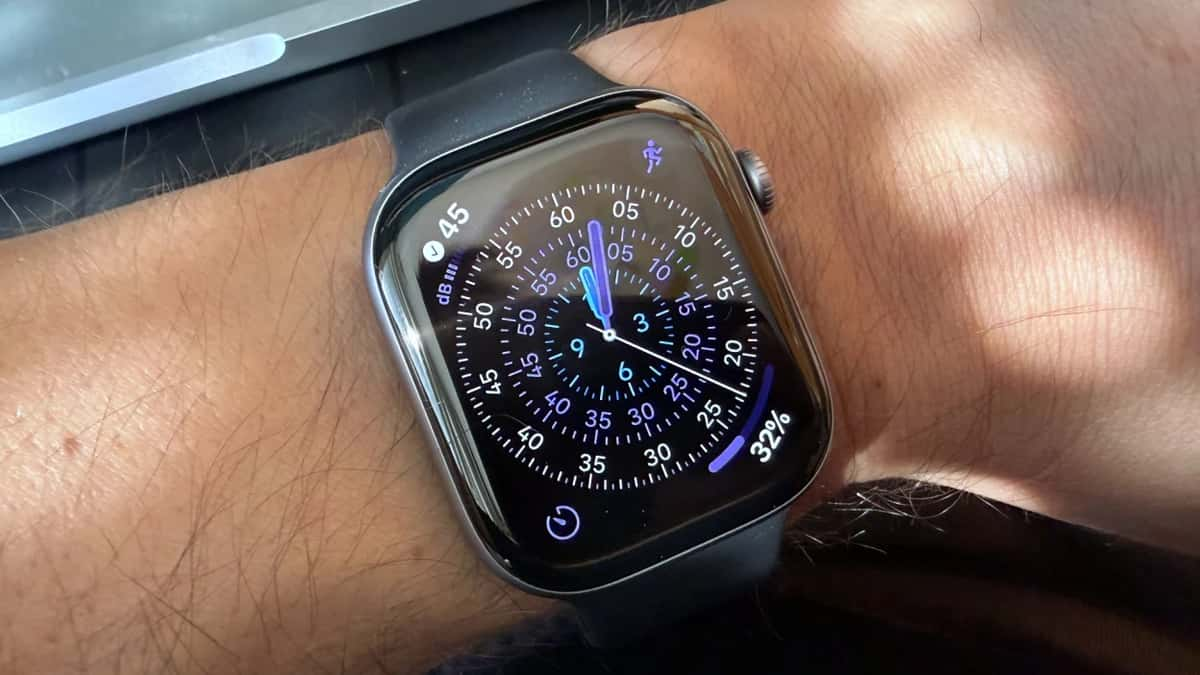
Series 12's S11 chip also enables Apple's new Audio Intelligence system. Features include Sound Recognition, improved Shazam functionality, Live Rewind and Siri Recap. Live Rewind can provide a transcript of the previous 15 seconds when enabled, while Siri Recap is designed to summarize relevant moments from your day.
The important buying consideration is timing: some of the most ambitious Audio Intelligence capabilities are arriving through later software updates rather than being fully available at launch. So we wouldn't recommend replacing a Series 11 today purely for these features.
Battery Life: Almost No Upgrade
Here's the disappointing part. Both watches are rated for up to 24 hours of normal use and 38 hours in Low Power Mode. That means Series 12's dramatically more frequent heart-rate monitoring hasn't reduced Apple's quoted battery life, which is impressive technically but it also hasn't produced the multi-day endurance some buyers might have wanted.
We found in independent real-world testing that continuous heart-rate tracking didn't noticeably damage Series 12 battery endurance. A 20-minute charge took the watch from approximately 20% to 64%. Series 12 also improves outdoor workout endurance from around 8 hours to 10 hours.
Fast charging is better too: Apple says 15 minutes provides up to 12 hours of normal use, while approximately 30 minutes can reach 80%.
Still, if your biggest Series 11 complaint is charging every day, Series 12 doesn't solve it.
Noticeable gap: Small
Nigeria Price: Series 11 Has Become More Interesting
Price changes this comparison significantly. Series 12 currently costs approximately ₦780,000–₦930,000 through one Nigerian Apple retailer, depending on configuration.
Current Series 11 marketplace pricing is much wider. We found 46mm GPS Series 11 listings around ₦532,000–₦560,000, while other 42mm and 46mm configurations reach roughly ₦750,000–₦846,000.
Marketplace prices vary by seller, size, warranty and availability, so buyers should confirm the exact configuration.
But the broader point is clear. If you can find a genuine Series 11 around ₦530,000–₦600,000, its value proposition becomes considerably stronger. If Series 11 costs ₦750,000 while Series 12 is ₦780,000, buying the older generation makes much less sense.
Should Series 11 Owners Upgrade?
For most Series 11 owners, keep your watch. You already have the same basic design, 2,000-nit display, 24-hour battery life, sleep tracking, ECG, sleep-apnea notifications, hypertension notifications and most of the everyday Apple Watch experience.
Upgrade becomes more interesting if you specifically care about high-frequency heart-rate monitoring, Recovery HRV, Readiness or Apple's upcoming wearable AI capabilities.
Independent testing reached a similar practical conclusion: the internal health improvements are meaningful, but Series 9 and newer owners generally have little reason to upgrade unless the improved health monitoring addresses a specific need.
Buying Series 11 or Series 12 New?
This is a different question. If you're buying your first Apple Watch and the price difference is small, Series 12 makes more sense. You're getting newer hardware and Apple's next generation of health and intelligence features.
But a heavily discounted Series 11 is still compelling. At roughly ₦550,000 versus ₦780,000, you're potentially saving more than ₦200,000 while retaining most of the everyday Apple Watch experience.
Final Verdict
The answer depends entirely on what you're measuring.
Design? Hardly noticeable.
Display? Almost identical.
Everyday speed? Small difference.
Battery life? Essentially unchanged.
Health and recovery tracking? Definitely noticeable.
Series 12 represents a much more meaningful health-sensing upgrade than a conventional smartwatch upgrade. Its ability to measure heart rate as frequently as every five seconds, gather substantially more HRV data and turn that information into Readiness and Recovery HRV is the real generational difference.
For an existing Series 11 owner, those improvements probably aren't enough to justify replacing a one-year-old watch unless advanced health and recovery tracking matters strongly to you.
For a new buyer, the calculation is simpler: choose Series 12 when prices are close; consider Series 11 when the discount is substantial.
That's ultimately the Series 12 story. It doesn't look much newer than Series 11, but it knows considerably more about what's happening on your wrist.
Read more: Apple Watch Series 12 vs Ultra 4: Which Should You Buy?
Read more: Oraimo Watch Nova 2 Air vs Apple Watch Series 11: Which Should You Buy?
Read more: Apple Watch Ultra 4 Review: Better Battery and Health Tracking, But Who Should Buy It?
Read more: Apple Watch Series 12 vs Ultra 4: Which Should You Buy?
Read more: Oraimo Watch Nova 2 Air vs Apple Watch Series 11: Which Should You Buy?
Read more: Apple Watch Ultra 4 Review: Better Battery and Health Tracking, But Who Should Buy It?

Author
Nkechi OkaforMobile device specialist focused on smartphones, tablets, and wearables for the African market. Explore author & articles





