

Cassava Adds NVIDIA Nemotron to Its AI Platform: What It Could Mean for African Businesses
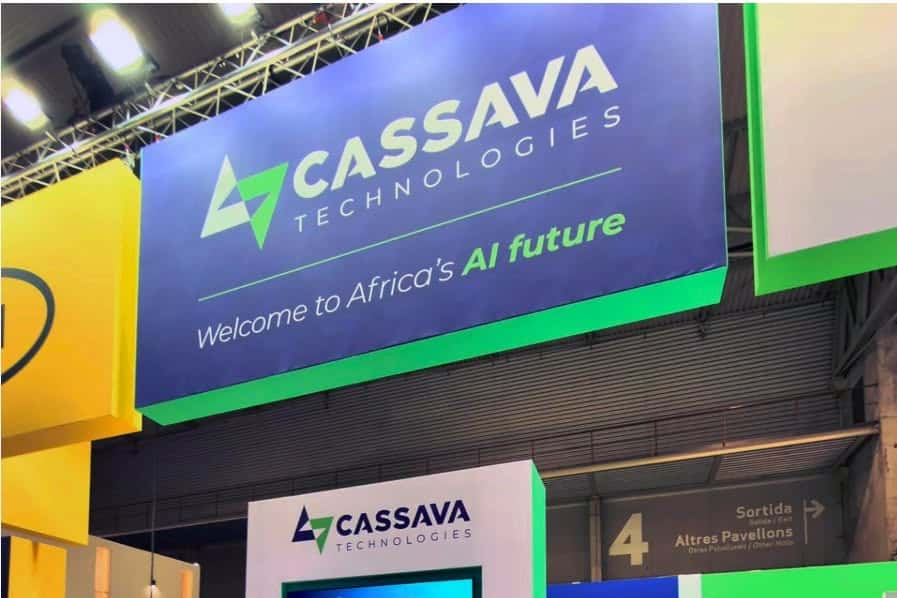
Cassava Technologies is expanding its AI infrastructure with NVIDIA Nemotron open models, a move that could make it easier for businesses across its markets to develop AI agents without building and managing their own model-serving infrastructure.
Announced on October 21, 2026, the deployment makes Nemotron available as a locally hosted, managed inference service through the Cassava AI Multi-Model Exchange (CAIMEx). The platform gives enterprises and service providers access to AI models through APIs, allowing developers to build applications without operating the underlying model infrastructure themselves.
The announcement comes as African businesses look beyond AI chatbots towards systems that can perform multi-step tasks and interact with business tools. For companies seeking to automate operations or scale customer service, the opportunity is significant. However, access to an AI model is only one part of deploying a reliable business solution.
What Cassava is adding to its AI platform
According to Cassava's announcement, NVIDIA Nemotron models bring reasoning and tool-use capabilities to CAIMEx, helping developers build agents that can work through complex tasks and interact with business applications.
The models also provide open weights, training data and recipes that developers can use as a foundation for customisation and specialised applications. Rather than requiring each business to establish its own model-serving infrastructure, Cassava is offering managed access through its AI Factory. Its broader infrastructure strategy includes AI computing capacity, cloud services, connectivity and data-centre capabilities across African markets and other regions.
Cassava is also introducing a CAIMEx Token Optimiser designed to identify information that has already been processed and reuse it where appropriate, reducing unnecessary repeated computation. The company says the optimiser applies to both Cassava-hosted and third-party models.
For businesses, the commercial question is whether this managed approach can make AI applications more practical to build, operate and scale.
Why AI agents could matter to African companies
Traditional AI assistants typically respond to individual prompts. AI agents can go further by carrying out sequences of tasks, using approved tools and interacting with business systems.
For example, a customer-service agent could retrieve an order, check a delivery status and prepare a response for a human representative. In a finance department, an agent might organise invoice information, flag discrepancies and prepare records for approval. A sales team could use agents to summarise customer interactions and prepare follow-up recommendations.
These are potential use cases, not deployments Cassava has specifically announced. Each requires suitable integrations, access controls, testing and oversight before it can be trusted with real business operations.
For smaller companies, managed model access could reduce the need to build specialised AI infrastructure in-house. For larger enterprises and service providers, a multi-model platform could offer flexibility when selecting models for different tasks.
The benefits will depend on pricing, service availability, integration effort, data requirements and the quality of the resulting applications. Cassava's announcement does not specify customer pricing, a rollout schedule for individual markets or quantified savings from the new deployment.
A wider push to build Africa's AI infrastructure
The Nemotron deployment follows Cassava's broader investment in AI infrastructure. The company has announced plans for its NVIDIA-powered AI Factory to expand beyond South Africa into markets including Nigeria, Kenya, Egypt and Morocco. Its AI infrastructure announcement describes the ambition to provide regional computing capacity and services for businesses and developers.
In January 2026, Cassava also announced a strategic partnership with AXON Networks to develop and manage an Operator-as-a-Service platform. The planned platform combines AXON's network automation and digital-twin technology with Cassava's connectivity infrastructure, aiming to help service providers manage networks and introduce services more efficiently.
Together, these developments point to a broader strategy: providing more of the infrastructure and managed services required to build and deploy AI applications, rather than focusing on models alone. The extent of the eventual benefits will depend on execution, market access and the services customers can actually procure.
African businesses are moving from AI experimentation towards adoption
Cassava's announcement comes as other African companies work to embed AI into their operations. Standard Bank Group reported in August 2026 that more than 39,000 employees—72% of its workforce—were active users of generative AI. The bank also said about one-third of its technology employees were using AI-enabled coding tools, with early use cases showing productivity improvements of around 20%. These figures describe the bank's reported generative AI and coding-tool adoption; they do not establish that all those employees are using autonomous agents. Nevertheless, they illustrate how AI is becoming part of established business workflows, not just a technology experiment.
Meanwhile, the 2026 KPMG Africa CEO Outlook, published on October 23, found that 72% of surveyed African CEOs viewed AI as a top investment priority, but only 14% believed their organisations were keeping pace with developments. The findings suggest that interest is advancing faster than organisational readiness.
For businesses, that gap includes more than access to models. It involves preparing reliable data, connecting AI to existing applications, training employees, establishing security policies and deciding which tasks should remain under human control.
What business leaders should consider before adopting AI agents
Access to managed AI infrastructure may make experimentation easier, but leaders should begin with a defined operational problem rather than adopting agents simply because the technology is available.
A retailer might test an agent that helps staff find product information. A telecommunications provider could explore network-support workflows. A financial-services business might begin with document classification or internal knowledge retrieval before considering more consequential automated actions.
Start with a limited pilot, measure time saved and error rates, and establish clear permissions for any agent that interacts with customer records, payments or production systems. Businesses should also assess where data is processed, how it is protected and what happens when an agent produces an incorrect result.
For African organisations, local infrastructure and managed model access could offer useful options, particularly where building a dedicated AI platform would be costly. But local hosting should not automatically be treated as proof of regulatory compliance, and open models do not eliminate the need for security and governance.
The bigger opportunity is practical adoption
Cassava's NVIDIA Nemotron deployment adds another option for enterprises and service providers exploring agentic AI. Its significance will ultimately depend on whether businesses can use the platform to solve specific problems at a sustainable cost.
For African companies, the opportunity is not simply to use more advanced models. It is to turn AI into better customer service, more efficient operations and products that meet real market needs.
The next phase of adoption will require infrastructure, but also business leaders who can identify suitable workflows, manage risk and measure results. The companies that combine those capabilities will be better positioned to turn access to AI into measurable business value.
Read more: AI Makes Building Easier: Execution Is What Turns Ideas Into Companies
Read more: Gates Foundation's $1 Billion AI Investment: What It Could Mean for Africa
Read more: How Founders and Students Can Build Businesses With Coding Agents
Read more: Are LinkedIn Ads Worth It for B2B Businesses? What the Data Reveals About ROI and Sales

Author
Kwame MensahTech journalist covering AI, software, and emerging technologies impacting Africa's digital landscape and beyond.. Explore author & articles





