EcoFlow DELTA 3 Air Buying Guide: Price, Specs, Best Uses and Limitations
EcoFlow DELTA 3 Air buying guide covering Nigeria price, 960Wh and 1920Wh models, runtime, appliances it can power, limitations and whether it suits students, bachelors and businesses.

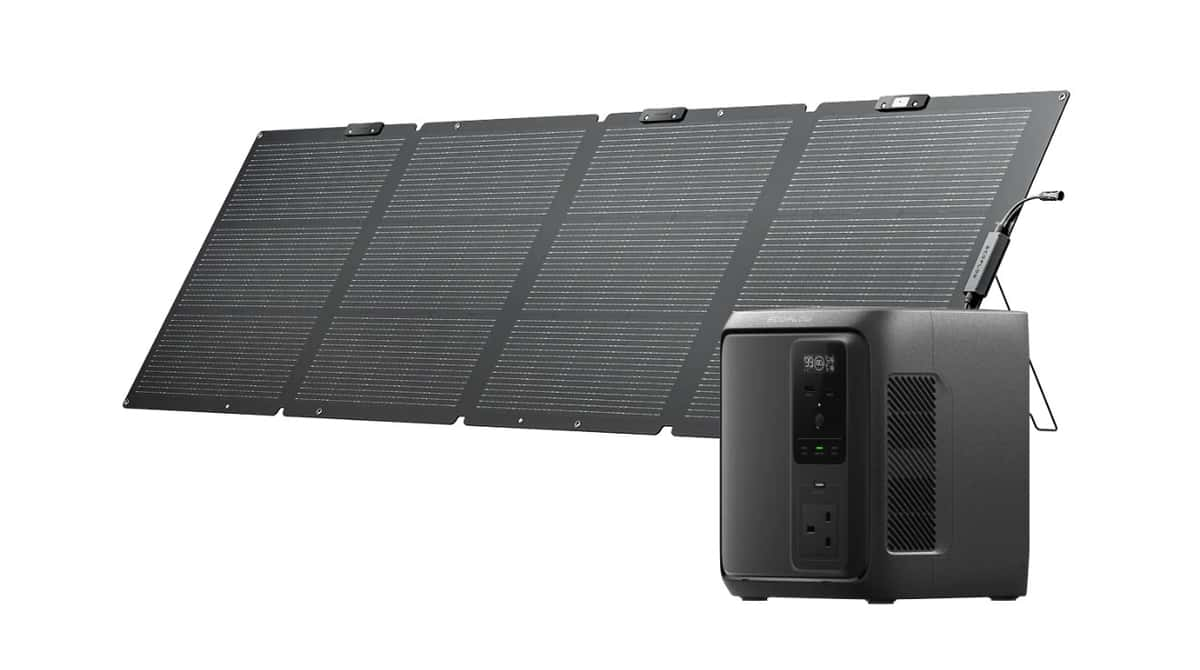
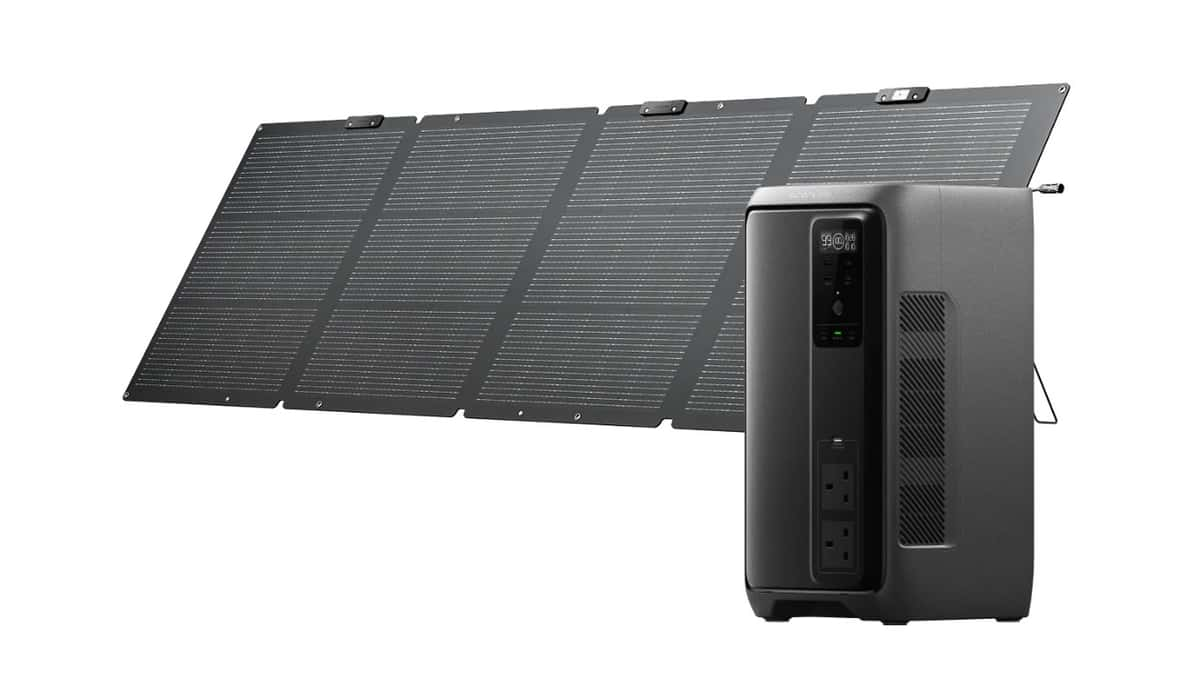
The EcoFlow DELTA 3 Air is essentially a giant rechargeable power bank for your home, apartment, office or small business except it can power AC appliances rather than only phones and laptops. The series comes in two capacities. The smaller DELTA 3 1000 Air provides 960Wh with 500W rated AC output, while the more powerful DELTA 3 2000 Air doubles capacity to 1,920Wh and output to 1,000W. Both use long-life LiFePO₄ batteries and can function as backup power when electricity goes out.
For students, people living alone, remote workers and small businesses looking for an alternative to constantly running a generator, that sounds attractive. But there's an important limitation: battery capacity and inverter wattage are two different things. Having 960Wh of energy doesn't mean the smaller DELTA 3 Air can run every appliance in your house. Let's look at what it can realistically do.
EcoFlow DELTA 3 Air Specifications
Specification | DELTA 3 1000 Air | DELTA 3 2000 Air |
|---|---|---|
Discount Price | ₦515,000 | ₦941,000 |
Regular Price | ₦739,199 | ₦1,219,679 |
Battery Capacity | 960Wh | 1,920Wh |
Rated AC Output | 500W | 1,000W |
X-Boost | Up to 1,000W | Up to 1,500W |
Battery Chemistry | LiFePO₄ (LFP) | LiFePO₄ (LFP) |
AC Charging | 500W | 1,000W |
Solar Input | Up to 500W | Up to 1,000W |
UPS | <10ms | <10ms |
Weight | 9.9kg | 17.8kg |
Dimensions | 220 × 223 × 263mm | 220 × 223 × 426mm |
Noise | Below 39dB | Below 44dB |
App Control | Yes | Yes |
Solar Charging | Yes | Yes |
Fuel Required | No | No |
Battery Design Life | Up to 10 years | Up to 10 years |
The prices above are from EcoFlow Nigeria at the time of writing. The store currently shows ₦515,000 for the 960Wh model and ₦941,000 for the 1,920Wh version.
What Can the DELTA 3 1000 Air Actually Power?
This is the most important question if you're considering the cheaper model. The DELTA 3 1000 Air has 960Wh of stored energy and a 500W rated AC output. That makes it well suited to relatively low-power electronics such as:
Laptops
Smartphones
Wi-Fi routers
LED lights
Fans
TVs
Monitors
Small office equipment
POS terminals
CCTV equipment
Some refrigerators
EcoFlow 1000 Air can power a Wi-Fi router for around 43 hours, a light for 41.5 hours, a fan for 20 hours and a TV for around eight hours when each device is tested individually. EcoFlow also estimates approximately 42 phone charges and 15 laptop charges.
Those numbers should be treated as examples rather than guarantees because actual runtime depends on the power consumption of your particular device, inverter losses and operating conditions.
What About a Refrigerator?
Yes, EcoFlow markets the DELTA 3 Air for refrigerators. Its internal tests estimate up to 20 hours for a refrigerator on the DELTA 3 1000 Air and 40 hours on the DELTA 3 2000 Air, when tested as a single appliance.
But refrigerators are tricky. A refrigerator may consume relatively little power while its compressor is running normally but require a much higher burst of power when that compressor starts. You should therefore check the wattage and startup requirements of your particular refrigerator before buying.
For a business where keeping a fridge or freezer running is essential to protecting stock, I would strongly favour the 1,920Wh/1,000W DELTA 3 2000 Air over the smaller model.
The 500W Limit Is Important
This is the biggest limitation of the DELTA 3 1000 Air. Its inverter provides only 500W of rated AC output. That's plenty for a laptop, TV, router and lights, but it becomes restrictive when you start considering high-power appliances. Devices such as large electric kettles, microwaves, hot plates, irons, water heaters, air conditioners and many cooking appliances can exceed 500W.
EcoFlow's X-Boost technology allows the 1000 Air to operate certain appliances rated as high as 1,000W by reducing the power delivered to compatible resistive appliances. But X-Boost doesn't magically turn a 500W inverter into a continuous 1,000W power station. If regularly running high-wattage equipment is your priority, buy a power station with a higher native AC output.
DELTA 3 2000 Air Is Much More Capable
The larger model doubles both major specifications:
1,920Wh capacity + 1,000W rated AC output
Its X-Boost capability reaches up to 1,500W. The additional capacity means devices run for considerably longer, while the 1,000W inverter allows you to operate a broader range of equipment.
EcoFlow estimates approximately:
Device | 1000 Air | 2000 Air |
|---|---|---|
Wi-Fi router | 43 hours | 80 hours |
Light | 41.5 hours | 73 hours |
Fan | 20 hours | 24 hours |
Phone charging | 42 times | 80 times |
Laptop charging | 15 times | 27 times |
TV | 8 hours | 14 hours |
Refrigerator | 20 hours | 40 hours |
Is EcoFlow DELTA 3 Air Good for Students?
Yes, particularly the DELTA 3 1000 Air. A typical student isn't trying to run an entire house from a portable power station. The important devices are more likely to be a laptop, smartphone, fan, Wi-Fi router and lights. Those are exactly the types of loads where a 960Wh battery makes sense. Imagine electricity goes out while you're working on an assignment. Your laptop, router and light can remain powered without starting a generator.
At 9.9kg, the smaller model is also relatively portable. EcoFlow describes it as roughly the size of a rice cooker, with dimensions of only 220 × 223 × 263mm. The biggest obstacle for a student is the ₦515,000 price. It's a significant upfront investment.
Is It Good for Someone Living Alone?
For a bachelor, single professional or someone living in a small apartment, the DELTA 3 1000 Air may be the best-value model in the series.
Your essential setup might look something like:
TV + router + fan + laptop + lights + phones
The key is not running everything indiscriminately. Because you only have 500W of rated AC output, you need to pay attention to the combined wattage of whatever is plugged in simultaneously.
For example, a 60W TV, 50W fan, 10W router, 60W laptop and a few LED lights could comfortably sit below the 500W rated limit. That's a much better use of the 1000 Air than trying to power an electric kettle, pressing iron and refrigerator simultaneously.
Is It Good for Remote Workers?
This is arguably one of its best applications. EcoFlow specifically markets the DELTA 3 Air for keeping computers, Wi-Fi routers and NAS devices running through outages.
The UPS functionality is particularly valuable. Depending on the exact model, switchover can be as fast as 10–20 milliseconds, allowing compatible equipment to continue operating when grid power disappears. That means an outage doesn't necessarily have to interrupt a video meeting, disconnect your router or suddenly shut down your desktop equipment.
For developers, designers, writers, traders and other people whose income depends on remaining online, that could justify the investment.
What About Small Businesses?
This depends heavily on the business. For a barbershop, small retail store, POS operation, office or boutique, the DELTA 3 Air could be very useful for lighting, laptops, routers, POS terminals, CCTV and other relatively low-power equipment.
EcoFlow itself promotes the series for keeping refrigerators, cash registers and lights operating during outages. But I would lean toward the DELTA 3 2000 Air for business use. Its 1,920Wh capacity and 1,000W output give you significantly more flexibility.
For businesses using heavy machinery, large air conditioners, industrial freezers, high-power cooking equipment or several demanding appliances simultaneously, neither Air model may be sufficient. A larger DELTA-series system would be more appropriate.
Fast Two-Hour Recharging
Another important advantage over traditional backup batteries is recharge speed. The DELTA 3 Air can fully recharge in approximately two hours using its X-Stream AC charging system. The 1000 Air supports up to 500W AC charging, while the 2000 Air reaches 1,000W.
That matters during intermittent electricity supply. If electricity returns for only a few hours, you can quickly refill the battery rather than needing grid power throughout the night.
You Can Add Solar Panels
The DELTA 3 Air can also recharge from solar. The 1000 Air supports up to 500W solar input, while the 2000 Air can accept up to 1,000W through its dual 500W inputs. That changes the product from simply being a rechargeable backup battery into something closer to a small solar-power system. With suitable panels and adequate sunlight, you can replenish energy during the day and use the stored electricity later.
For someone dealing with extended outages, solar is arguably the feature that unlocks the most long-term value.
LiFePO₄ Battery Designed for Long-Term Use
EcoFlow uses LiFePO₄ (LFP) battery chemistry in the DELTA 3 Air series. The company markets the system as having a 10-year lifespan under its testing assumptions. LFP batteries are particularly attractive for backup-power systems because they're designed to tolerate many repeated charge/discharge cycles.
EcoFlow also uses a battery-management system that monitors the cells and provides multiple layers of protection. The outer housing uses a UL94V-0 fire-resistant material, while the internal structure is designed to withstand vibration and physical stress.
No Fuel, Fumes or Generator Noise
One of the biggest lifestyle advantages is obvious the moment electricity disappears. You don't have to start an engine. There is no petrol, exhaust smoke or generator vibration. EcoFlow rates operating noise below approximately 39dB for the 1000 Air and below 44dB for the 2000 Air under its laboratory conditions. That makes it particularly attractive for apartments, bedrooms, dorm-style accommodation and indoor offices where running a petrol generator nearby would be impractical.
Smart App Control
The DELTA 3 Air also supports smartphone control. Its app lets you monitor battery level and real-time energy consumption, receive alerts and customize charging speeds and schedules. This is more useful than it might initially sound. If you know your battery is at 45% and your equipment is drawing 180W, you can decide which devices to switch off before the battery reaches a critical level.
Limitations You Should Know Before Buying
The first limitation is price. At ₦515,000 for the smaller model, this isn't an inexpensive substitute for a small power bank. Second is AC output. The 500W native limit on the 1000 Air is restrictive if your lifestyle involves high-wattage appliances. Third, the advertised runtime numbers assume individual appliances. Running a TV, fan, laptop, router and refrigerator simultaneously will naturally drain the battery considerably faster. The larger model also weighs 17.8kg, so calling it portable doesn't mean you'll want to carry it around casually.
And finally, solar panels cost extra unless you're purchasing one of EcoFlow's solar bundles.
Which DELTA 3 Air Should You Buy?
User | Recommended Model | Why |
|---|---|---|
Student | DELTA 3 1000 Air | Laptop, router, fan, lights and phone |
Bachelor / Single Person | DELTA 3 1000 Air | Good for essential apartment electronics |
Remote Worker | DELTA 3 1000 Air | Excellent for computer, monitor and internet backup |
Couple / Small Household | 1000 or 2000 Air | Depends on refrigerator and simultaneous loads |
Small Shop/POS Business | DELTA 3 2000 Air | More capacity and higher 1,000W output |
Fridge/Freezer Business | DELTA 3 2000 Air or larger | Better runtime and startup-power headroom |
Heavy Appliance User | Consider larger DELTA model | 500W/1,000W native output may be insufficient |
Pros
Large 960Wh or 1,920Wh battery options
Quiet and emission-free
No petrol required
Fast approximately two-hour AC charging
Solar charging supported
Long-life LFP battery chemistry
UPS functionality
Excellent for laptops and internet equipment
Can power TVs, fans and refrigerators within appropriate load limits
Smartphone monitoring
Compact 1000 Air weighs only 9.9kg
No installation required
Cons
₦515,000 starting price is expensive
500W output on 1000 Air limits heavy appliances
2000 Air costs ₦941,000
Solar panels increase total system cost
Runtime drops significantly when several appliances run together
X-Boost shouldn't be confused with native continuous inverter output
Not suitable for powering an entire high-consumption home
17.8kg 2000 Air isn't particularly convenient to move frequently
Should You Buy the EcoFlow DELTA 3 Air?
For a student, I'd choose the DELTA 3 1000 Air only if the ₦515,000 price fits your budget. Its 960Wh capacity is more than enough to make a meaningful difference for studying, charging devices and keeping a fan and internet connection running.
For a bachelor or single professional, it's arguably an even better fit. If your essential appliances are a laptop, router, television, fan, lights and phones, the smaller DELTA 3 Air provides a sensible balance between capacity and portability.
For a remote worker, the 1000 Air is especially compelling because its UPS capability can keep important electronics online during outages.
For a small business, however, I'd spend more for the DELTA 3 2000 Air. The jump from 500W to 1,000W output and from 960Wh to 1,920Wh capacity is significant.
Final Verdict
The EcoFlow DELTA 3 Air is best understood as an essential-appliance backup system rather than a replacement for your entire electricity supply.
At ₦515,000, the 960Wh DELTA 3 1000 Air is particularly well suited to students, bachelors, remote workers and people living in small apartments who mainly need to keep laptops, phones, routers, lights, fans and TVs running. The ₦941,000 DELTA 3 2000 Air makes more sense for small businesses and households that need longer runtime, refrigerator backup and more flexibility from its 1,000W rated output.
The biggest reason not to buy either model is straightforward: if you regularly need to run high-wattage cooking appliances, air conditioners, large heaters or several demanding appliances simultaneously, the DELTA 3 Air's inverter output may be too restrictive. But if your priority is quiet, fuel-free backup for essential electronics with fast charging and optional solar, the DELTA 3 Air is a compelling alternative to constantly starting a generator.
Read more: Best Solar Power Station for Your Home in Nigeria: itel 500W Solar Generator vs EcoFlow DELTA 3 Air
Read more: Power Your Nigerian Home Around the Clock: Is the itel IPV-6K48U 6kW Solar Inverter Worth ₦599,500?
Read more: Best Affordable itel Solar Generators in Nigeria: 3 Portable Options for Students and Remote Workers

Author
Adebayo JohnsonSenior tech editor with over 4 years of experience covering mobile and gadget technology. Explore author & articles