

Best Solar Power Station for Your Home in Nigeria: itel 500W Solar Generator vs EcoFlow DELTA 3 Air
Comparing the itel 500W 1000Wh Solar Generator with 410W panel and EcoFlow DELTA 3 Air in Nigeria. See prices, battery capacity, power output, solar charging and the appliances each can run.

Which Solar Power Station Should You Buy for Your Home?
Power outages remain one of the biggest reasons Nigerians look for alternative electricity sources. For many households, the challenge is no longer simply finding backup power, it is finding something quiet, portable, rechargeable and affordable enough to use every day.
Two products currently competing for attention are the itel 500W Solar Generator with 1,000Wh battery and 410W solar panel and the EcoFlow DELTA 3 Air.
The itel package is currently listed at ₦437,000, reduced from ₦460,000, and includes the 410W solar panel. The EcoFlow DELTA 3 1000 Air is currently listed at ₦515,000 on EcoFlow Nigeria, compared with a listed regular price of ₦739,199. It offers a 960Wh battery and 500W rated AC output.
That makes the itel package about ₦110,000 cheaper. But there is an important catch: neither of these 500W-class power stations is designed to power every heavy appliance in a Nigerian home simultaneously.
If you want to run air conditioners, electric cookers, kettles, irons and large refrigerators, you need a substantially more powerful system. For lights, fans, phones, laptops, TVs, routers and other everyday essentials, however, these compact solar systems can be much more practical.
itel vs EcoFlow DELTA 3 Air: Quick Comparison
Feature | itel IESS-05K10N + 410W Panel | EcoFlow DELTA 3 1000 Air |
|---|---|---|
Dicount Nigeria price | ₦437,000 | ₦515,000 |
Listed regular price | ₦460,000 | ₦739,199 |
Battery capacity | 1,000Wh | 960Wh |
Rated AC output | 500W | 500W |
Solar panel included | 410W | Not included in listed base price |
Battery chemistry | LiFePO4 | LiFePO4 |
Solar charging | Up to panel's rated output | Up to 500W |
Weight | 10-12kg | 9.9kg |
UPS | Not specified | <10ms |
App control | No | Yes |
Warranty | 2 years | 2 years |
Best suited for | Affordable solar backup | Premium portable backup |
itel 500W Solar Generator: The Better Budget Package
The biggest attraction of the itel IESS-05K10N is simple: you get the solar panel with the power station. At ₦437,000, the package combines a 1,000Wh LiFePO4 battery, 500W power output and a 410W solar panel. Itel says the system is intended for essentials such as lights, TVs, fans and laptops and can be used in homes, offices and small shops. For someone trying to reduce dependence on petrol generators, that combination is appealing. You don't have to purchase a separate solar panel immediately just to begin generating electricity from sunlight.
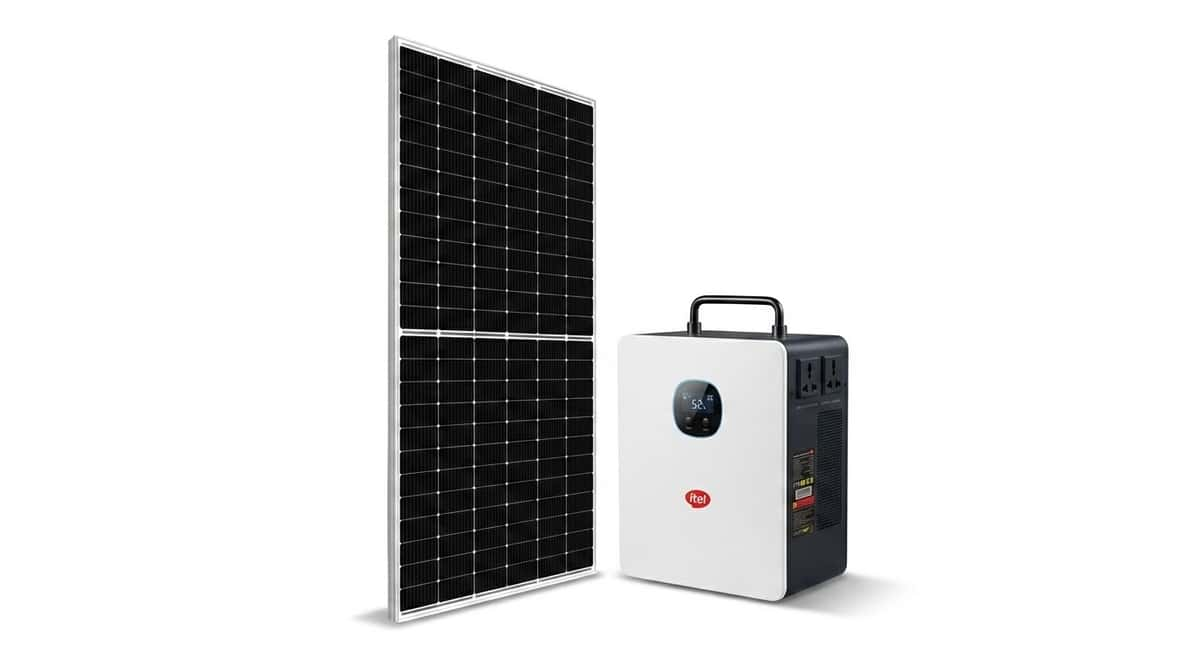
The 1,000Wh battery is also slightly larger than the 960Wh battery inside the DELTA 3 1000 Air.
Why the 410W panel matters
The panel is arguably one of the strongest reasons to consider the itel package. A solar generator without a panel is essentially a rechargeable battery system until you purchase the solar hardware separately. With the itel package, you already have a 410W solar panel included. That makes the ₦437,000 asking price particularly interesting for buyers who want to start using solar power rather than gradually assembling a system.
EcoFlow DELTA 3 Air: More Premium Technology
EcoFlow takes a different approach. The DELTA 3 1000 Air also has a 500W rated AC output, but it uses a 960Wh LiFePO4 battery and adds features such as app control, UPS functionality and fast charging. EcoFlow says the unit can recharge from AC in about two hours and supports up to 500W solar input. The unit weighs approximately 9.9kg, making it reasonably easy to move around a house or take elsewhere.
Its <10ms UPS switching is particularly useful for equipment that needs relatively uninterrupted backup power.
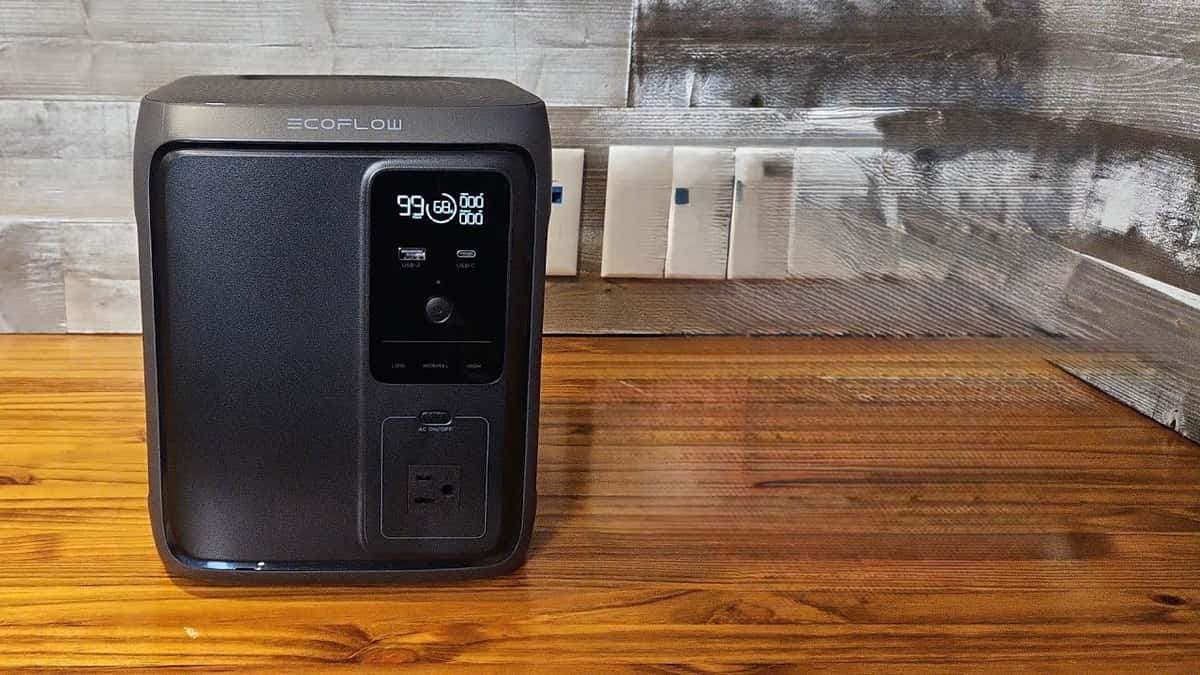
EcoFlow also provides estimated runtimes for different appliances. For example, the company lists approximately 20 hours for a fan, 15 laptop charges, eight hours for a TV and 20 hours for a refrigerator, although actual results will depend on the appliance and operating conditions.
Which One Has More Battery?
On paper, the answer is itel. The itel system has a stated 1,000Wh battery, compared with 960Wh for the DELTA 3 1000 Air. The difference is only 40Wh, however, so you shouldn't choose the itel purely because the number is slightly higher.
In practical use, battery runtime depends on:
How much power your appliance consumes.
How long you use it.
Inverter efficiency.
Battery condition.
Ambient temperature.
Whether other devices are connected simultaneously.
For example, a 50W device theoretically consumes around 50Wh every hour, while a 100W device consumes around 100Wh every hour. Real-world runtime will be lower than simply dividing battery capacity by appliance wattage because of conversion losses and other system factors.
Can These Solar Generators Power Your Whole House?
This is where buyers need to be realistic. No, not every home appliance. Both systems are in the 500W output class. That makes them excellent for low- and moderate-power electronics, but unsuitable for many high-power household appliances.
Good appliances to consider
You can use this type of system for things such as:
LED lights
Wi-Fi routers
Smartphones
Laptops
TVs
Fans
Small electronics
Modems
Cameras
Some low-power appliances
However, whether a particular appliance works depends on its actual wattage and startup requirements.
Appliances requiring caution
Electric kettles, pressing irons, microwaves, electric cookers, water heaters and air conditioners can demand considerably more power than a 500W system can continuously provide. This is why solar generator for the whole home shouldn't be interpreted as run every appliance in the house. Instead, think of these products as home-essential backup power systems.
What About a Refrigerator?
A refrigerator is more complicated than simply looking at its running wattage. Compressors can have a higher startup demand than their normal operating consumption. EcoFlow specifically markets the DELTA 3 Air as capable of powering refrigerators and lists an estimated 20-hour runtime for its 960Wh model under its stated test assumptions. But you should check the actual wattage and starting requirements of your refrigerator before buying.
If you have a large refrigerator, freezer or other compressor-based appliance, don't assume every 500W power station will handle it simply because another manufacturer's test shows that a particular refrigerator can run from the system.
Solar Charging: This Is Where the itel Package Gets Interesting
For Nigerian users, solar charging can be more important than fast wall charging. The itel package includes a 410W solar panel, while the DELTA 3 1000 Air supports up to 500W solar charging but its ₦547,000 base listing does not include a solar panel. This means the initial purchase comparison isn't completely equal. You are comparing:
itel: power station + 410W panel
against
EcoFlow: power station alone.
If you need solar generation immediately, the itel package offers a significant financial advantage.
EcoFlow Wins on Portability and Smart Features
EcoFlow's biggest advantage isn't battery capacity. It's the overall ecosystem.
The DELTA 3 Air provides app remote control, allowing users to monitor and manage the power station from their phone. EcoFlow also advertises its <10ms UPS capability and multiple charging methods.
For someone working from home, this can be valuable. You can monitor your power consumption and battery status without constantly walking over to inspect the power station. The DELTA 3 Air is also designed as a plug-and-play system, meaning there is no conventional solar installation required for basic operation.
Which Is Better for a Nigerian Home?
For value, I would give the advantage to itel at ₦437,000, you're getting:
1,000Wh battery + 500W inverter + 410W solar panel.
That is difficult to ignore for a buyer whose priority is simply getting reliable solar backup at a lower entry price. The EcoFlow DELTA 3 Air, meanwhile, makes more sense if you're willing to spend an additional ₦110,000 for a more polished portable power-station experience, including app control, UPS functionality, fast charging and EcoFlow's broader ecosystem.
Who Should Buy the itel Solar Generator?
The itel package is particularly attractive if you:
Work from home.
Need to keep laptops and phones running.
Want to power fans and lights.
Need backup power for a router and TV.
Want solar charging included.
Have a limited budget.
Live in an area with frequent outages.
Want a portable alternative to a small petrol generator.
For many Nigerian households, the 410W panel included in the package is the biggest selling point.
Who Should Buy the EcoFlow DELTA 3 Air?
Consider the EcoFlow if:
You value smart monitoring.
You need UPS functionality.
You want fast charging.
You frequently move your backup power between rooms.
You want a more established portable power-station ecosystem.
You are comfortable spending more.
You may eventually move into the wider EcoFlow ecosystem.
EcoFlow also offers the DELTA 3 2000 Air, which doubles the battery capacity to 1,920Wh and increases rated output to 1,000W. It is currently listed at ₦913,000 in Nigeria. That model is much more appropriate if your definition of "home power" includes larger appliances.
Our Verdict
At ₦437,000, the itel package is the more compelling deal for a Nigerian buyer starting with solar power. You're getting a 1,000Wh LiFePO4 battery and a 410W solar panel in the same package.
Best premium option: EcoFlow DELTA 3 Air
At ₦547,000, EcoFlow costs more, but it brings smart-app control, <10ms UPS, fast charging, a compact 9.9kg design and a mature portable power ecosystem.
Best for powering larger home loads
Neither should be your first choice if your goal is to run an air conditioner, electric cooker, kettle, iron and other heavy appliances. In that situation, look at a 1,000W–2,000W+ power station or a properly installed hybrid solar/inverter system. EcoFlow's own DELTA range, for example, extends to the DELTA 3 2000 Air with 1,920Wh capacity and 1,000W rated output.
Frequently Asked Questions
Can the itel 500W solar generator power a laptop and fan together?
Potentially, yes, provided the combined continuous load and startup requirements remain within its 500W output capability. Always check the wattage printed on your individual appliances.
Does the itel package include a solar panel?
Yes. The specific package reviewed here includes an itel 410W solar panel.
Is EcoFlow DELTA 3 Air worth ₦547,000?
For someone who values UPS functionality, app control, fast charging and portability, it can be. However, the itel package provides a stronger value proposition if you specifically need a solar panel included at purchase.
Can either one power an air conditioner?
A 500W-rated system is generally not the right class of product for typical household air conditioners. Check the air conditioner's running and startup requirements before considering any portable power station.
Which one would we choose?
For a Nigerian household primarily looking for affordable backup electricity for lights, fans, phones, laptops, routers and entertainment, we'd choose the itel package because of its lower price and included 410W solar panel. For users who prioritize smart features, UPS performance and a premium portable power-station experience, the EcoFlow DELTA 3 Air is the stronger choice.
Read more: itel Power Tank Review: Price, Specs & What It Can Power
Read more: Power Your Nigerian Home Around the Clock: Is the itel IPV-6K48U 6kW Solar Inverter Worth ₦599,500?
Read more: Best Affordable itel Solar Generators in Nigeria: 3 Portable Options for Students and Remote Workers

Author
Adebayo JohnsonSenior tech editor with over 4 years of experience covering mobile and gadget technology. Explore author & articles





