

Best Affordable itel Solar Generators in Nigeria: 3 Portable Options for Students and Remote Workers
Looking for affordable backup power in Nigeria? We compare three itel solar generators by price, battery capacity, power output, solar charging and use cases.

Which itel Solar Generator Should You Buy in Nigeria?
For students, freelancers and remote workers in Nigeria, unreliable electricity can quickly become a productivity problem. A laptop running out of battery during an online class, a Wi-Fi router going off during a meeting or a power cut interrupting an important work session can be frustrating. That is where a portable solar generator or power station can make sense.
itel Solar currently offers several options, ranging from relatively affordable 500W/1,000Wh power stations to much larger 3,600W/8,000Wh systems designed for homes and businesses. For this guide, we're focusing on three options at very different price points:
itel Power Go Pro 320Wh — ₦145,200
itel 500W/1,000Wh Power Tank — ₦292,600
itel 500W/1,000Wh + 410W Solar Panel — ₦437,000
The interesting part is that the second and third options use the same 1,000Wh power station, but the more expensive package adds a 410W solar panel.
itel Solar Generator Comparison
Feature | Power Go Pro 320Wh | Power Tank 1,000Wh | Power Tank + 410W Panel |
|---|---|---|---|
Price | ₦145,200 | ₦292,600 | ₦437,000 |
Battery capacity | 320Wh | 1,000Wh | 1,000Wh |
Inverter output | 200W | 500W | 500W |
Battery chemistry | LiFePO4 | LiFePO4 | LiFePO4 |
Solar panel included | No | No | 410W |
Solar charging | Up to 100W advertised | Solar charging supported | 410W panel included |
UPS | — | 20ms advertised | 20ms advertised |
Best for | Students/light users | Remote workers | Remote workers + longer outages |
Portability | Excellent | Good | Good, but panel adds bulk |
Prices and specifications are based on itel Solar's current Nigerian listings and can change.
1. itel Power Go Pro 320Wh — Best Cheap Option
If your budget is tight, the itel Power Go Pro 320Wh is the most affordable option of the three. itel Solar currently lists it at ₦145,200. It combines a 320Wh battery with a 200W AC output, uses a LiFePO4 battery and supports up to 100W solar charging.
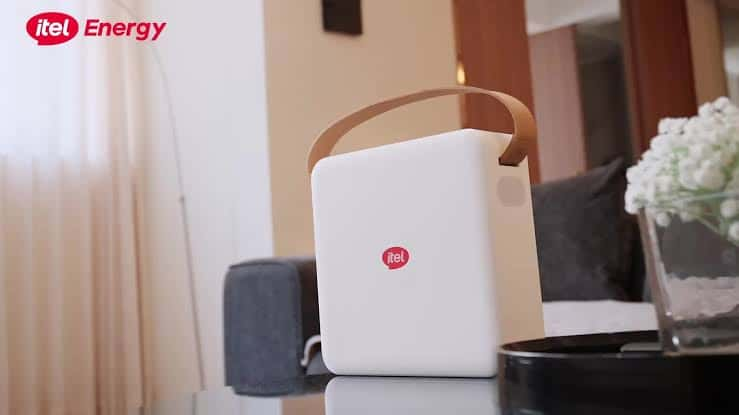
For a student, this could be enough for basic electronics rather than heavy appliances.
Think about:
Laptop charging
Smartphone charging
Wi-Fi router
LED lights
Small electronics
The biggest advantage is portability. You can move it from your bedroom to a study area, take it to school or keep it beside your workstation without installing anything.
Who should buy it?
The Power Go Pro makes the most sense if your main objective is:
I just need affordable backup power for my laptop, phone and internet equipment.
At ₦145,200, it is considerably easier to justify than a full solar installation.
2. itel 500W/1,000Wh Power Tank — Best Value
If you can spend around ₦300,000, the itel IESS-05K10N Power Tank is arguably the more interesting option. The current listing shows it at ₦292,600, reduced from ₦308,000. The major upgrade is battery capacity.
You get:
1,000Wh LiFePO4 battery + 500W inverter.
The product listing also advertises 6,000+ battery cycles, a 20ms UPS switchover and dual PV/grid charging. That makes it substantially more suitable for someone working from home.
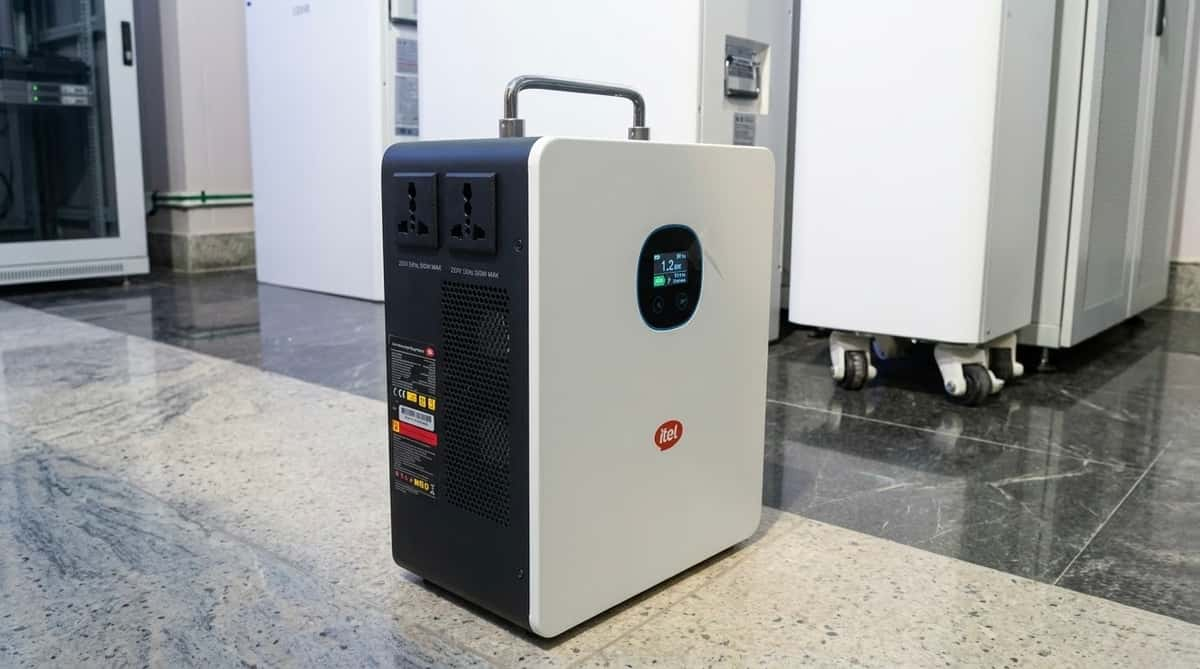
A laptop, router, phone and lights are much more realistic workloads for a 1,000Wh system than they are for a 320Wh unit. The 500W inverter also gives you more headroom for compatible equipment.
Our pick for most students
If you're a university student, freelancer or beginner remote worker and can afford the extra money, this is the model I'd consider first. You're paying roughly twice as much as the Power Go Pro, but you're getting more than three times the battery capacity.
3. itel 500W/1,000Wh + 410W Solar Panel — Best for Long-Term Use
This is the most interesting package if your goal isn't simply backup power but recharging independently from the Nigerian grid. The package currently costs ₦437,000, compared with ₦292,600 for the standalone 1,000Wh Power Tank. The difference is approximately ₦144,400.
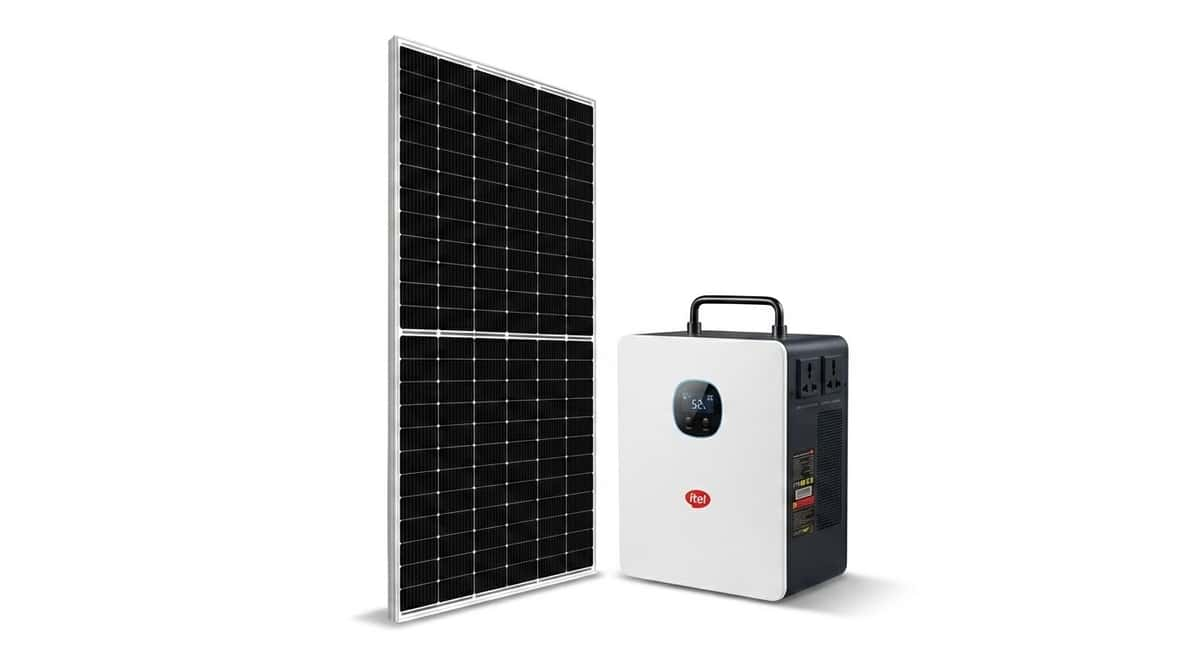
For that additional money, you're getting an itel 410W solar panel alongside the 1,000Wh Power Tank. itel describes the package as a portable solar solution for powering essentials such as lights, TVs, fans and laptops. Installation isn't included.
For a remote worker experiencing frequent outages, this is arguably the most complete option of the three. During the day, the solar panel can recharge the power station while the battery can provide stored energy later.
Why the Solar Panel Changes the Equation
There is a major difference between owning a power station and owning a solar-powered power station. The ₦292,600 Power Tank gives you stored electricity.
Eventually, you have to recharge it. The ₦437,000 package gives you the same 1,000Wh battery plus a 410W panel capable of replenishing the battery from sunlight. This is particularly useful in Nigeria because you can potentially recharge during daylight hours without depending entirely on NEPA/grid electricity. However, solar charging isn't guaranteed to produce 410W continuously. Cloud cover, panel orientation, temperature, shading and the time of day all affect actual solar generation. So don't interpret 410W panel as 410W every hour.
Which itel Solar Generator Is Best for Students?
I'd divide the decision into two budgets.
Under ₦150,000: Power Go Pro:
If you mainly need to keep your phone, laptop and internet connection alive, the 320Wh Power Go Pro is the budget choice. It's compact and relatively easy to move around.
Around ₦300,000: 1,000Wh Power Tank:
If you can stretch your budget, the 1,000Wh Power Tank provides significantly more energy storage. For someone spending long hours studying or working from a laptop, that extra capacity can make a substantial difference.
Which Is Better for Remote Workers?
For remote work, I would lean toward the 1,000Wh models. A remote worker may simultaneously need:
Laptop + monitor + Wi-Fi router + phone + desk lighting.
That creates a much larger energy requirement than simply charging a smartphone. The 500W Power Tank gives you considerably more capacity than the 320Wh/200W Power Go Pro. And if you work remotely every day, the ₦437,000 solar-panel package becomes particularly attractive because you aren't only buying backup storage, you are also getting a way to replenish it from sunlight.
What About the Bigger 8,000Wh itel Solar Generator?
If you're thinking about powering an entire house, itel has a much larger option. The itel IESS-3K680N combines an 8,000Wh LiFePO4 battery with a 3,600W pure-sine inverter and is currently listed at ₦1.68 million. That's a completely different class of product. It is designed for homes, businesses and heavier backup requirements rather than someone who simply needs to keep a laptop running.
itel also lists an 8kWh package with solar panels and installation for about ₦3.308 million. So if you're a student, don't spend ₦3 million when a ₦145,200–₦437,000 portable system could cover your actual requirements.
Our Verdict
For Nigerian students and remote workers, there isn't one perfect itel solar generator. It depends on your budget and electricity requirements.
Best cheap option: itel Power Go Pro 320Wh at ₦145,200
Choose this if you need portable backup for basic electronics.
Best value: itel 500W/1,000Wh Power Tank at ₦292,600
This is our preferred option for students, freelancers and remote workers who want significantly more battery capacity without crossing the ₦300,000 mark.
Best overall for solar independence: 500W/1,000Wh + 410W panel at ₦437,000
If you regularly experience long outages, this is the package I'd choose. The included 410W panel makes it much more useful as an ongoing energy solution rather than simply a large rechargeable battery.
Read more: Best Solar Power Station for Your Home in Nigeria: itel 500W Solar Generator vs EcoFlow DELTA 3 Air
Read more: itel Power Tank Review: Price, Specs & What It Can Power
Read more: Best Portable Power Banks for Laptop Charging in Nigeria (2026 Buyer's Guide)
Read more: itel PowerPulse Turbo 60 Review: Is This ₦80,000 Power Bank Worth It for Laptop and Phone Users in Nigeria?

Author
Adebayo JohnsonSenior tech editor with over 4 years of experience covering mobile and gadget technology. Explore author & articles





