Huawei Mate 90 Series Review: Huawei’s Flagship Phones Push Cameras, Battery and HarmonyOS Further
Huawei Mate 90 series review covering the Mate 90, Mate 90 Pro and Mate 90 Pro Max, including cameras, performance, battery and price.

Huawei's Mate 90 series arrives with something to prove. The company has spent several generations rebuilding its flagship smartphone technology around its own chips, HarmonyOS and increasingly ambitious XMAGE cameras. The Mate 90 family feels like the point where those pieces are becoming a much more complete ecosystem.
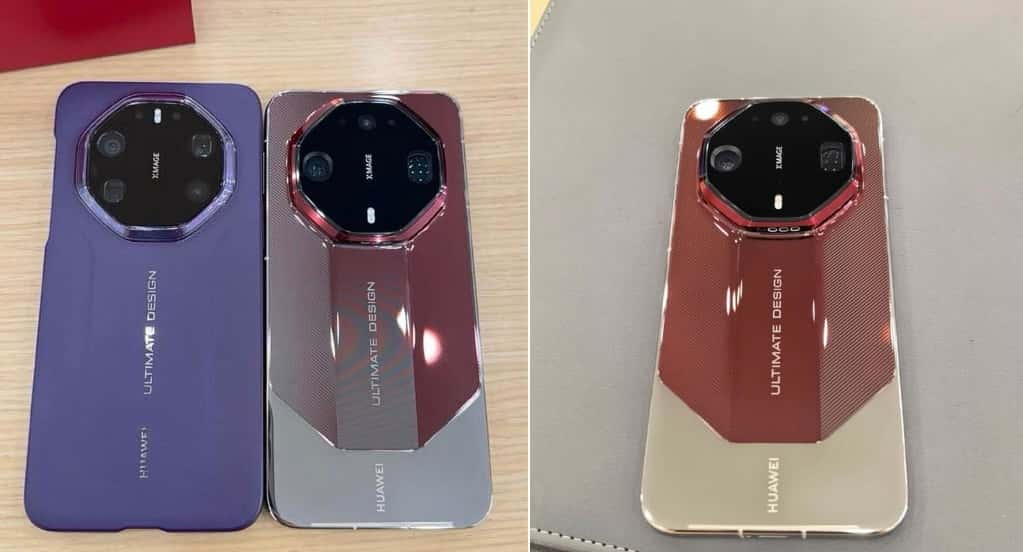
Launched on October 1, the family includes the Mate 90, Mate 90 Pro, Mate 90 Pro Max and Mate 90 RS Ultimate Design, with the Pro Max Collector's Edition extending the range further.
The improvements aren't concentrated in one specification. Huawei has upgraded processing, displays, cameras, durability, batteries and connectivity while moving the lineup to HarmonyOS 7.
Huawei Mate 90 Series Specifications and Prices
Specification | Mate 90 | Mate 90 Pro | Mate 90 Pro Max |
|---|---|---|---|
International launch price | CNY 5,999 (~$895) | CNY 6,999 (~$1,045) | CNY 9,499 (~$1,420) |
Nigeria price | ₦1.2m–₦1.44m | ₦1.5m–₦1.8m | ₦2.25m |
Display | 6.75-inch LTPO OLED | 6.75-inch dual-layer LTPO OLED | 6.9-inch dual-layer OLED |
Refresh rate | 1–120Hz | 1–120Hz | 1–120Hz |
Processor | Kirin 9030 | Kirin 9035 | Higher-tier Kirin platform |
RAM | 12GB | 12GB / 16GB | Up to 16GB |
Storage | 256GB–1TB | 256GB–1TB | 512GB |
Main camera | 50MP variable aperture | 50MP variable aperture | Flagship XMAGE system |
Telephoto | 50MP, 4x optical | 50MP macro telephoto, 4x | Advanced telephoto system |
Ultra-wide | 40MP | 40MP | Ultra-wide |
Battery | 6,600mAh | 6,600mAh | 6,800mAh |
Wired charging | 66W | 100W | 100W |
Wireless charging | 50W | 50W | 50W |
Protection | IP68 + IP69 | IP68 + IP69 | IP68 + IP69 |
Software | HarmonyOS 7 | HarmonyOS 7 | HarmonyOS 7 |
International dollar conversions and Nigerian prices are approximate. Huawei has not announced official Nigeria pricing at publication time.
Mate 90: The Standard Model Isn't Particularly Standard
The regular Mate 90 may sit at the bottom of the lineup, but Huawei hasn't stripped away the interesting hardware. Its 6.75-inch LTPO OLED operates between 1Hz and 120Hz and provides a 2832 × 1280 resolution. Huawei also uses third-generation Kunlun Glass and gives the phone both IP68 and IP69 protection.
Inside is Huawei's Kirin 9030 paired with 12GB RAM and as much as 1TB storage. Huawei claims overall performance has improved by 27% compared with the previous generation.
The 6,600mAh battery is particularly impressive for a mainstream flagship, with 66W wired and 50W wireless charging.
For many buyers, this could be the sensible Mate 90.
Huawei Is Still Serious About Physical Apertures
The camera system shows why Huawei remains one of the more unconventional smartphone manufacturers. The Mate 90's 50MP RYYB main camera has a physical variable aperture ranging from f/1.4 to f/4.0 rather than relying entirely on computational depth effects.
It is joined by a 40MP RYYB ultra-wide and 50MP telephoto with OIS and approximately 4x optical zoom. Huawei also introduces its third-generation colour-sensing camera system to improve colour reproduction.
This approach is increasingly unusual in smartphones. Most flagships rely on fixed-aperture lenses and computational photography. Huawei gives photographers another physical variable to work with.
Mate 90 Pro Is Where Things Become More Serious
Move to the Mate 90 Pro and several specifications change meaningfully. The display remains 6.75 inches, but Huawei switches to a dual-layer OLED panel. Tandem-style OLED technology can improve efficiency, brightness and panel longevity by distributing output across multiple emissive layers.
Performance also moves to the Kirin 9035, with configurations offering 12GB or 16GB RAM and storage reaching 1TB.
The camera system retains a 50MP variable-aperture main camera but upgrades the telephoto proposition with a 50MP macro telephoto and 4x optical zoom.
Charging rises significantly to 100W wired, while 50W wireless charging remains available. That combination makes the Pro arguably the sweet spot for buyers who want the important upgrades without paying Pro Max money.
Mate 90 Pro Max Goes After the Ultra Flagships
The Mate 90 Pro Max is Huawei's answer to enormous premium devices such as Samsung's Galaxy Ultra phones, Apple's Pro Max models and the growing number of Chinese camera flagships.
Its display grows to approximately 6.9 inches, while the battery increases to 6,800mAh. That battery capacity is becoming one of the most interesting differences between Chinese flagship phones and their Western competitors. Silicon-carbon and related battery developments have allowed manufacturers to package increasingly large capacities without turning their devices into bricks.
Huawei pairs the 6,800mAh battery with 100W wired and 50W wireless charging.
For heavy camera users, travellers and people spending long periods on mobile data, that combination could prove more meaningful than another incremental processor benchmark improvement.
HarmonyOS 7 Is an Important Part of the Story
The entire Mate 90 family runs HarmonyOS 7. Huawei's strategy increasingly depends on controlling the complete stack: hardware, silicon, operating system, AI services and its broader device ecosystem. That integration can produce advantages for people already using Huawei tablets, watches, laptops and other hardware.
But international buyers need to understand the other side of that equation.
These aren't conventional Google-certified Android flagships. Users heavily dependent on Google Mobile Services should investigate application compatibility and regional software limitations before importing one.
For buyers already comfortable with Huawei's ecosystem, that concern becomes considerably smaller.
Durability Has Become a Flagship Feature
Huawei is also emphasizing physical durability. The standard Mate 90 uses third-generation Kunlun Glass alongside what Huawei calls its Xuanwu architecture. The Mate 90 and Mate 90 Pro carry IP68 and IP69 ratings.
Huawei specifies IP68 testing at depths reaching six metres under controlled conditions, while IP69 addresses high-pressure, high-temperature water jets.
That doesn't mean you should deliberately test a €1,000-class smartphone underwater. Water resistance can deteriorate over time and isn't the same thing as permanent waterproofing. Still, Huawei is clearly treating durability as part of the premium experience rather than an afterthought.
Huawei Mate 90 Series Price in Nigeria
Nigeria is currently the difficult part of this review. Huawei launched the series initially with Chinese pricing, and we couldn't verify official Huawei Nigeria retail pricing at publication time.
The Mate 90 starts at CNY 5,999, approximately $895 before regional taxes and import costs. One Nigerian technology publication currently estimates its local equivalent at around ₦1.19 million, while another Nigerian pricing database estimates roughly ₦1.44 million.
The Mate 90 Pro starts internationally at CNY 6,999, while the Mate 90 Pro Max starts at CNY 9,499. Early Nigerian estimates put the Pro Max around ₦2.25 million.
These should not be treated as official retail prices. Imported units could initially cost considerably more because of exchange rates, shipping, customs charges, seller margins and limited supply.
Which Mate 90 Should You Buy?
For most buyers, the Mate 90 offers the strongest value. You still get the variable-aperture XMAGE camera, 120Hz LTPO display, 6,600mAh battery, wireless charging and strong durability.
The Mate 90 Pro is the model we'd choose for enthusiasts. Its dual-layer OLED, stronger Kirin platform, improved telephoto capabilities and 100W charging provide meaningful upgrades.
The Mate 90 Pro Max makes sense for buyers who specifically want Huawei's biggest display, strongest camera proposition and largest battery.
The RS Ultimate Design is more difficult to justify on specifications alone. It is a luxury interpretation of the platform for buyers willing to pay substantially more for Huawei's most exclusive materials and design.
Final Verdict
The Mate 90 series demonstrates how differently Huawei now approaches the flagship-phone market. Rather than simply competing over benchmark scores, Huawei is combining variable-aperture photography, large batteries, advanced OLED displays, satellite capabilities, Kunlun durability and increasingly vertically integrated hardware and software.
The standard Mate 90 looks particularly well balanced. The Pro is arguably the enthusiast's choice, while the Pro Max pushes battery and imaging further for buyers who want everything Huawei can currently package into a conventional smartphone.
There are still major considerations for international buyers, particularly software compatibility, regional availability and pricing. But judged purely as hardware, the Mate 90 family is considerably more than another annual smartphone refresh.
Our pick: Huawei Mate 90 Pro. It sits in the most interesting position in the lineup: substantially more sophisticated than the standard Mate 90 without requiring the Pro Max's considerably higher price.
Read more: Huawei Pura X Max Review: Price, Specs And Features
Read more: vivo X300 Pro Review: A Camera Flagship Built Around a 200MP Telephoto
Read more: Xiaomi 17 Pro Max Review: Two Screens, Huge Battery and Serious Cameras

Author
Adebayo JohnsonSenior tech editor with over 4 years of experience covering mobile and gadget technology. Explore author & articles