Marketplace Advertising: How Discovery Is Changing Customer Acquisition
Discover how marketplace advertising is changing customer acquisition, when sponsored listings are worth the cost, and how businesses can measure profitable growth.

Marketplace Growth Is Changing: How Businesses Can Turn Product Discovery Into Profitable Sales
Marketplaces are no longer just places where customers complete purchases. They are increasingly becoming places where customers discover brands, compare alternatives and decide what to buy. For businesses, this creates a new advertising opportunity but also a new question: should more of the marketing budget go towards marketplace visibility instead of conventional advertising?
An October 9, 2026, report by Inc. on marketplaces capturing discovery and advertising dollars highlights how retailers such as Best Buy, Walmart and Target are expanding their marketplace ecosystems. As these platforms attract more third-party sellers, marketplace participation is becoming both a distribution decision and a marketing decision.
The practical lesson for business owners is not to abandon Google Ads, Meta or other channels. It is to understand where customers discover products, where they are ready to buy, and which channel generates additional sales at a sustainable cost.
1. What Is Marketplace Advertising, and Why Does It Matter?
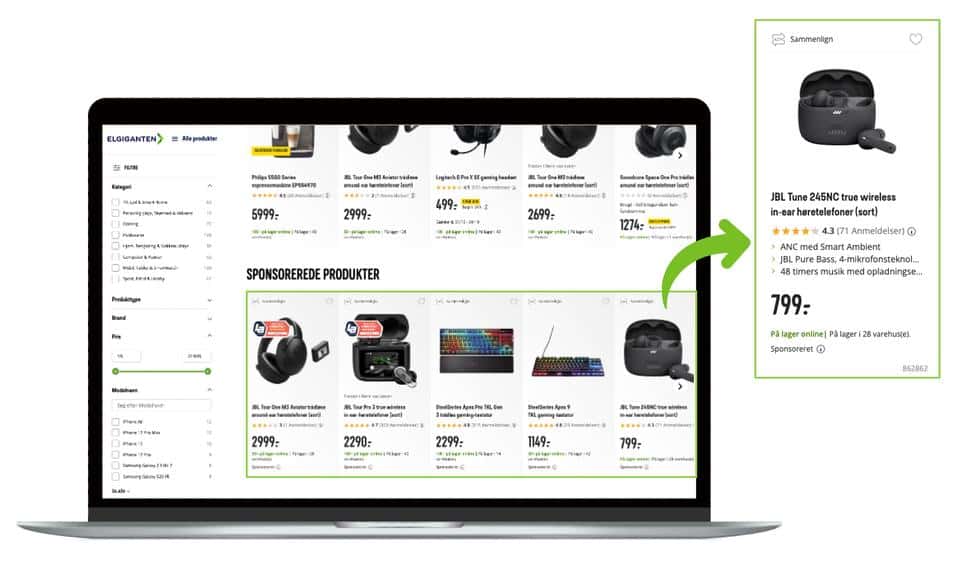
Marketplace advertising allows businesses to pay for greater visibility within a shopping or service platform. Common formats include sponsored product listings, promoted search results, featured placements and advertisements shown to relevant shoppers.
The appeal is straightforward: a business can reach people who are already exploring products or services, rather than relying entirely on advertising to create interest from scratch.
Consider a customer searching for wireless headphones on an online retailer. A sponsored listing can place a relevant product in front of that customer while they are comparing prices and specifications. The advertisement appears close to the purchasing decision. This differs from an advertisement on a social network, where someone might discover a product while watching videos or catching up with friends. Both channels can generate sales, but they influence different moments in the customer journey.
For businesses, the opportunity is to match the advertising channel to the buyer's immediate needs.
2. Why Marketplaces Are Competing for Advertising Budgets
The traditional digital marketing model often separates demand generation from distribution. A brand advertises on search engines or social platforms, then directs interested customers to its website or an online retailer.
Marketplace advertising can shorten that journey by bringing product discovery, comparison and purchase into one environment. Retailers also have a valuable advantage: information about shopping behaviour and transactions within their own ecosystems. Depending on the platform and permissions involved, that information can help advertisers reach relevant audiences and evaluate sales outcomes.
Google on commerce media describes how commerce partners can share first-party data with advertising partners to reach consumers and support sales campaigns. However, more visibility does not automatically mean more profit. Sponsored placements can attract clicks from customers who would have purchased anyway. Advertising can also become expensive when multiple sellers compete for the same high-intent searches.
The business question is therefore not simply whether marketplace ads generate sales. It is whether those sales justify the advertising costs, marketplace fees, fulfilment expenses and discounts required to win the customer.
3. Marketplace Ads vs Google Ads and Paid Social
Different channels serve different commercial purposes. Choosing between them should begin with the way customers discover and purchase what you sell.
Marketplace advertising: Often best suited to product businesses selling through an established shopping platform. Sponsored listings can help capture demand from customers comparing products within that marketplace.
Google Ads: Useful when customers actively search for a product, service, solution or local provider. Search campaigns can direct them to a marketplace listing, product page or business website.
Meta Ads: Facebook and Instagram can help brands introduce products, build interest, retarget suitable audiences and generate enquiries. Visual products and consumer-focused offers may benefit from this approach.
TikTok Ads: Can support discovery through short-form video, particularly when a product is easy to demonstrate or benefits from creator-led content. Results depend on the audience, creative execution and purchase journey.
These channels can complement each other. A customer might first discover a product in a TikTok video, search for reviews on Google and then purchase it through a marketplace. That is why businesses should compare their advertising options in the context of the complete customer journey. Our guide to Google Ads, Meta Ads, TikTok Ads and LinkedIn Ads explores how channel choice depends on the business model and audience.
4. How Businesses Can Tell Whether Marketplace Advertising Is Working
A marketplace dashboard may report impressions, clicks, attributed orders and return on ad spend (ROAS). These are useful indicators, but they do not tell the entire story.
Suppose a business spends $1,000 on marketplace advertising and records $4,000 in attributed sales. Its reported ROAS is 4:1. That sounds attractive, but the business still needs to account for product costs, platform commissions, shipping, returns and other operating expenses.
It should also ask how many sales the advertising actually created. If some customers would have purchased without seeing the advertisement, attributing every resulting sale to the campaign can exaggerate its impact. The Interactive Advertising Bureau's guidance on incremental measurement in commerce media explains approaches for estimating the additional value advertising creates beyond what would otherwise have happened.
Business owners should track four things:
Contribution margin: What remains after product costs, platform fees, fulfilment, returns and advertising?
Customer acquisition cost: How much does it cost to acquire a genuinely new customer?
Incremental sales: Are campaigns generating additional purchases or mostly capturing existing demand?
Repeat purchases: Do customers return, and does the business retain enough value from those relationships?
Where possible, test advertising against a control group, compare performance across comparable periods, or use other viable methods. Do not assume that a campaign is profitable simply because its dashboard reports a positive ROAS.
5. What This Means for On-Demand Service Marketplaces
The retail marketplace trend also offers lessons for platforms connecting customers with service providers, but the operating model is different.
A shopping marketplace can promote a product listing while the item remains in stock. A home-services, delivery or transport platform must also consider location, provider availability, response times, cancellations and service quality.
For example, a home-cleaning marketplace might promote available professionals in one neighbourhood. Advertising could generate enquiries, but if too few providers are available at the requested times, the platform risks wasting its budget and damaging customer trust.
The same principle applies to delivery businesses. Promoting a service across a large city before building adequate merchant and courier coverage can increase demand without improving completed orders.
For these businesses, the right starting point is often a limited service area or category. Build reliable supply, measure completed transactions and repeat usage, then increase advertising where the platform can fulfil its promise.
6. An African Perspective: Visibility Must Translate Into Local Value
For African businesses, marketplace advertising should be evaluated against local purchasing behaviour, logistics and payment realities rather than imported assumptions about digital commerce.
A seller may reach customers through a large marketplace, social commerce, WhatsApp or its own website. The best option depends on whether the platform serves the seller's target geography, supports practical payment methods, provides dependable fulfilment and offers enough customer trust to convert interest into orders.
Smaller businesses should also consider the total cost of participation. Advertising may be affordable initially, but commissions, delivery costs, returns and price competition can erode margins.

Service marketplaces face an additional challenge: demand is often local. A platform operating in Lagos, Nairobi or Accra needs sufficient provider coverage and reliable service within the areas it promotes. A large advertising audience is not useful if customers cannot receive the service when they need it.
Founders can apply the same discipline used in early customer acquisition: focus on a specific customer segment, learn why people convert, and expand only when the underlying economics make sense. Our guide on getting the first 50 customers as an early-stage startup in Africa offers a complementary approach to building initial demand.
7. How to Decide Where Your Marketing Budget Belongs
Before moving a substantial portion of your budget into marketplace advertising, answer three questions.
Where are customers closest to making a purchase? If they are actively comparing products on a marketplace, sponsored listings may be worth testing. If they need education or inspiration first, search content, social media or other awareness campaigns may be more appropriate.
Can you fulfil the demand profitably? Check stock, service capacity, delivery costs, commissions and margins before increasing spend.
Can you measure the result? Define the target outcome before launching a campaign. It could be profitable first purchases, new customers, completed bookings or repeat transactions, not simply clicks or impressions.
Start with a controlled budget, establish a baseline and compare the results with other channels. Increase spending only when the evidence supports it. Marketplace advertising is becoming a more important part of customer acquisition because it brings brands closer to the moment of purchase. But the businesses that benefit most will not necessarily be those that spend the most to secure visibility.
They will be the ones that understand their customers, measure additional value and connect discovery to a profitable transaction.
Read more: Are LinkedIn Ads Worth It for B2B Businesses? What the Data Reveals About ROI and Sales
Read more: Beyond Unicorns: Should Africa Measure Technology by the Abundance It Creates?
Read more: African Startups Have Raised $2 Billion in 2026 But Where Is the Money Actually Going?
Read more: Your Competitor Just Raised Millions, What Should an African Startup Founder Do Next?

Author
Azeez LiadiAzeez is an AI Engineer, Data Scientist, founder, and Senior Tech Writer at Afritech Connect. A top 1% graduate of Lagos State University, he has worked with international startups and… Explore author & articles