

Samsung Doubles Down on Foldables with the New Galaxy Z Fold8 and Fold8 Ultra
Samsung's Galaxy Z Fold8 and Fold8 Ultra take two different approaches to foldables. We examine their displays, cameras, batteries, AI features, performance and what they mean for buyers.

Samsung isn't treating foldable phones as an experiment anymore. The Galaxy Z Fold8 and Galaxy Z Fold8 Ultra make that particularly clear. Instead of offering one expensive Fold and expecting it to satisfy everyone interested in a book-style foldable, Samsung has separated the range into two distinct devices.
The Galaxy Z Fold8 is lighter, wider and more focused on comfortable everyday content consumption.
The Galaxy Z Fold8 Ultra is bigger, more powerful in areas such as photography and battery capacity, and positioned as Samsung's ultimate productivity foldable.
After examining both devices, that distinction matters more than simply calling one “standard” and the other “Ultra.” The Fold8 might actually be the more interesting device for many buyers.
Galaxy Z Fold8 vs Fold8 Ultra
Feature | Galaxy Z Fold8 | Galaxy Z Fold8 Ultra |
|---|---|---|
Main Display | 7.6-inch | 8.0-inch |
Cover Display | 5.5-inch | 6.5-inch |
Processor | Snapdragon 8 Elite Gen 5 for Galaxy | Snapdragon 8 Elite Gen 5 for Galaxy |
Main Camera | 50MP | 200MP |
Ultra-wide | 50MP | 50MP |
Battery | 4,800mAh | 5,000mAh |
Weight | 201g | 215g |
Unfolded Thickness | 4.5mm | 4.1mm |
Storage | Up to 1TB | Up to 1TB |
Main Focus | Content/everyday portability | Productivity/cameras |
US Starting Price | $1,899.99 | $2,099.99 |
The Fold8 Is the More Unusual Phone
The standard Fold8 isn't simply a cheaper Ultra. Samsung has redesigned its proportions around content consumption.
When closed, the phone has a wider aspect ratio intended to make ordinary smartphone activities such as scrolling through social media, messaging and watching short-form videos feel more natural.
Open it and the 7.6-inch 4:3 main display gives you considerably more room for reading, gaming and video. Samsung has also managed to bring the Fold8 down to just 201 grams. That makes it Samsung's lightest Galaxy Z Fold yet.
That's more significant than another specification increase. One of the recurring problems with book-style foldables has been that you gain a tablet-sized screen but carry something noticeably heavier than a normal flagship phone.
At 201g, the Fold8 starts narrowing that compromise.
The Fold8 Ultra Takes the Opposite Approach
The Ultra isn't really about making the Fold experience cheaper or simpler.
It's about pushing it further. You get a larger 8-inch internal display, a 6.5-inch cover screen, a bigger battery and a much more ambitious camera system.
Samsung has also managed to make it just 4.1mm thick when unfolded, despite the larger hardware. Weight rises to 215g, but that's still impressively restrained for an 8-inch foldable.
The result is a device that makes more sense for someone who regularly uses split-screen applications, works with documents, edits content or simply wants the largest practical workspace Samsung can fit into a phone.
Display: Size Isn't the Only Difference
Both phones use Samsung's foldable AMOLED technology, but the proportions are important.
The Fold8 has:
5.5-inch cover display
7.6-inch main display
120Hz main display
3,000-nit peak brightness
10:16 cover-screen ratio
4:3 internal ratio
Samsung has deliberately designed the Fold8 around switching between quick interactions while closed and more immersive content after unfolding it.
The Ultra gives you considerably more screen space. Its 6.5-inch external display is much closer to what you'd expect from a conventional flagship smartphone, while the 8-inch internal screen creates a larger canvas for multitasking.
That difference becomes important if you spend most of your day using the cover screen. A foldable shouldn't require you to unfold it every time you want to type a message.
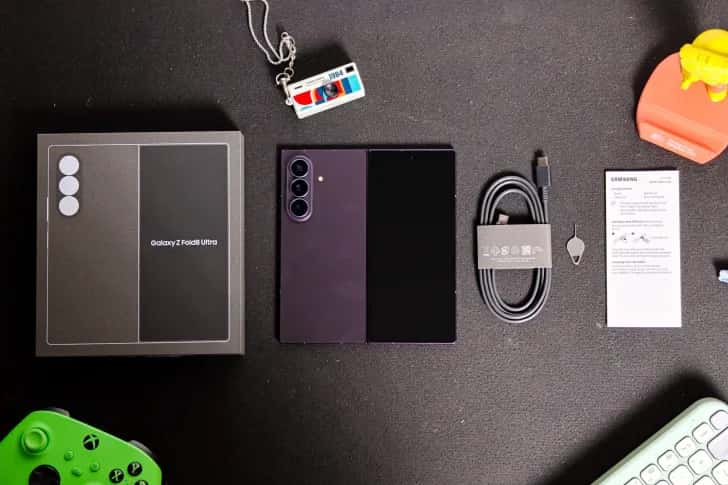
Samsung Is Still Chasing the Crease Problem
Every generation of foldable phones raises the same question:
Can you still see the crease?
Samsung hasn't eliminated it. What it has done is continue changing the underlying display and hinge construction.
The Fold8 uses Samsung's Flex Titanium technology, which adds titanium layers designed to support the folding display while helping maintain durability and reduce crease visibility over time.
That's the more realistic way to describe progress here. The crease isn't magically gone. It's becoming less intrusive while the phones themselves become thinner.
For us, durability remains more important than whether the crease disappears completely. A slight line through the middle of the screen is easier to tolerate than a fragile ₦2 million-plus device.
Performance Is Surprisingly Similar
Buying the Ultra doesn't mean getting a completely different class of processor. Both devices use the Snapdragon 8 Elite Gen 5 for Galaxy. Samsung says the customised platform brings upgraded CPU, GPU and NPU performance, including support for advanced AI workloads and real-time ray tracing.
For everyday use, either device has far more processing power than most people need.
That includes:
Gaming
Video editing
Multitasking
Samsung DeX
AI processing
Large documents
Multiple applications simultaneously
So we'd avoid choosing the Ultra simply because you assume “Ultra” means dramatically faster.
The differences elsewhere are much more important.
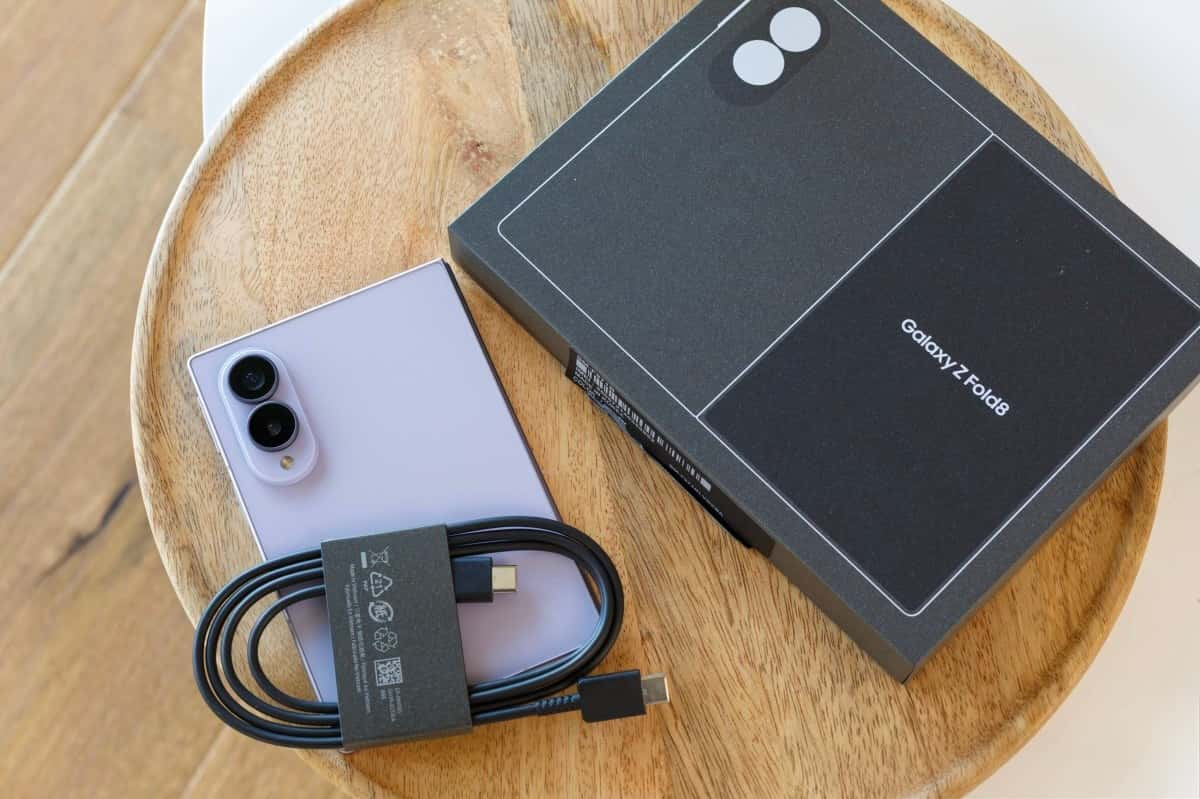
The Camera Is Where Ultra Starts Justifying Its Name
This is one of the clearest separations. The Fold8 uses a dual 50MP Wide + 50MP Ultra Wide camera setup according to Samsung's current specifications.
The Fold8 Ultra steps up to a 200MP primary camera, paired with a new 50MP ultra-wide camera.
Samsung also enables HDR capture in 200MP mode. That makes the Ultra much more interesting for someone trying to use a foldable as both a productivity device and a serious flagship camera.
Samsung has historically required Fold buyers to accept some camera compromises compared with its conventional Ultra phones. The 200MP Fold8 Ultra reduces that gap.
For creators, entrepreneurs and professionals who regularly shoot product photographs, events, social content or video from the same device they use for work, that's arguably one of the strongest reasons to pay more for the Ultra.
Battery: Ultra Gets the Bigger Cell
The standard Fold8 has a: 4,800mAh battery
Samsung rates it for up to 26 hours of video playback.
The Ultra increases capacity to: 5,000mAh
Samsung rates it for up to 27 hours of video playback, while also providing 45W wired charging.
We wouldn't expect the 200mAh difference alone to transform battery life.
Remember that the Ultra is also powering a larger display. The more important takeaway is that Samsung managed to increase capacity while keeping the Ultra extremely thin.
Galaxy AI Makes More Sense on a Foldable
AI features on smartphones can sometimes feel like software looking for a reason to exist. Foldables give some of those tools more room to become useful.
Samsung is leaning heavily into Gemini and Galaxy AI across the new generation.
On the Fold8, for example, Samsung highlights Gemini Notebook, which can bring notes, recordings, images, documents and files together into one workspace.
The Fold8 Ultra introduces features such as Now Nudge, which can suggest relevant next actions across supported applications. That direction is more interesting than simply putting another chatbot inside the phone.
The real advantage of an AI-enabled foldable should be using the large display and multiple applications together. Imagine researching something on one side of the display while AI summarises information or helps organise notes on the other.
That's where the form factor can actually change how the software is used.
But There's One Productivity Feature Missing: S Pen
This is an unusual omission. Neither the Galaxy Z Fold8 nor Fold8 Ultra supports Samsung's S Pen.
Samsung previously removed stylus support from the Fold line as part of making the devices thinner, and it hasn't returned with this generation. That's worth considering before buying the Ultra specifically for productivity.
An 8-inch foldable display looks ideal for handwritten notes, document annotation and sketching.
But you can't use Samsung's S Pen with it. For some buyers that won't matter.
For someone who previously treated the Fold as a pocket notebook, it could be a genuine downgrade.
The Fold8 May Actually Be Better for Gaming
Not because it's more powerful. Both phones have flagship processing hardware.
The Fold8's advantage is weight. At 201g, it's easier to hold for long periods while still giving you a 7.6-inch internal display.
The Ultra gives you a larger 8-inch canvas, which is fantastic for games that adapt properly to foldable aspect ratios.
But larger doesn't automatically mean more comfortable. If we were primarily buying a Fold for gaming and media rather than productivity, we'd think carefully before automatically choosing the Ultra.
Nigerian Pricing Changes the Entire Conversation
This is where these phones become much harder to recommend casually. Current Nigerian retail references put the Galaxy Z Fold8 around:
256GB: ₦2,404,000
512GB: ₦2,659,900
1TB: ₦3,171,720
The Fold8 Ultra starts at roughly ₦2,669,500, with higher configurations climbing above ₦3 million.
Those prices can change quickly because of exchange rates, stock and retailer promotions.
But they illustrate the real problem. At ₦2.4 million+, the Fold8 isn't merely competing against other phones.
It's competing against buying an excellent conventional flagship phone and potentially a tablet or laptop. That's the calculation we'd make before purchasing.
What African Buyers Should Consider Before Buying
Foldables have become dramatically better. But buying one in Nigeria, Ghana, Kenya or another African market requires thinking beyond the specification sheet.
Warranty matters more on a foldable
A conventional phone has one rigid screen. A Fold has a flexible display, hinge and considerably more complicated mechanical construction.
For a device costing several million naira, we'd strongly prefer official or clearly documented local warranty coverage over saving a relatively small amount on a grey-market import.
Repair costs matter
Dropping a conventional flagship is already expensive. Damaging a folding display can be considerably more painful.
That's why the difference between a ₦2.5 million phone and a ₦2.3 million unofficial import may not represent real savings if something goes wrong.
Think about how often you'll unfold it
This sounds obvious, but it's probably the most important buying question.
If you spend 90% of your time using the cover display, you're paying an enormous premium for an internal screen you barely use. A Fold makes sense when that inner display becomes part of how you work, read, watch, edit or multitask.
Fold8 or Fold8 Ultra?
The choice isn't simply good versus better.
Choose the Galaxy Z Fold8 if:
You want the lighter phone.
Content consumption is your priority.
You prefer something easier to carry.
A 7.6-inch internal display is already large enough.
You don't need a 200MP primary camera.
You want to spend less without sacrificing flagship performance.
At 201g, the standard Fold8 is arguably the more impressive engineering achievement.
Choose the Galaxy Z Fold8 Ultra if:
You want the largest Samsung foldable display.
You multitask heavily.
Camera quality matters substantially.
You want the 200MP main camera.
You need the larger battery.
You intend to use the foldable as a serious productivity device.
The additional cost isn't a major concern.
The Ultra is the more capable device. That doesn't automatically make it the more sensible purchase.
Frequently Asked Questions
What's the biggest difference between Fold8 and Fold8 Ultra?
The Fold8 prioritises a lighter, more content-friendly design, while the Fold8 Ultra provides a larger 8-inch main display, 200MP primary camera, 5,000mAh battery and additional productivity-focused capabilities. Both use Snapdragon 8 Elite Gen 5 for Galaxy.
Which one is lighter?
The Galaxy Z Fold8. It weighs 201g compared with 215g for the Fold8 Ultra.
Does Galaxy Z Fold8 support S Pen?
No. Neither Fold8 model supports the S Pen.
Which has the better camera?
On specifications, the Fold8 Ultra has the stronger system, led by its 200MP primary camera and 50MP ultra-wide. The standard Fold8 uses 50MP Wide and 50MP Ultra Wide cameras.
How much is the Galaxy Z Fold8 in Nigeria?
Current Nigerian retail references start at roughly ₦2.4 million for the 256GB Fold8, while the Fold8 Ultra starts around ₦2.67 million. Prices can change with stock, exchange rates and promotions.
Final Thoughts
Samsung's most important Fold8 decision isn't making another foldable thinner.
It's finally admitting that not every foldable buyer wants the same thing.
The standard Galaxy Z Fold8 is the more practical interpretation of the concept.
At only 201g, it gives you a 7.6-inch folding display without carrying something that feels excessively heavy. The wider proportions also make the cover screen more useful for the ordinary things people do hundreds of times every day.
The Fold8 Ultra takes another route. Its 8-inch display, 200MP camera, 5,000mAh battery and extremely thin 4.1mm unfolded body push Samsung's foldable hardware considerably further.
But Nigerian pricing forces some perspective. Once you're spending roughly ₦2.4 million to well above ₦3 million, “which has the better specifications?” isn't the most useful question.
The better question is: What will the folding screen actually allow you to do that a conventional flagship won't?
For someone who regularly multitasks, reads documents, edits content or runs several applications together, that answer can be convincing.
For someone who mostly uses WhatsApp, Instagram, TikTok, YouTube and a camera, the additional screen may be difficult to justify at these prices.
The Fold8 Ultra is Samsung's more ambitious foldable. But the lighter Fold8 may represent the more important direction for the category: making a foldable feel less like a technological compromise and more like a normal phone that happens to open into something much bigger.
Read more: Samsung Galaxy S27 Ultra Camera: First Look, Leaks & What We Know
Read more: iPhone Duo vs Galaxy Z Fold8 vs Xiaomi 18 Fold vs Huawei Pura X Max: Which Should You Buy?
Read more: iPhone Duo vs Samsung Galaxy Z Fold8: Specs, Price and Which Foldable Should You Buy?

Author
Nkechi OkaforMobile device specialist focused on smartphones, tablets, and wearables for the African market. Explore author & articles





