

Samsung Galaxy Note20 Review in 2026: Six Years On
Samsung Galaxy Note20 review covering its AMOLED display, S Pen, cameras, performance, battery life, price and whether this older flagship is still worth buying.

The Samsung Galaxy Note20 was a flagship when it launched in August 2020. Six years later, it remains surprisingly capable in some areas, particularly if you want Samsung's S Pen without paying for a modern Galaxy Ultra.
You still get a 6.7-inch Super AMOLED Plus display, S Pen, 8GB RAM, triple rear cameras, wireless charging, Samsung DeX and a 4,300mAh battery. Samsung's official specifications also confirm 8K video recording and 3x Hybrid Optic Zoom.
But buying a 2020 flagship in 2026 comes with serious compromises. Software support is effectively the biggest concern, and the Note20 misses the wave of Galaxy AI features Samsung has introduced on newer devices.
Samsung Galaxy Note20 Specifications
Specification | Samsung Galaxy Note20 |
|---|---|
Launch Date | August 2020 |
Nigeria Price | ₦215,000–₦410,000 |
Display | 6.7-inch Super AMOLED Plus |
Resolution | 2400 × 1080 FHD+ |
Refresh Rate | 60Hz |
Processor | Exynos 990 / Snapdragon 865+ |
RAM | 8GB |
Storage | 128GB / 256GB depending on model |
Main Camera | 12MP f/1.8, OIS |
Ultra-Wide | 12MP f/2.2 |
Telephoto | 64MP f/2.0 |
Zoom | 3x Hybrid Optic / up to 30x digital |
Selfie Camera | 10MP |
Video | Up to 8K |
Battery | 4,300mAh |
Wired Charging | 25W |
Wireless Charging | Yes |
S Pen | Yes |
Water Resistance | IP68 |
Samsung DeX | Yes |
Galaxy AI | Not officially supported |
The AMOLED Screen Still Looks Good
The Note20 has a 6.7-inch 2400 × 1080 Super AMOLED Plus display with HDR10+. Even in 2026, that's a respectable screen for watching YouTube, reading documents, browsing and editing photos.
The problem is its 60Hz refresh rate. Modern mid-range and flagship phones routinely offer 90Hz, 120Hz or adaptive refresh rates. Once you're accustomed to 120Hz scrolling, the Note20 can feel noticeably less fluid despite its flagship heritage.
Samsung also used Gorilla Glass 5 on the front and a plastic-backed construction on the standard Note20, another reminder that this wasn't the premium Note20 Ultra.
The S Pen Remains Its Biggest Attraction
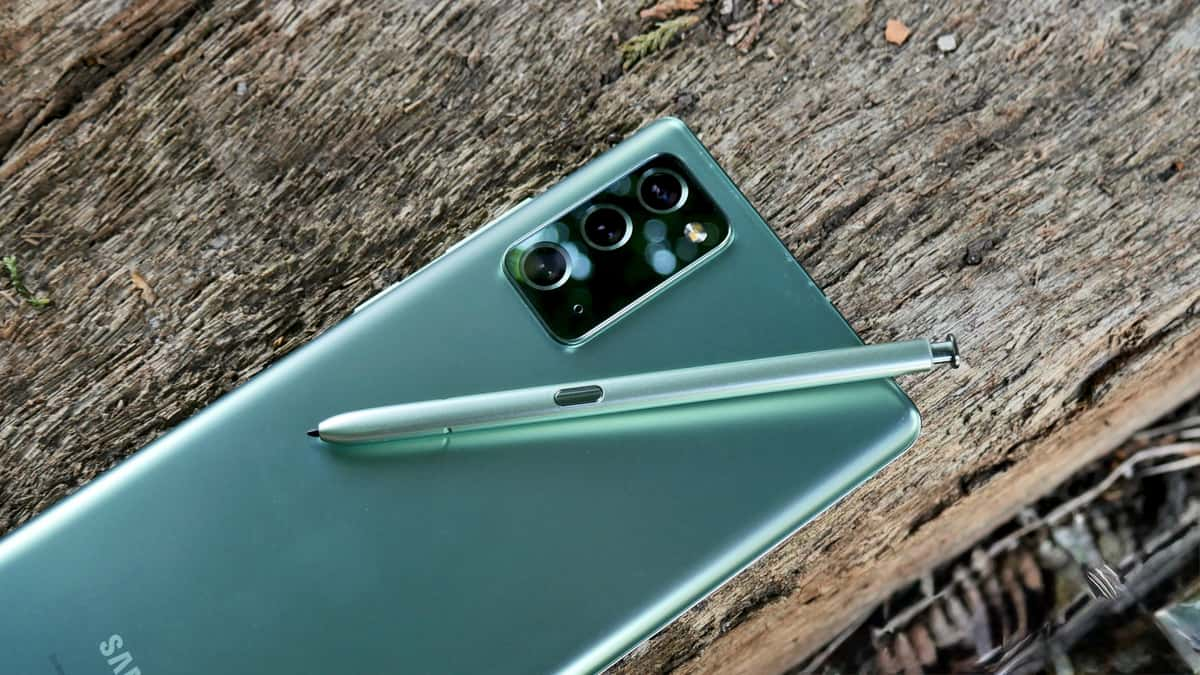
The strongest reason to buy a Note20 today is arguably the S Pen. Samsung's official specifications confirm stylus support with gesture and remote-control functionality. You can use it for handwriting notes, signing documents, drawing, annotating screenshots and navigating the interface.
The phone also supports Samsung DeX, allowing you to connect it to a larger display for a desktop-style interface.
For students, business users and people who frequently work with documents, those features can make the Note20 more useful than some newer budget phones with faster processors but no stylus.
Cameras Are Still Surprisingly Capable
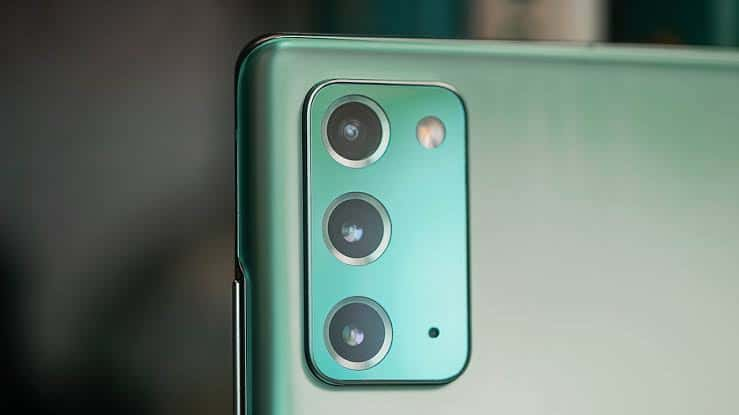
The Note20 has three rear cameras:
12MP main + 12MP Ultra Wide + 64MP telephoto
The main camera includes optical image stabilization, while Samsung advertises 3x Hybrid Optic Zoom and up to 30x digital zoom. Video recording reaches 8K at 24fps, while the 10MP front camera includes autofocus.
For daylight photography, portraits, family pictures, social media and casual video, this remains capable hardware. But six years of computational-photography improvements matter. Modern flagships have considerably more sophisticated night processing, HDR, zoom algorithms and AI-assisted editing.
So don't assume an old flagship automatically beats every newer mid-range phone simply because it originally had better camera hardware.
Performance Is Still Usable
The Note20 came with either Samsung's Exynos 990 or Qualcomm's Snapdragon 865+ depending on region. The Nigerian/global variants commonly use Exynos 990, paired with 8GB RAM.
Basic tasks such as WhatsApp, Instagram, YouTube, browsing, email and banking remain well within its capabilities. It can still handle games too, although efficiency and sustained performance aren't competitive with current flagship processors.
The Snapdragon version is generally the more desirable model if you're shopping among imported units.
4,300mAh Battery Is Now a Bigger Concern
Samsung officially rates the Note20 battery at 4,300mAh, with 25W Super Fast Charging. Samsung's original testing claimed more than 50% charge in around 30 minutes under specified conditions.
The specification itself isn't terrible. The real problem is battery age.
A Note20 manufactured several years ago may have undergone substantial battery degradation. A used phone that originally provided acceptable endurance could now require much more frequent charging. Battery health should therefore be one of the first things you investigate before buying.
The Biggest Downside: It's a 2020 Phone in the AI Era
This is the strongest argument against the Note20. Samsung introduced Galaxy AI with the Galaxy S24 generation and has since expanded features such as Circle to Search, AI-assisted writing, Samsung Notes intelligence, photo-editing tools and other generative features to numerous Galaxy devices.
But Samsung's current Galaxy AI compatibility list includes generations such as the Galaxy S21, S22, S23 and newer supported models — the Galaxy Note20 isn't listed.
That's significant. AI is increasingly becoming part of Samsung's everyday software experience. Buying a Note20 means missing many of the integrated AI capabilities arriving on newer Galaxy phones.
You can still install third-party AI applications such as ChatGPT, Gemini and other services where supported, but that's different from having Samsung's latest AI functions integrated throughout One UI.
Software Support Is Another Problem
The Note20 launched with Android 10 in 2020. Its age means buyers shouldn't expect the long runway of Android and security updates offered by current Samsung phones. This matters more than simply missing new interface features. An aging security-patch level becomes increasingly undesirable for a phone used for banking, business accounts, passwords and sensitive personal information.
For someone intending to keep their next phone for another three or four years, I'd strongly favor a newer Galaxy.
Who Should Still Buy the Note20?
The Note20 can make sense if you find a clean, genuine unit at a very attractive price and specifically want the S Pen, AMOLED display, DeX and flagship-grade camera hardware.
It could work particularly well as a secondary phone, inexpensive productivity device or entry point into Samsung's S Pen experience. But at ₦300,000–₦400,000, the argument becomes much harder. Newer phones provide longer software support, newer batteries, faster displays and more modern AI capabilities.
Final Verdict
The Samsung Galaxy Note20 hasn't suddenly become a bad phone because it's old. Its 6.7-inch AMOLED display, S Pen, DeX support, 8GB RAM, OIS-equipped camera system, wireless charging and IP68 resistance still provide a surprisingly complete experience.
But the calendar matters. The Note20 is a 2020 smartphone being considered in 2026, and six years is a long time in mobile technology. Battery degradation, limited remaining software support, a 60Hz display and the absence of Samsung's current Galaxy AI suite make it increasingly difficult to recommend at high prices.
Buy it if: you find a genuine unit in excellent condition for around ₦200,000–₦250,000 and specifically value the S Pen and DeX.
Skip it if: the seller wants ₦300,000–₦400,000 or you care about long-term updates and Samsung's latest AI features.
The Galaxy Note20 remains a capable reminder of how good Samsung's Note series was. But in 2026, a good old flagship isn't automatically a better purchase than a newer mid-range phone especially now that software support and AI features have become much bigger parts of the smartphone experience.
Read more: Best Samsung Phones Under ₦300,000 in Nigeria in 2026
Read more: Samsung Galaxy Note20 vs Note20 Ultra: Which One Should You Buy?
Read more: Samsung Galaxy S25 Ultra Review and Buying Guide: Still Worth It in 2026?

Author
Adebayo JohnsonSenior tech editor with over 4 years of experience covering mobile and gadget technology. Explore author & articles





