

Samsung Galaxy Note20 vs Note20 Ultra: Which One Should You Buy?
Galaxy Note20 vs Note20 Ultra comparison covering displays, cameras, S Pen, performance, battery, storage and whether the Ultra is worth paying more for.

The Samsung Galaxy Note20 and Galaxy Note20 Ultra launched together in August 2020, but six years later their differences arguably matter even more.
Both provide the S Pen, Samsung DeX, flagship-class processors, wireless charging and capable cameras. But the Ultra received several features that have aged considerably better, including a 120Hz Dynamic AMOLED 2X display, 108MP main camera, dedicated optical telephoto camera and expandable storage.
The question in 2026 is whether those improvements justify paying roughly ₦100,000–₦150,000 more for such an old phone.
Galaxy Note20 vs Note20 Ultra Specs and Price
Specification | Galaxy Note20 | Galaxy Note20 Ultra |
|---|---|---|
Launch Date | August 2020 | August 2020 |
Nigeria Price | ₦215,000–₦410,000 | ₦395,000–₦430,000 |
Display | 6.7" Super AMOLED Plus | 6.9" Dynamic AMOLED 2X |
Resolution | 2400 × 1080 | 3088 × 1440 |
Refresh Rate | 60Hz | Adaptive up to 120Hz |
Processor | Exynos 990 / Snapdragon 865+ | Exynos 990 / Snapdragon 865+ |
RAM | 8GB | Up to 12GB |
Storage | 128/256GB | 128/256/512GB |
microSD | No | Yes, up to 1TB |
Main Camera | 12MP OIS | 108MP OIS |
Ultra-Wide | 12MP | 12MP |
Telephoto | 64MP hybrid system | 12MP 5x optical telephoto |
Maximum Zoom | 30x | 50x |
Selfie Camera | 10MP | 10MP |
Video | 8K | 8K |
Battery | 4,300mAh | 4,500mAh |
Wired Charging | 25W | 25W |
Wireless Charging | 12W | 15W |
S Pen | Yes | Yes, lower latency |
IP Rating | IP68 | IP68 |
DeX | Yes | Yes |
Galaxy AI | Not officially supported | Not officially supported |
Display: Note20 Ultra Wins Easily
The standard Note20 has a 6.7-inch FHD+ Super AMOLED Plus screen, but it's limited to 60Hz. The Ultra gets a larger 6.9-inch 3088 × 1440 Dynamic AMOLED 2X display with an adaptive refresh rate reaching 120Hz.
That difference remains noticeable in 2026. Scrolling, animations, S Pen interaction and gaming feel considerably smoother at 120Hz. The Ultra also reaches 496ppi compared with 393ppi on the Note20.
Winner: Galaxy Note20 Ultra
Performance Is Much Closer
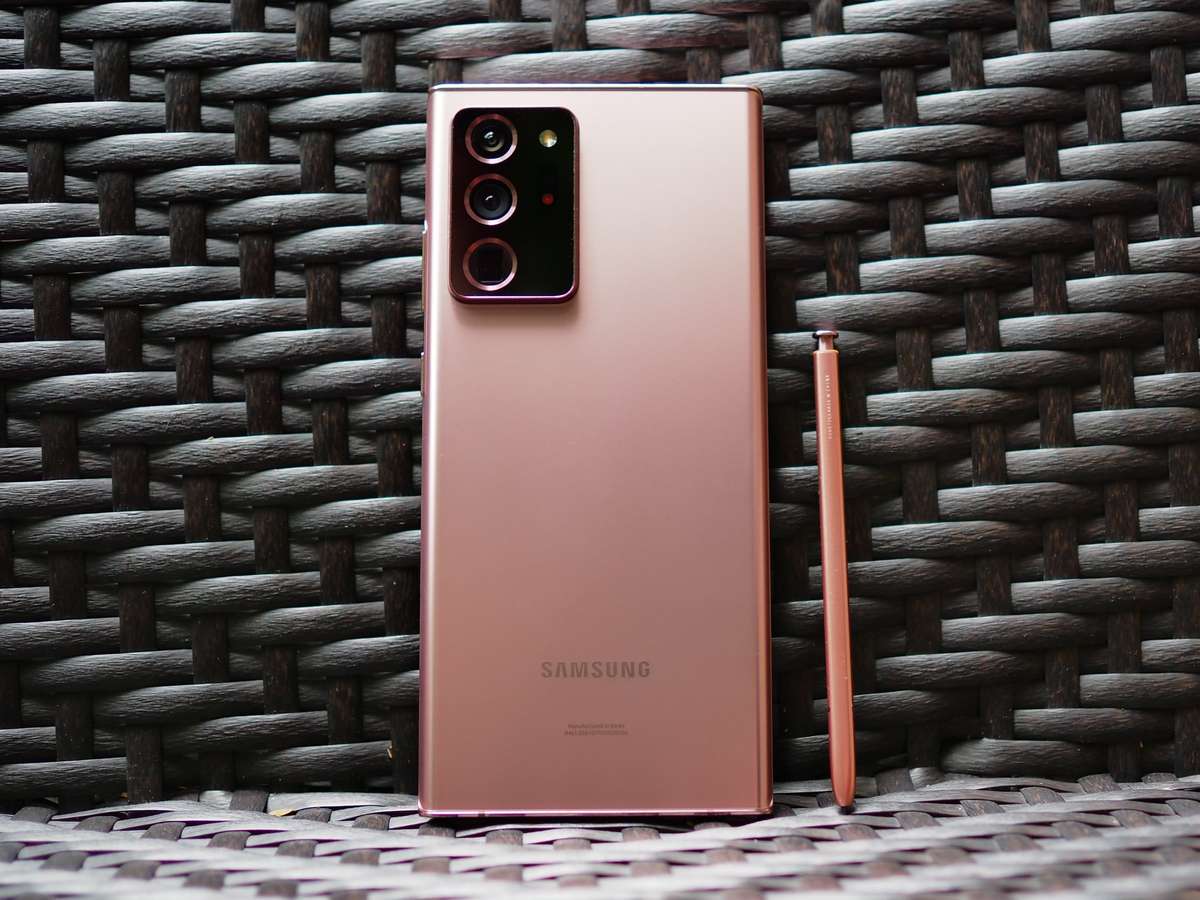
There isn't much reason to choose between them purely on processing power. Both launched with flagship Samsung or Qualcomm processors depending on market, including Exynos 990 and Snapdragon 865+ configurations. The Ultra can provide more RAM, however, with certain versions offering 12GB. That gives it a little more breathing room for multitasking.
For WhatsApp, YouTube, browsing, social media and productivity, both remain usable. Neither should be purchased expecting performance comparable with a 2026 flagship.
Winner: Note20 Ultra, slightly
Cameras: The Ultra Is Far Better
This is arguably the biggest hardware difference. The standard Note20 combines a 12MP main camera, 12MP Ultra Wide and 64MP telephoto system, providing 3x Hybrid Optic Zoom and up to 30x digital zoom. The Note20 Ultra moves to a 108MP OIS-equipped main camera, 12MP Ultra Wide and 12MP telephoto.
More importantly, that telephoto provides 5x optical zoom, giving the Ultra much greater reach without relying as heavily on cropping and digital processing. Samsung originally advertised up to 50x zoom.
Both can record 8K video and use 10MP autofocus selfie cameras. For photography, the Ultra is unquestionably the better Note20.
Winner: Galaxy Note20 Ultra
S Pen: Both Have It, but Ultra Feels Better
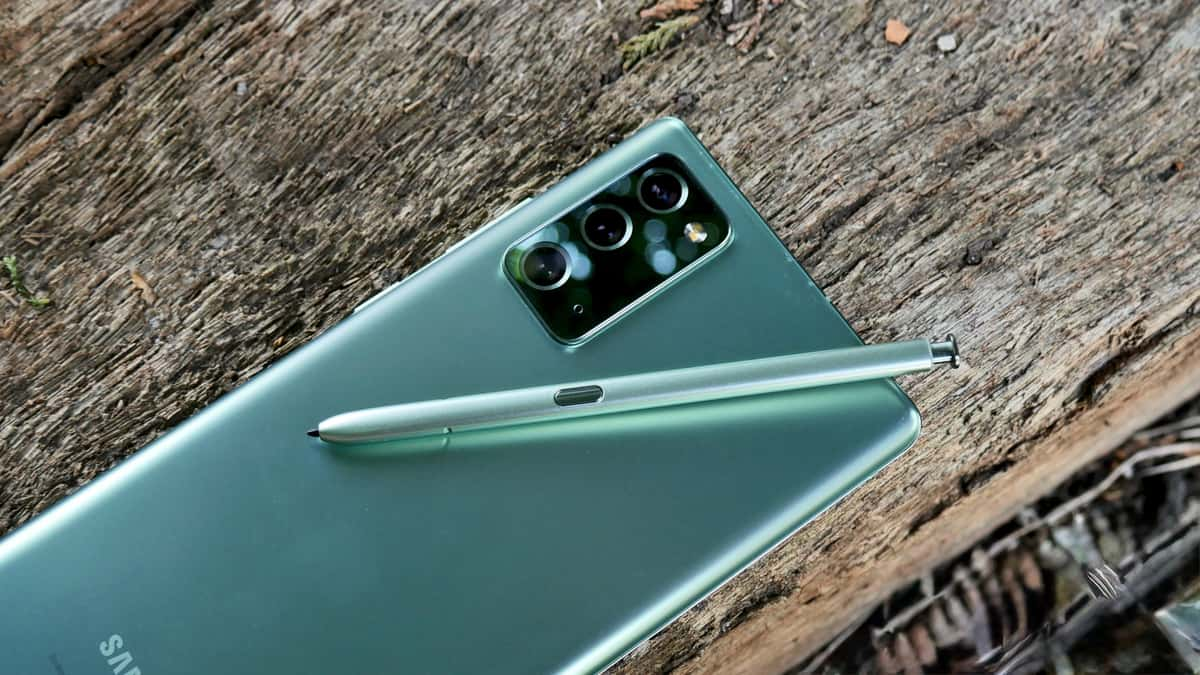
The reason many people still consider these phones is the S Pen. Both let you handwrite notes, annotate documents, draw, control presentations and use Air Actions. Both also support Samsung DeX, including the wireless DeX functionality introduced with the Note20 generation. But Samsung substantially reduced S Pen latency on the Ultra, making handwriting feel closer to writing directly on paper.
Combined with its 120Hz display, the Note20 Ultra remains the more satisfying device for serious S Pen users.
Winner: Galaxy Note20 Ultra
Storage: Another Big Ultra Advantage
The standard Note20 lacks microSD expansion. The Ultra supports microSD cards up to an additional 1TB, depending on configuration, and was offered with larger internal-storage options. That matters in 2026 because 8K videos, offline movies, photographs and large apps can quickly consume internal storage.
If you intend to keep lots of media locally, the Ultra is clearly better.
Battery Difference Is Smaller Than Expected
Note20 has a 4,300mAh battery, while the Ultra increases capacity to 4,500mAh. Both support 25W wired fast charging. Don't assume the Ultra automatically lasts significantly longer. Its larger, higher-resolution and faster-refresh display also consumes more energy.
More importantly, these are 2020 phones. A six-year-old used device may have substantial battery degradation, making battery condition more important than the original 200mAh capacity difference.
Price: Note20 Is Much Cheaper
Current Jumia listings make the decision more complicated. The Note20 256GB is around ₦279,500–₦280,000, while Note20 Ultra listings currently range from about ₦395,000 for 128GB to ₦430,000 for 256GB.
That means the Ultra can cost roughly ₦115,000–₦150,000 more. At ₦280,000, the standard Note20 offers the cheaper route to an S Pen-equipped Samsung flagship. At roughly ₦400,000+, however, the Ultra begins competing with much newer phones.
Because most available units are now used, refurbished, imported or old stock, check battery health, display burn-in, S Pen functionality, cameras, IMEI status and repair history before buying.
The Shared Problem: They're Both From 2020
This is the biggest reason to think carefully before buying either phone. Samsung launched the Note20 generation in August 2020 with Android 10 and One UI 2.5.
That means neither offers the long software-support runway of a modern Galaxy phone.
They also miss many of Samsung's newer Galaxy AI experiences. You can still use third-party AI services such as ChatGPT or Gemini where supported, but that's different from getting Samsung's latest integrated AI capabilities. So don't buy either simply because it was once a flagship.
Which Should You Buy?
If your priority is getting an S Pen Samsung phone as cheaply as possible, the regular Note20 makes more sense around ₦280,000.
But if you specifically want the best experience this generation offered, Note20 Ultra is dramatically better. Its 120Hz QHD+ display, 108MP main camera, 5x optical telephoto, expandable storage and improved S Pen experience are meaningful upgrades rather than minor specification differences.
Final Verdict
The Galaxy Note20 Ultra is easily the better phone, and its hardware has aged much more gracefully. The 120Hz Dynamic AMOLED 2X screen alone makes it feel considerably more modern, while the 108MP camera, 5x optical telephoto, microSD expansion and better S Pen experience strengthen its advantage.
But better phone doesn't automatically mean better purchase. At around ₦400,000–₦430,000, you're spending serious money on a six-year-old device with aging software support and no official access to Samsung's newest Galaxy AI experience.
If you find an excellent-condition Note20 Ultra around ₦300,000–₦350,000, it can still be an interesting S Pen flagship bargain. At roughly ₦400,000 or more, we'd compare it carefully against newer Galaxy phones before buying.
For everyone else, the regular Note20 around ₦280,000 is cheaper, but the Ultra is unquestionably the Note20 model we'd rather own in 2026.
Read More: Best Samsung Phones Under ₦300,000 in Nigeria in 2026
Read more: Google Pixel 11 vs Galaxy S26 vs iPhone 17: Which Flagship Should You Buy in Nigeria?
Read more: iPad vs Samsung Galaxy Tab: Which Tablet Should You Buy in Nigeria? 2026 Comparison Guide

Author
Nkechi OkaforMobile device specialist focused on smartphones, tablets, and wearables for the African market. Explore author & articles





