


Africa's New Unicorns: Why Moove's Rise Matters Beyond Fintech
Africa's unicorn club remains dominated by fintech, but Moove's $2.1 billion valuation signals growing opportunities for mobility, e-commerce and other tech sectors.


Africa Is Creating Billion-Dollar Startups—But Fintech Still Dominates
Africa's technology ecosystem has reached an important milestone. The continent now has a growing group of privately held technology companies valued at $1 billion or more, commonly known as unicorns. But there is an interesting pattern behind these billion-dollar valuations.
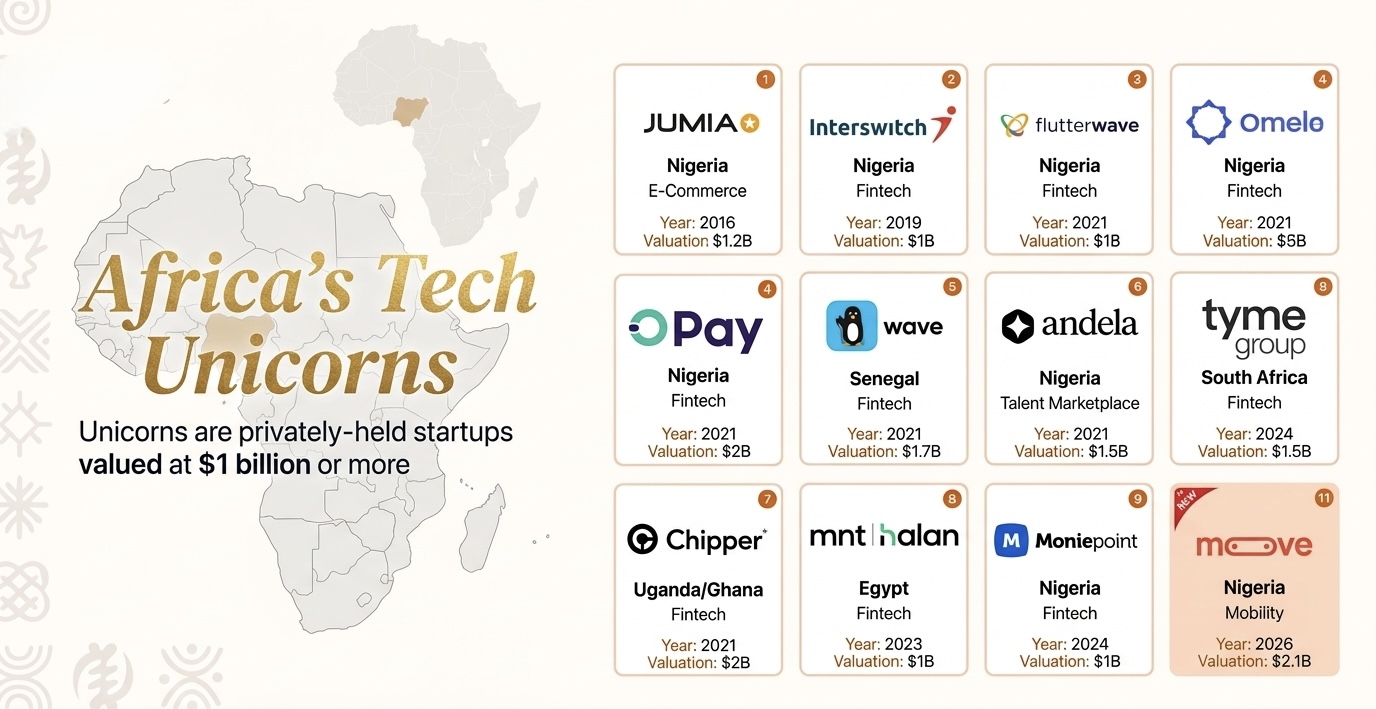
Most African unicorns are fintech companies. From Flutterwave and OPay to Interswitch, Wave, Chipper Cash, MNT-Halan and Moniepoint, financial technology has dominated Africa's unicorn story.
The recent rise of Moove, however, offers something different. The Nigerian-founded mobility technology company has reportedly reached a $2.1 billion valuation, making it one of the continent's most valuable privately held technology companies and one of the clearest examples of an African unicorn emerging outside traditional fintech.
What Is an African Unicorn?
A unicorn is a privately held startup that reaches a valuation of at least $1 billion. The term has become one of the most closely watched milestones in the global startup ecosystem. For Africa, however, becoming a unicorn means more than simply reaching a large valuation.
It demonstrates that investors believe an African-founded company can build a business large enough to compete across multiple markets. The continent's unicorn journey began with Jumia, which reached a billion-dollar valuation in 2016. However, Jumia later became a publicly traded company, so it is important to distinguish historical African unicorns from the current private-unicorn group.
Africa's Unicorn Story Is Still Mostly Fintech
Financial technology has been the biggest driver of billion-dollar startup valuations across Africa.
Companies such as:
Interswitch — Nigeria
Flutterwave — Nigeria
OPay — Nigeria
Wave — Senegal
Chipper Cash — Ghana/Uganda
MNT-Halan — Egypt
Moniepoint — Nigeria
Tyme/GoTyme — South Africa
have all played major roles in the continent's fintech boom. By the end of 2024, reporting showed that eight of Africa's nine private unicorns were fintech companies, highlighting just how dominant financial technology had become. That concentration is understandable.
Africa has a huge demand for:
Digital payments
Mobile banking
Business banking
Cross-border transfers
Digital lending
Financial inclusion
Payment infrastructure
But it also creates an obvious question:
Can Africa produce billion-dollar companies outside financial services?
Moove Is Changing the Conversation
This is where Moove becomes particularly interesting. Founded by Nigerian entrepreneurs, Moove built its business around mobility financing, allowing drivers to access vehicles and repay through their earnings. The company has expanded far beyond its original Nigerian market and has increasingly positioned itself around technology, fleet management and autonomous mobility.
Recent reports put Moove's valuation at approximately $2.1 billion following a $250 million funding round. That makes Moove significantly more than another African fintech story.
Its business sits at the intersection of:
Mobility
Vehicle financing
Software
Fleet management
Artificial intelligence
Autonomous vehicles
Electric vehicles
This is important because it shows that African startups can potentially create enormous companies by solving problems in physical industries, not only financial services.
Moove's Global Ambition
Moove started with a very African problem:
How can drivers who cannot easily afford vehicles access financing and build sustainable livelihoods?
The company developed a model around financing vehicles for mobility entrepreneurs. But the opportunity has expanded. Moove has moved into international markets and has developed partnerships around autonomous mobility.
Its evolution demonstrates an increasingly important trend in African technology:
African startups don't necessarily have to remain African companies.
They can use challenges encountered in African markets as a starting point before expanding their technology and business models globally.
The Other Non-Fintech Unicorns
Moove isn't the first major African technology company to reach unicorn status outside traditional fintech.
Andela
Andela represents another important example. Rather than building a payments platform, Andela created a global technology talent marketplace connecting companies with software developers and technical professionals. The company reached a valuation of approximately $1.5 billion in 2021.
Its story demonstrates that African talent itself can become a global technology product.
Jumia: Africa's E-Commerce Pioneer
Then there is Jumia. Jumia became Africa's first major billion-dollar startup when it reached unicorn status in 2016. Its business was fundamentally different from the fintech companies that followed.
Instead, Jumia focused on:
E-commerce
Online marketplaces
Logistics
Digital payments
Consumer technology
Although Jumia is now a publicly traded company rather than a private unicorn, its original milestone remains an important part of Africa's startup history.
Nigeria Continues to Lead Africa's Startup Unicorn Race
Nigeria remains one of the continent's most important startup ecosystems. The country has produced or hosted several billion-dollar technology companies, including:
Interswitch
Flutterwave
OPay
Moniepoint
Andela's African technology operations
Jumia's major African operations
Nigeria's enormous population, large consumer market, entrepreneurial culture and relatively mature technology ecosystem have helped create an environment where startups can scale quickly.
Recent research and industry reports continue to identify Nigeria as Africa's leading source of unicorn companies.
The Bigger Opportunity May Not Be Another Fintech
Fintech has already proven that African startups can reach billion-dollar valuations. The next challenge is proving that the continent can replicate that success elsewhere.
Imagine an Africa where the next billion-dollar companies include:
An African AI company
A global African logistics platform
An electric mobility company
An African robotics startup
A healthtech company
A major e-commerce platform
An agricultural technology company
That would represent a much broader technology ecosystem.
What This Means for African Entrepreneurs
For African founders, the message is encouraging. You don't necessarily have to build another payment app to create a huge technology company. Some of Africa's biggest opportunities remain in industries where technology adoption is still relatively low.
Think about the problems people face every day:
How do I get reliable electricity?
How do I move around my city cheaply?
How do I access healthcare?
How do I sell my farm produce?
How do I move goods across borders?
How do I access affordable housing?
How can my business use AI?
These problems represent enormous markets.
Frequently Asked Questions
What is a unicorn startup?
A unicorn is a privately held startup valued at $1 billion or more.
How many unicorns does Africa have?
The exact number depends on whether historical unicorns, public companies and corporate structures are included. Recent industry lists generally identify nine private African unicorns before Moove's latest milestone, with the number increasing after Moove's reported $2.1 billion valuation.
Are most African unicorns fintech companies?
Yes. Fintech has overwhelmingly dominated Africa's unicorn ecosystem. Industry analysis has previously found that eight of nine private African unicorns were fintech companies.
Is Moove a fintech company?
Moove is often described as a mobility fintech because vehicle financing is central to its business model. However, its operations extend into mobility technology, fleet management and autonomous vehicles, making it different from traditional payment and digital-banking unicorns.
Which African countries have produced the most unicorns?
Nigeria has been particularly successful, producing several of Africa's best-known unicorns, while Egypt, Senegal, Ghana/Uganda and South Africa have also produced major billion-dollar startups.
Final Thoughts
Africa's unicorn story is no longer about whether the continent can produce billion-dollar startups. It already can.
The more important question now is what kind of companies Africa will build next. Fintech created the first major wave, solving some of the continent's biggest financial and payment problems. But Moove's rise shows that the opportunity extends far beyond banking and payments. From mobility and energy to artificial intelligence, healthcare, agriculture and logistics, Africa has enormous markets waiting for technology-driven solutions.
For African entrepreneurs, that may be the most important lesson of all:
The next African unicorn doesn't necessarily need to be another fintech. It could be solving a completely different problem. And if Moove's rise is any indication, Africa's next billion-dollar technology story may happen on the road rather than inside a banking app.
Related Articles

Jumia Raises $50 Million to Reach More Customers Across Africa
Jumia is raising $50 million to expand its e-commerce reach, improve delivery and bring more affordable products to customers across Africa.
Moove Raises $250 Million: How a Lagos Startup Became a Global Mobility Powerhouse
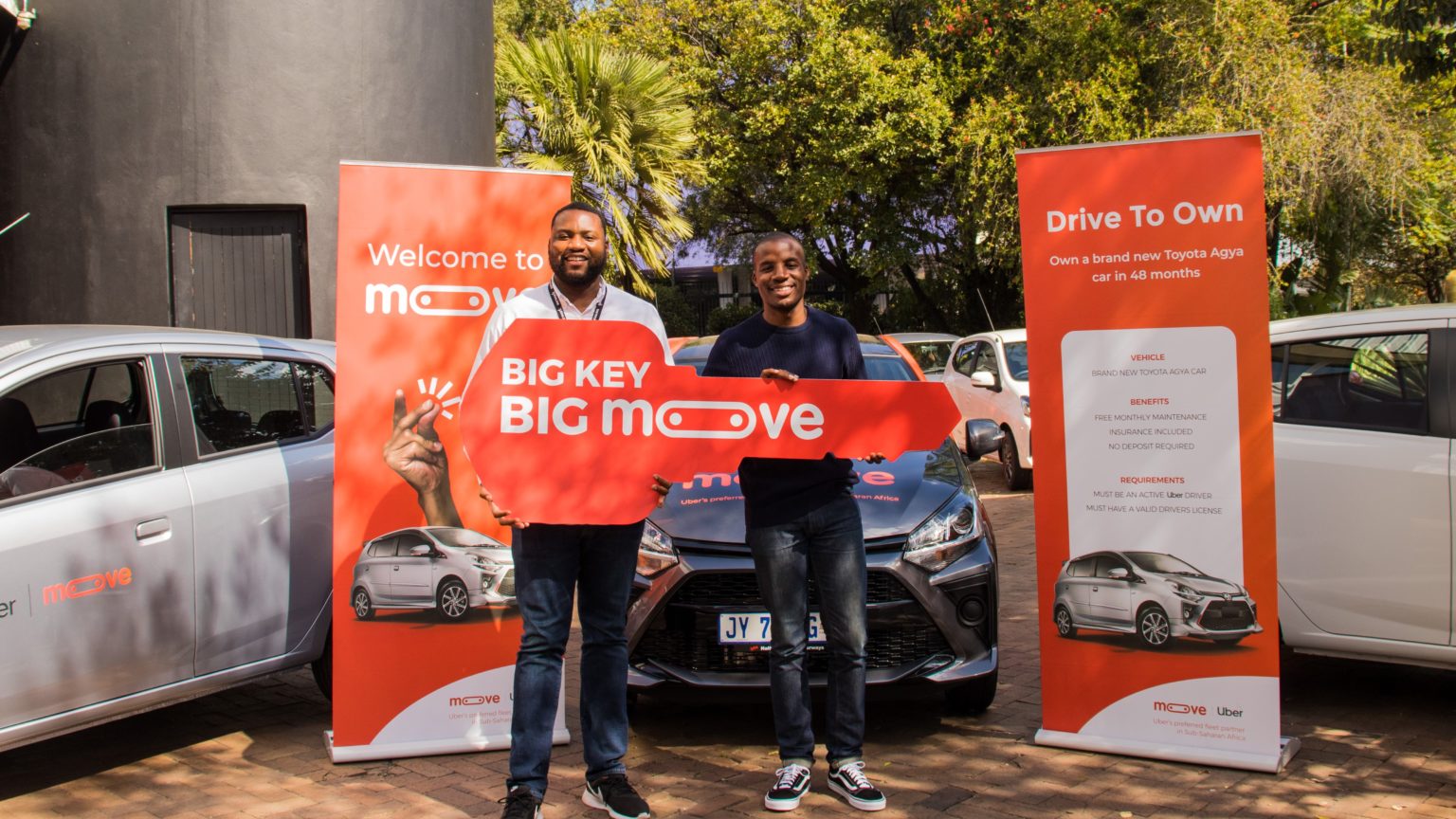
Nigerian-founded mobility fintech Moove has raised $250 million at a $2.1 billion valuation. Here's how a startup that began in Lagos grew into a global mobility and autonomous vehicle company.

Gemini Becomes Google’s Fastest-Growing Product Ever as It Hits 1 Billion Users
Google Gemini has reached 1 billion monthly active users, becoming the fastest Google product to hit the milestone. Here’s what is driving Gemini’s growth and what comes next.

WhatsApp Makes Parental Controls Easier on iPhone: What African Parents Need to Know
WhatsApp is making parent-managed accounts easier to set up on iPhone. Learn how WhatsApp parental controls work, what parents can monitor, and how Nigerian and African families can protect children online.

X Money Is Here: Elon Musk's X Begins Rolling Out Its New Financial App in the U.S.
X has begun rolling out X Money to U.S. Premium subscribers, bringing peer-to-peer payments, a Visa debit card, cashback and savings yields to the social platform. Here's what it means.
New AirPods Could Launch Next Month: Should Nigerians Wait Before Buying?

Apple's iCloud Private Relay May Not Fully Hide Your IP Address, Researchers Warn
Security researchers say Apple's iCloud Private Relay may expose a user's real IP address under certain conditions. Here's what the issue means, who's affected, and whether you should be worried.
Comments (0)
Leave a comment
Comments cannot be edited or deleted after posting. Please review your comment before submitting.
No comments yet. Be the first to share your thoughts!