

Foldable Phones vs Tablets: Should You Ditch Your iPad or Galaxy Tab?
Foldable phones now open into tablet-like screens. We compare iPhone Duo, Galaxy Z Fold8 and Xiaomi 18 Fold with iPads and Galaxy Tabs to see which users should buy.

For years, the reason to own both a smartphone and tablet was obvious.
Your phone stayed in your pocket for calls, WhatsApp, social media and photography. When you wanted a larger screen for movies, reading, drawing, studying or serious multitasking, you picked up an iPad or Android tablet.
Foldable phones are starting to disrupt that arrangement. The iPhone Duo, Xiaomi 18 Fold and Samsung Galaxy Z Fold8 represent a new generation of wider book-style foldables that feel considerably more like miniature tablets when opened. Xiaomi's 18 Fold opens to 7.58 inches, while the iPhone Duo provides a 7.6-inch internal display.
Huawei has pushed the idea even further with its tri-fold Mate XTs. Fold it and you have a phone. Open it once and the screen becomes approximately 7.9 inches. Fully unfold it and you're holding a 10.2-inch OLED display—roughly the territory traditionally occupied by tablets.
That raises an increasingly important question: Do you still need a tablet if your phone can become one?
Foldable vs Tablet: Price Comparison
Device | Category | Main Screen | International Price | Nigeria Price |
|---|---|---|---|---|
iPhone Duo | Foldable | 7.6-inch | $1,999 | ₦3.5m–₦4.5m |
Xiaomi 18 Fold | Foldable | 7.58-inch | ¥10,999 / ~$1,640 | ₦3.29m |
Galaxy Z Fold8 | Foldable | Tablet-like foldable | $1,999.99 | ₦2.4m–₦2.5m |
Huawei Mate XTs | Tri-fold | Up to 10.2-inch | ¥17,999 / ~$2,520 | ₦4.5m |
iPad Air M4 11-inch | Tablet | 11-inch | $599 | From ₦1.35m |
iPad Air M4 13-inch | Tablet | 13-inch | $799 | From ₦1.5m |
Galaxy Tab S11 Ultra | Tablet | 14.6-inch | $1,199 | ₦1.95m–₦2m |
Prices require some context. Xiaomi launched the 18 Fold in China from ¥10,999, approximately $1,640, while the iPhone Duo starts at $1,999. The Galaxy Z Fold8 launched around the same $1,999.99 level. Huawei's Mate XTs started at ¥17,999 in China, roughly $2,520 at launch. Nigerian import pricing can be considerably higher.
Meanwhile, the 11-inch iPad Air M4 starts internationally at $599, while Nigerian retail pricing currently starts around ₦1.35 million for the 128GB Wi-Fi version. The Galaxy Tab S11 Ultra originally started at $1,199, with a current Nigerian Samsung retailer listing around ₦1.95 million. And that immediately exposes the first problem with replacing a tablet with a foldable.
Foldables Aren't Actually Cheaper Than Buying a Tablet
It is tempting to think:
Why buy a ₦1 million phone and another ₦1.5 million tablet when I can buy one foldable?
But premium foldables have become so expensive that the calculation isn't always favourable.
A Galaxy Z Fold8 currently costs around ₦2.4 million through one Nigerian Samsung retailer. The Xiaomi 18 Fold has Nigerian pricing around ₦3.29 million on one current price listing. A Huawei Mate XTs import listing reaches ₦4.5 million.
Meanwhile, an 11-inch iPad Air M4 starts around ₦1.35 million in Nigeria. So buying a foldable isn't necessarily the economical way to get a tablet.
You're paying for something else: convenience.
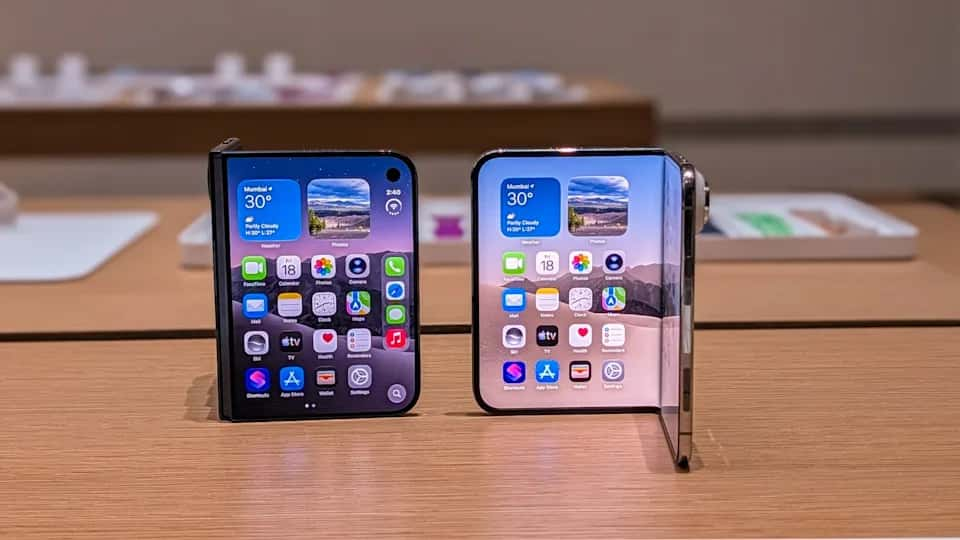
The Foldable's Killer Feature Is That It's Always With You
This is where tablets cannot compete. An iPad may provide an 11-inch or 13-inch display, but you need to deliberately carry it. A foldable is already your phone.
You're sitting at the airport and need to answer emails? Open it.
Someone sends you a PDF on WhatsApp? Open it.
You want to watch YouTube during lunch? Open it.
You need Google Maps while simultaneously checking information in another app? Open it.
You're reading an Afritech Connect article and want more screen space? Open it.
That's the brilliance of the modern foldable. It isn't necessarily a better tablet.
It is a tablet-like screen that happens to be in your pocket whenever you need it.
Multitasking Is Where Foldables Start Replacing Small Tablets
The larger internal display also changes how you interact with applications. Instead of constantly switching between apps, you can put applications beside each other.
Imagine having Chrome open on one side while taking notes on the other. Or WhatsApp beside your email. Or YouTube playing while you're browsing social media.
Samsung has spent several generations refining multitasking on the Galaxy Z Fold line, while Xiaomi is positioning the 18 Fold heavily around multitasking.
This is the category of usage where a foldable can genuinely reduce the need for a small tablet.
If your tablet is primarily used for browsing, email, reading, Netflix, YouTube and social media, you may discover that you stop reaching for it once you own a good foldable.
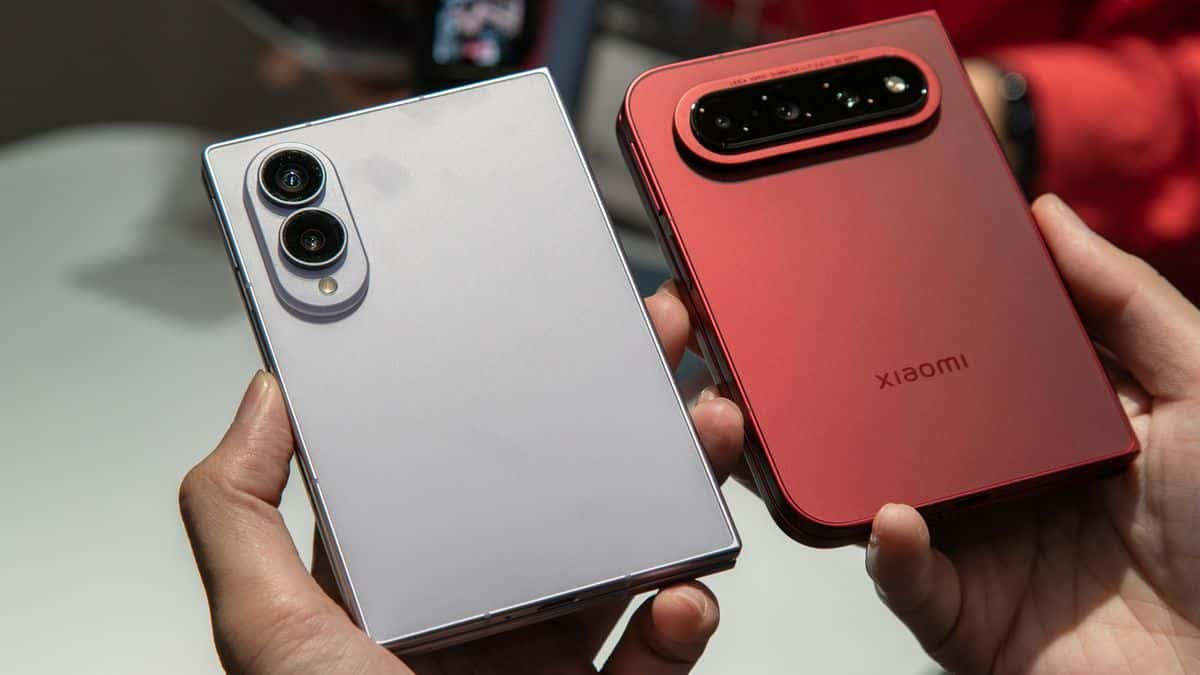
But 7.6 Inches Isn't Really an 11-Inch iPad
This is the limitation people shouldn't ignore. Opening an iPhone Duo or Xiaomi 18 Fold gives you considerably more space than a conventional smartphone, but it doesn't magically create an 11-inch iPad. And it certainly doesn't create a 14.6-inch Galaxy Tab S11 Ultra.
Samsung's Tab S11 Ultra provides a huge 14.6-inch display. That's a completely different working surface from a roughly 7.6-inch foldable.
Put a spreadsheet, timeline, illustration or document on both screens and the difference becomes obvious.
A foldable gives you more phone and a large tablet gives you portable workspace. Those aren't necessarily the same thing.
Huawei's Tri-Fold Shows Where This Could Be Heading
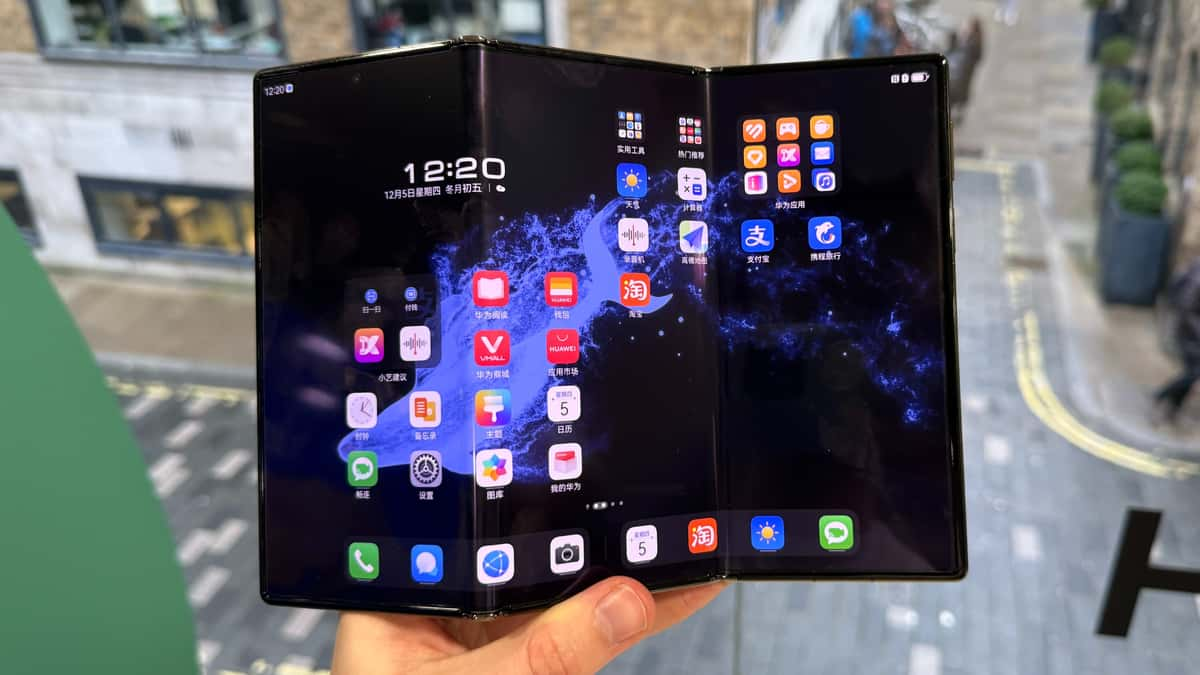
Huawei makes the argument considerably more complicated. Its Mate XTs isn't limited to one fold. Fully opened, its OLED panel reaches 10.2 inches. That's genuine tablet territory.
You can effectively move between three form factors: Phone → larger foldable → 10.2-inch tablet from one device.
The concept is extraordinary because it demonstrates where the industry could eventually go. If manufacturers can make tri-fold devices thinner, lighter, cheaper and more durable, the distinction between "phone" and "tablet" becomes increasingly difficult to define.
But today there are significant compromises. The Mate XTs weighs around 298g, uses a complex multi-hinge design and starts around $2,500 in China. A Nigerian import listing currently puts it around ₦4.5 million. You're paying heavily for being at the frontier of mobile hardware.
Tablets Still Destroy Foldables for Writing and Serious Work
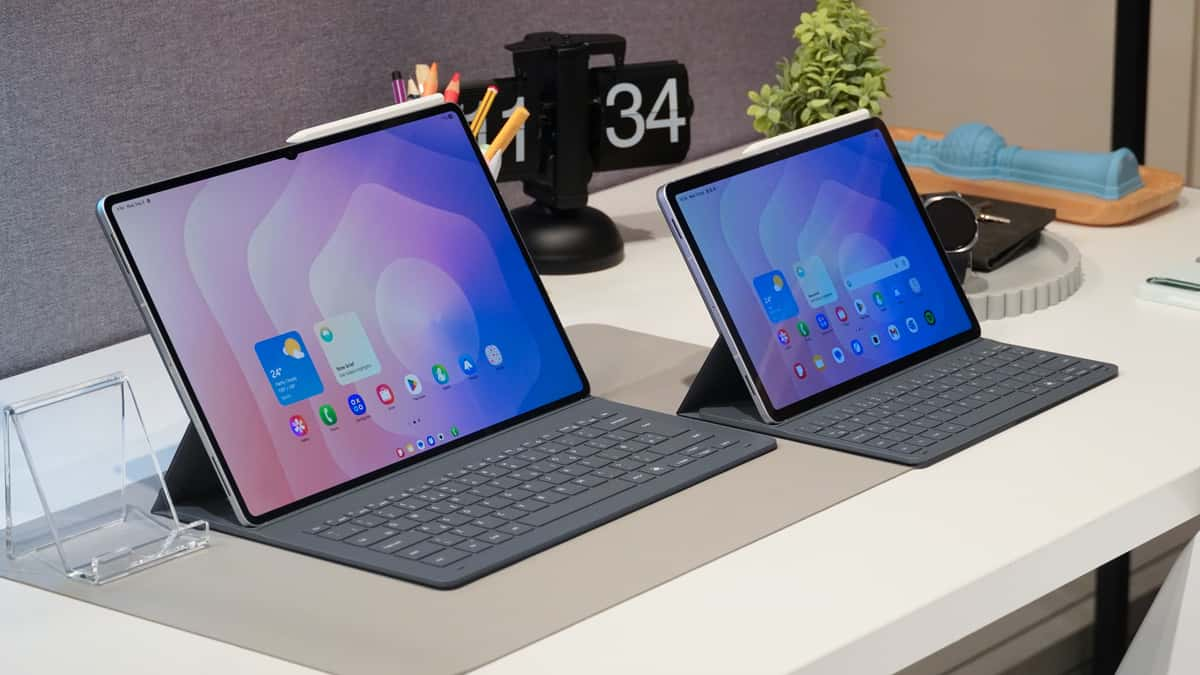
Try writing a 2,000-word report on a foldable. Then attach a proper keyboard to an iPad Air or Galaxy Tab. The difference becomes obvious.
Tablets still make more sense for students writing assignments, journalists drafting long articles, professionals working with spreadsheets and anyone who wants a device to partially replace a laptop.
An iPad or Galaxy Tab can sit on a desk with a keyboard and trackpad and behave much more like a conventional computer. Samsung goes even further with DeX, giving compatible Galaxy tablets a desktop-style environment with resizable windows and external-display capabilities.
Foldables can perform serious work, but their smaller dimensions eventually become the limitation.
Artists and Note-Takers Should Probably Keep Their Tablets
This is another category where tablets remain difficult to replace.
A 13-inch iPad gives an illustrator a large canvas. A Galaxy Tab S11 Ultra provides a massive 14.6-inch display and supports Samsung's S Pen. That amount of physical drawing space matters.
For handwritten lecture notes, diagrams, digital art, photo retouching and detailed creative work, having a larger uninterrupted canvas is considerably more useful than simply having a screen that unfolds.
Foldables can complement those workflows. They haven't eliminated them.
Watching Movies Is Surprisingly Complicated
A foldable has a large screen, so surely it's automatically better for Netflix? Not necessarily.
Screen shape matters. Foldable displays tend to have squarer aspect ratios than televisions and conventional tablets. Widescreen movies can therefore display substantial black bars, meaning you aren't always using the entire internal screen for actual video.
A conventional tablet with a more media-friendly aspect ratio may provide a larger effective picture despite not folding.
For YouTube, webpages, comics, ebooks and multitasking, the foldable format can be excellent. For long movie sessions, we'd still prefer a proper tablet.
Foldables Have More Things That Can Go Wrong
A conventional tablet has one solid display. A foldable introduces a flexible OLED panel, hinge and moving components. A tri-fold introduces even more complexity.
Modern foldables have improved enormously, but buyers spending ₦2 million–₦4 million should think about long-term ownership, repairs and replacement-display costs.
There's also the crease. It has become considerably less distracting on modern foldables, and current Fold8 owners report that it can become difficult to notice when viewing the display directly, but the physical fold hasn't completely disappeared.
A conventional iPad or Galaxy Tab doesn't have that concern.
Battery Life Is Another Reason Tablets Survive
A tablet has one enormous physical advantage: space.
Manufacturers can fit substantially larger batteries inside them.
The Galaxy Tab S11 Ultra, for example, carries an 11,600mAh battery. Xiaomi deserves credit for fitting a huge 6,000mAh battery inside the much smaller 18 Fold, alongside 67W wired and 50W wireless charging. But tablets remain better suited to extended sessions where you're sitting in lectures, travelling, drawing, watching movies or working for several hours.
Should You Ditch Your Tablet for a Foldable?
Yes, if your tablet is mostly a bigger entertainment screen. If you primarily use your iPad or Galaxy Tab for browsing, YouTube, Netflix, reading, social media, email and occasional multitasking, a modern book-style foldable could realistically replace it. You gain something even more important than screen size: you stop carrying two devices.
But if your tablet functions as a laptop replacement, digital notebook, drawing canvas or serious productivity device, keep it. A 7.6-inch foldable doesn't replace an 11-inch iPad Air, and it certainly doesn't replace a 14.6-inch Galaxy Tab S11 Ultra for serious desk-based work.
Who Should Buy a Foldable?
Buy a foldable if you want one device that handles both smartphone duties and light tablet-style tasks.
The ideal buyer is someone who travels frequently, reads documents on the move, multitasks heavily, watches lots of content and values carrying fewer devices.
It's particularly compelling for business users. Instead of carrying a phone and tablet into every meeting, you can carry one device and unfold it whenever you need more workspace.
For this type of user, the convenience can justify the enormous price.
Who Should Still Buy an iPad or Android Tablet?
Buy a tablet if screen size is the reason you're shopping in the first place.
Students taking handwritten notes, artists drawing for hours, video editors working with timelines, children using educational applications and professionals who attach keyboards and use their tablet as a lightweight laptop will still benefit more from a conventional tablet.
There's also value. Spending $599 on an iPad Air gives you a much larger working display for considerably less money than a $1,999 foldable.
If you already own a powerful conventional smartphone, buying a tablet can therefore be considerably more economical than replacing your phone with an expensive foldable.
The Future Isn't Foldables vs Tablets
After looking at where these devices are heading, we don't think foldables are going to kill tablets. They're going to kill some reasons for owning a tablet.
Small tablets used primarily for entertainment, browsing and reading are increasingly vulnerable because book-style foldables can perform those jobs while remaining pocketable.
Large productivity tablets are different. An iPad Air, iPad Pro or Galaxy Tab still provides substantially more physical workspace, better keyboard ergonomics and a more natural canvas for handwriting and creative applications.
Huawei's tri-fold shows where the line may eventually blur completely. Once a phone can expand into a 10-inch display, the distinction between smartphone and tablet starts becoming mostly about ergonomics.
Final Verdict
Foldables have finally reached the point where asking whether you still need a tablet is reasonable.
The iPhone Duo, Galaxy Z Fold8 and Xiaomi 18 Fold can transform from pocketable phones into roughly 7.6-inch workspaces within seconds. Huawei's Mate XTs takes the concept even further by expanding to 10.2 inches. But bigger isn't the only reason tablets exist.
Choose a foldable if: you want maximum portability, use your tablet mainly for content consumption and light productivity, hate carrying multiple devices and can justify spending roughly $1,600–$2,500+ on cutting-edge hardware.
Choose a tablet if: you write extensively, draw, take handwritten notes, edit content, use a keyboard regularly or simply want the largest display for your money.
And if you already own a good phone and tablet? Don't rush to sell the tablet just because foldables are trending.
Watch what you actually use it for. If your iPad spends most of its life showing YouTube, webpages and Netflix, your next foldable could make it redundant.
If it spends its life attached to a keyboard, holding lecture notes, running creative applications or serving as your second computer, foldables aren't ready to take its job yet.
Our verdict: Foldables can replace casual tablets. They don't yet replace productivity tablets.
Read more: iPhone Duo vs Galaxy Z Fold8 vs Xiaomi 18 Fold vs Huawei Pura X Max: Which Should You Buy?
Read more: iPhone Duo vs Samsung Galaxy Z Fold8: Specs, Price and Which Foldable Should You Buy?
Read more: iPad vs Samsung Galaxy Tab: Which Tablet Should You Buy in Nigeria? 2026 Comparison Guide

Author
Adebayo JohnsonSenior tech editor with over 4 years of experience covering mobile and gadget technology. Explore author & articles





